TL;DR
In small dorm rooms, the best fans are compact, quiet, and safe. A 6–12 inch desk fan or a slim tower fan often provides the best mix of cooling, noise control, and dorm compatibility, especially when paired with smart placement like near open windows at night.
Choose a fan size that fits your space—6–12 inches for desks, tower fans for whole-room circulation.
Prioritize quiet models, especially brushless DC motors, to avoid disturbing sleep or study time.
Always check dorm rules on appliances, and opt for UL-certified fans for safety.
Use strategic placement—near windows at night, aimed at your bed—to boost cooling.
Regularly clean and maintain your fan to keep airflow strong and allergens down.
Dorm Cooling Guide — Hot Climates
Essential Small Fans for Dorm Rooms in Hot Climates
Small room, no central AC, strict housing rules. The right 6–12″ desk fan or slim tower fan — placed smartly and running quietly — is your best shot at staying cool, alert, and sane through sweltering days and nights.
180–230 sq ft
Typical shared dorm room
Two students, one window, zero AC — footprint and storage matter as much as airflow.
25–35 dB
Sleep-safe noise ceiling
Brushless DC motors run whisper-quiet; cheap AC motors can hit 40–55 dB on high.
5–45 W
Small-fan power draw
Versus 500–1,500+ W for even modest AC units — fans pass dorm wattage rules easily.
6–12″
Ideal desk fan size
30–40″
Slim tower fan height
~95°F
Fan benefit cutoff
4–24hr
Battery fan runtime
Section 01 — Form Factor
Which fan types actually fit a dorm — and do the job?
Match the fan style to your space first, then worry about features. Dorm rules vary, but most allow small fans — check your housing policy before buying.
Personal · Desk
Desk Fan
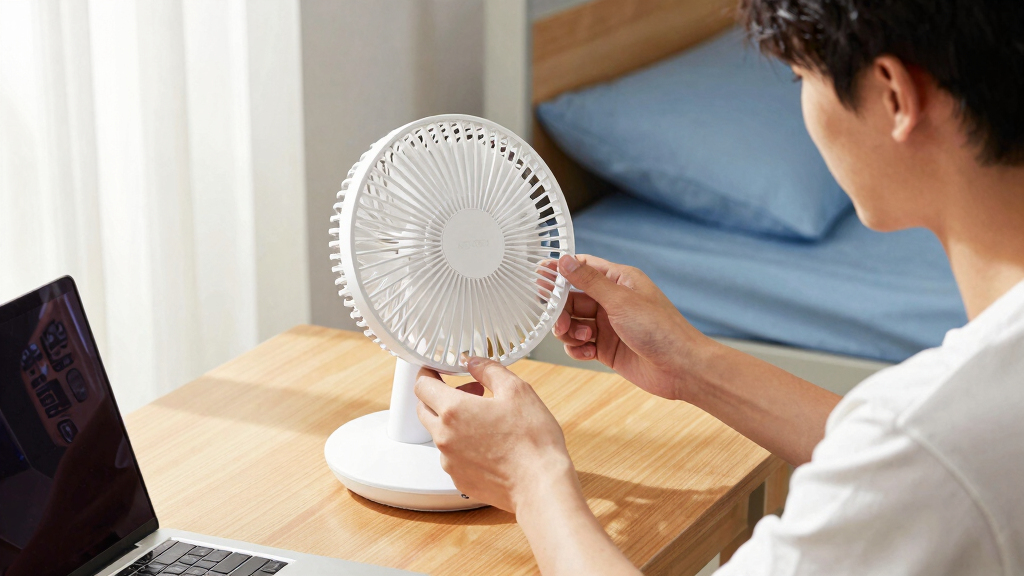
Compact and cheap; perfect for directing airflow at your desk or bed while you study or sleep.
Clamp · Lofted Beds
Clip-On Fan
Clamps to bed frames, desks, or bunk rails — a lifesaver for lofted beds with no nightstand.
Whole Room · Oscillating
Tower Fan
Slim floor footprint, oscillates to circulate air across the whole room; often the quietest option.
Max Airflow · Window
Box Fan
Airflow champion per dollar — great for window exhaust/intake, but bulky for desks or nightstands.
Section 02 — The Deciding Factor
Noise level matters more than you think
If a fan wakes you or your roommate, it’s useless. Even a small increase in background noise causes fatigue over time — quiet operation directly protects sleep, study focus, and academic performance.
Section 03 — Head to Head
Dorm-ready fan comparison
How the main styles stack up on the criteria that actually decide a dorm purchase.
| Criteria | Desk Fan | Clip-On | Tower Fan | Box Fan |
|---|---|---|---|---|
| Personal cooling | ✓ Excellent | ✓ Excellent | ~ Good | ~ Good |
| Whole-room circulation | ✗ Weak | ✗ Weak | ✓ Strong | ✓ Strong |
| Quiet sleep use | ~ Varies | ~ Varies | ✓ Often quietest | ✗ Loud |
| Storage over winter | ✓ Closet / under bed | ✓ Drawer-sized | ~ Closet corner | ✗ Awkward |
| Window exhaust use | ✗ Too small | ✗ Too small | ✗ Poor fit | ✓ Best option |
| Typical price | $ Low | $ Low | $$ Medium | $ Low |
Section 04 — Rules & Safety
Power, dorm rules & fire safety
Most small fans are safe for dorm use — but checking your housing rules is essential to avoid penalties or hazards.
“UL or ETL certification isn’t just a label — it’s a safety badge showing the fan was tested for fire and electrical hazards.”The Non-Negotiable Check Before You Buy
- 01Check housing policy first. Many dorms restrict high-wattage appliances or uncertified electronics; small fans are almost always allowed.
- 02Go USB-C rechargeable where outlets are scarce. Battery fans (4–24 hr runtimes) free you from cords and blocked outlets near bunk beds.
- 03Never cover a fan. Bedding or paper over the grill causes overheating — a real fire risk in tight rooms.
- 04Don’t overload outlets. Keep cords untangled and undamaged, and set the fan on a stable surface.
Section 05 — Pro Placement
Make your fan work harder for you
Fans cool people, not rooms. A high-airflow fan in the wrong spot loses to a small fan placed well — every time.
Night intake
Place the fan near an open window at night to pull cooler outdoor air in, creating a cross-breeze.
Day exhaust
Shut curtains in the morning, then aim the fan out a window to exhaust built-up warm air.
Aim at you
Direct airflow at your bed or desk — not the ceiling. Evaporation off your skin is the mechanism.
Clean monthly
Dust on blades and grills cuts airflow and spreads allergens. A quick wipe restores performance.
Quick Reference — Decision Chain
From heat to relief in five links
Small Room
180–230 sq ft, shared, no central AC
Right Type
6–12″ desk fan or slim tower
Quiet Motor
BLDC, 25–35 dB for sleep
Certified Safe
UL / ETL listed, rules checked
Smart Placement
Window at night, aimed at you
Indoor temperature scale: evaporative skin cooling works well through the mid-80s°F; above ~95°F (35°C) a fan alone stops helping and cross-ventilation becomes critical.
Section 06 — What’s New
The latest in dorm fans
Recent developments worth knowing before you buy this back-to-school season.
USB-C Rechargeables
Lithium-ion personal fans with 4–24 hour runtimes are mainstream — one charger for fan, laptop, and phone. No tangled cords, no outlet hunting.
BLDC Quiet Motors
Brushless DC motors — once premium-only — now appear in mid-range fans: quieter, less vibration, more energy-efficient, longer battery life.
Mini Bladeless & Misters
Dyson-style minis are safe near bedding but deliver less airflow per dollar. Evaporative misters help in dry climates only — skip them in humid dorms.
Which fan types actually fit in a dorm and do the job?
Choosing the right fan begins with understanding what style matches your space and needs. Desk fans are compact, usually 6-12 inches, perfect for directing airflow at your desk or bed. Clip-on fans clamp onto beds, desks, or bunk rails, ideal when space is tight or when you sleep lofted. Tower fans stand about 30-40 inches tall, take up little floor space, and oscillate to circulate air across the room. Box fans are the airflow champs for their size—great for exhaust or intake in windows, but often too bulky for a desk or nightstand. Dorm rules vary, but most allow small fans; check your housing policy before buying.
As an affiliate, we earn on qualifying purchases.
Why noise level matters more than you think in dorms
In a dorm, noise can make or break your sleep and study sessions. Quiet fans run around 25-35 dB—think a whisper or rustling leaves—while typical small fans sit around 40-55 dB at high speed. If a fan wakes you or your roommate, it’s useless. Choosing a quieter fan isn’t just about comfort; it directly impacts your ability to rest and concentrate. Brushless DC motors are a game changer—they operate at significantly lower noise levels and generate less vibration, which reduces overall sound. When you opt for a quiet fan, you’re investing in better sleep quality and less disturbance, which are crucial for academic performance and well-being in a shared space. Remember, even a small increase in noise can cause fatigue over time, so prioritizing low-noise models helps maintain a peaceful environment.
As an affiliate, we earn on qualifying purchases.
Power sources and dorm rules: what’s safe and allowed?
Many dorms restrict high-wattage appliances or prohibit certain electronics. Most small fans are safe for dorm use, but checking your housing rules is essential to avoid penalties or hazards. Battery-powered fans—especially USB or rechargeable models—offer flexibility when outlets are limited or inconveniently placed, allowing you to position the fan for optimal airflow without worrying about cords. UL or ETL certification isn’t just a label; it’s a safety badge that indicates the product has been tested for fire and electrical hazards. Using uncertified or damaged cords, or covering fans with bedding or paper, can cause overheating and fires. Always follow safety guidelines—avoid overloading outlets, keep cords untangled, and ensure fans are on stable surfaces—to prevent accidents and ensure compliance with dorm policies.
As an affiliate, we earn on qualifying purchases.
Size and storage: fitting a fan into your tiny dorm space
Most dorm rooms are around 180–230 sq ft, shared by two students. Your fan’s size and weight matter—compact fans fit comfortably on desks or under beds. Storage is a real concern—choose a fan that can be easily stored in a closet or tucked away during winter months. Think about a fan’s footprint, especially if you share a desk or bed space. A 6-inch desk fan or a slim tower can be stored easily, leaving room for your books and gadgets. In addition, consider how often you’ll need to move or store the fan; lightweight models are easier to handle and less likely to cause clutter. Selecting a size that balances effective cooling with minimal space consumption ensures your dorm remains functional and comfortable year-round.
As an affiliate, we earn on qualifying purchases.
Why airflow matters more than marketing claims
CFM (cubic feet per minute) measures airflow, but many small fans don’t list it. Instead, look for features like oscillation, tilt, and multiple speeds—these influence how effectively a fan circulates air. A fan with high airflow but poor placement won’t cool you effectively; understanding this helps you optimize your setup. For example, placing a small fan near an open window at night pulls in cooler air, which can significantly enhance cooling efficiency. Conversely, a high-speed fan directed at the ceiling may circulate warm air rather than cool your space. Recognizing the importance of placement and airflow features allows you to select a fan that maximizes cooling performance, making your investment more effective and your room more comfortable.
Pro tips: making your fan work harder for you
- Place your fan near an open window at night to pull in cool air, creating a cross-breeze that can lower room temperature more effectively than just pointing it at your bed.
- Use the fan to blow *out* hot air during the day—aim it at a window after shutting the curtains in the morning—to exhaust warm air and promote cooler indoor conditions.
- Pair your fan with a damp towel or bowl of ice for a cool breeze, which can temporarily boost cooling, but remember it’s not a substitute for proper ventilation or air conditioning.
- Regularly clean your fan’s blades and grills—dust and debris can reduce airflow and worsen allergens, decreasing efficiency and potentially affecting your health.
The latest in dorm fans: what’s new and worth knowing
Rechargeable fans with USB-C charging are now common—no more tangled cords or dependence on wall outlets. BLDC motors make fans quieter and more energy-efficient, extending battery life and reducing noise. Some mini bladeless fans mimic Dyson’s safety and aesthetic appeal but often deliver less airflow per dollar, so consider whether their style matches your cooling needs. Smart features like timers, remote controls, and app connectivity are increasingly available even on budget models, offering convenience and customization. In dry climates, evaporative or personal misters can be effective, but they’re less suitable in humid dorm environments where excess moisture can cause mold or damage electronics. Staying informed about these innovations helps you choose a fan that balances performance, safety, and modern features.
Frequently Asked Questions
What size fan is best for a dorm room?
A 6-12 inch desk fan is perfect for personal space, while a slim tower fan can circulate air across the whole room without taking up much space. Consider your layout and noise tolerance when choosing.
Are fans allowed in dorms?
Almost always yes, but rules vary. Check your dorm’s policy on window fans, high-wattage items, or uncertified electronics to avoid surprises. Small fans are generally safe and permitted if used responsibly.
What’s the quietest fan for sleeping?
Look for fans with brushless DC motors, which run at lower noise levels—around 25-35 dB. Brands that emphasize quiet operation often list decibel ratings, making it easier to pick a sleep-friendly model.
Should I get a battery-powered or plug-in fan?
Battery-powered fans are great for bunk beds or when outlets are scarce. Plug-in fans provide continuous airflow without needing recharging, ideal for overnight use in a dorm with accessible outlets.
Where’s the best place to put my fan in my dorm?
Near an open window at night to draw in cool air, or aimed at your bed during the day. During daytime, placing it to blow out hot air can help exhaust warmth from the room.