TL;DR

Prime made for students and young adults
- Fast, free delivery for dorm and study essentials
- Prime Video and Amazon Music included
- Member-only deals
Florida Education Commissioner Anastasios Kamoutsas argues that state assessments show student progress that national NAEP results do not capture on their own. His opinion essay cites gains since progress monitoring began in 2022–23 while acknowledging weak reading scores and calling for a review of parts of the school grading system.
Florida Education Commissioner Anastasios Kamoutsas has defended the state’s school accountability system, arguing in a recent opinion essay for The 74 that state assessment results show student progress that national test scores alone do not capture. He cited gains in English language arts and mathematics since Florida began statewide progress monitoring in 2022–23, while acknowledging that the state’s reading scores on the National Assessment of Educational Progress (NAEP) are at their lowest point this century.
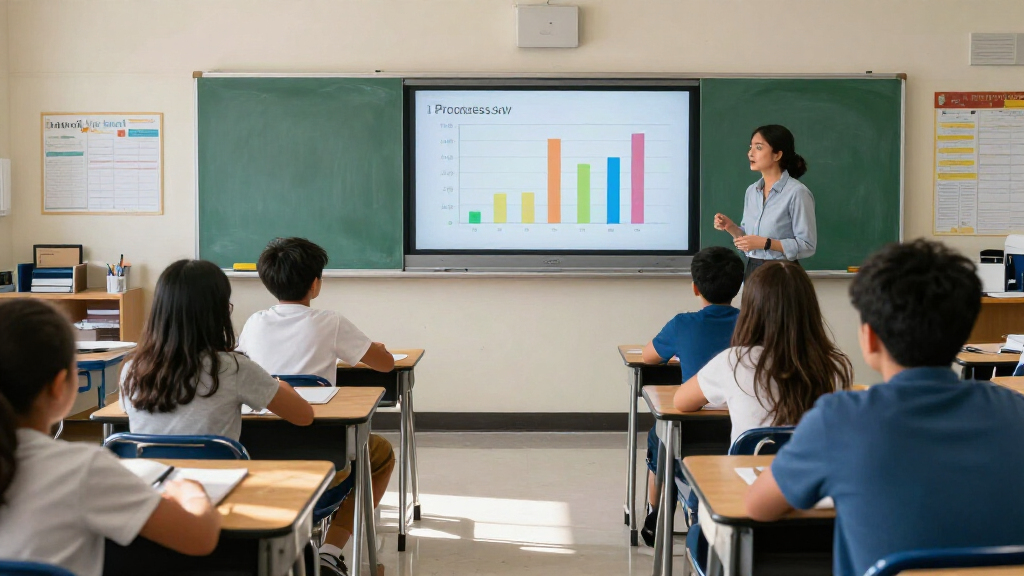
Kamoutsas said 61% of students in grades 3–10 were on grade level in English language arts and 62% of students in grades 3–8 were on grade level in mathematics, based on Florida’s progress-monitoring assessments. Compared with the 2022–23 starting point, he reported a 12-percentage-point increase in ELA, equivalent to about 150,000 additional students, and a 9-point increase in mathematics, or about 115,000 students. The essay describes assessments administered three times a year and aligned with what Florida classrooms teach.
He also acknowledged the limits of the more favorable state picture. Florida’s NAEP reading scores are at their lowest point this century, and, according to the essay, the decline began before the COVID-19 pandemic. Kamoutsas noted that in 2024 no state recorded a statistically significant gain in fourth-grade reading, eighth-grade reading or eighth-grade mathematics. He said Florida fourth graders’ reading performance held steady from 2019 to 2022 as national performance declined, while the state’s fourth-grade mathematics score rose between 2022 and 2024 and ranked among the country’s highest.
The essay defends Florida’s school grades as a statutory index that includes achievement, learning gains, acceleration and graduation rates, including outcomes for lower-performing students. Kamoutsas said the law does not permit officials to adjust a school’s grade away from the points it earned. He also said high school A grades now require the highest threshold in the grading system’s history, while acknowledging that the system’s escalating thresholds and specific components warrant review.
How Florida Measures Student Progress
The dispute concerns which measures should guide public judgments about schools and student learning. NAEP provides a national benchmark, but it does not produce student- or school-level results, according to Kamoutsas, limiting its use for decisions about individual pupils or campuses. Florida’s state assessments are designed to track performance against state standards during the school year, which the commissioner argues makes them more useful to teachers and families seeking actionable information.
That distinction does not resolve whether students are learning enough or whether the grading system identifies schools in need of support. State and national tests measure performance differently, and the essay’s reported gains cannot by themselves settle concerns raised by low NAEP reading results. The debate matters to parents, educators and policymakers because accountability scores can shape school support, public confidence and decisions about education policy.
Popular right now

Shark Rocket Ultra-Light Corded Stick Vacuum, HV301, Gray/Orange

KitchenAid Classic Series 4.5-Quart Tilt-Head Stand Mixer, Onyx Black

Dyson Ball Animal 3 Upright Vacuum
As an affiliate, we earn on qualifying purchases.
State Tests and National Benchmarks
Florida has changed its assessment and standards systems several times in recent years, according to the essay. The state replaced Common Core with its Benchmarks for Excellent Student Thinking, updated the related assessments and replaced a single end-of-year test with progress monitoring. Kamoutsas said Florida also rewrote its learning-gain rules so schools no longer receive credit for students who remain at the lowest performance level.
The essay responds to a recent piece by former Florida Gov. Jeb Bush, which it says emphasized that accountability is an ongoing process. Kamoutsas contends that one NAEP cycle, coinciding with the implementation of new standards and progress monitoring, cannot by itself establish whether those policies are working. He also disputes treating NAEP Proficient as equivalent to grade-level performance, citing NAEP materials that describe proficiency as competency over challenging material rather than a state’s grade-level standard.
Questions Behind the Score Gains
The essay does not provide the underlying assessment tables or enough methodological detail to independently evaluate the reported student counts, comparisons or grade-level classifications. It also does not establish how much of the state-assessment improvement reflects changes in learning, assessment design, standards or other factors. The figures are presented as claims by the commissioner, not as a separate analysis in the source material.
It remains uncertain how Florida will review its grading escalator, high school grading thresholds and acceleration measures, or whether any changes will follow. Nor does the essay resolve how state results should be weighed against NAEP’s national comparisons. Both measures cover different purposes, and the commissioner’s argument is that neither should be treated as a complete account on its own.
Reviewing Florida’s Accountability Rules
Kamoutsas called for continued examination of the state’s grading system, including whether its automatic scale increases, high school grades and acceleration components continue to identify schools that need support. The essay does not announce a formal review, timetable or proposed changes. Parents and educators can expect the debate to continue as Florida releases further assessment results and officials consider how to make performance information understandable and useful.
Key Questions
What did Florida’s education commissioner argue?
Anastasios Kamoutsas argued that Florida’s state assessments show student progress that NAEP results alone cannot capture, while saying the state should continue reviewing its accountability system.
What gains did the essay report?
Kamoutsas said that since statewide progress monitoring began in 2022–23, the share of students on grade level rose by 12 percentage points in English language arts and 9 points in mathematics. He estimated those gains represented about 150,000 and 115,000 additional students, respectively.
Does the essay dispute Florida’s low NAEP reading scores?
No. Kamoutsas acknowledged that Florida’s NAEP reading scores are at their lowest point this century. His argument is that NAEP is a national benchmark and does not provide the student- or school-level information available through state assessments.
What remains unsettled?
The source does not specify whether Florida will change its school grading rules or when a review might occur. It also does not independently verify the commissioner’s assessment figures or explain how much of the reported improvement reflects changes in learning versus other factors.
Source: the74million.org