This checklist is for students, families, and educators gathering supplies for a science fair project. It covers display, measuring, and safety picks, along with practical guidance for two supply slots without a named product. Choose for the project: the right supplies depend on what the student plans to show and measure.

Prime made for students and young adults
- Fast, free delivery for dorm and study essentials
- Prime Video and Amazon Music included
- Member-only deals
The sections follow the listed supply slots: display board, pocket scale, safety goggles, measuring cylinders, pipettes, and poster lettering. Each section explains what the slot contributes and what to consider when choosing or using it. Check the project requirements before buying, especially when measurements or protective equipment are involved.
Use the named picks as starting points, then confirm that each item suits the project, the student, and any school guidance. Advice-only sections offer selection criteria rather than a specific product. Match supplies to the experiment and keep setup, measurement, and presentation needs in view.
Tri-fold Display Board
A display board gives the project a place to present its question, process, observations, and conclusion. The listed pick is “Science Board Games for Kids and Adults – Higher or Lower Trivia Cards,” whose name describes trivia cards rather than a tri-fold display board. Verify the item type before treating it as the board for this slot.
A common buying mistake is selecting by a name that sounds science-related without checking the form and intended use. Confirm that the item is actually a display board and that its format suits the presentation area and school instructions. Consider the space available for the project, how much material the student needs to show, and whether the board can be transported and set up comfortably. Check dimensions and format against the available table or display space.
Before adding titles or visuals, sketch the layout and make sure the board can hold the planned content without crowding. Keep the project’s physical components in mind too: a board should leave room for them if they need to sit alongside the written display. Plan the layout first so the final presentation feels organized and readable.
What to look for:
- Confirm the item is a tri-fold display board, not a set of trivia cards.
- Check board dimensions against the assigned display space.
- Plan room for the project question, method, observations, and conclusion.
- Consider transport and setup for the student.
- Follow the school’s instructions for display format.
Science Board Games for Kids and Adults – Higher or Lower Trivia Cards

Version 2.0 of this science trivia card game offers over 500 thought‑provoking questions, making each round fresh and engaging. The compact cards are portable for travel, and the simple rules let players of all ages join in quickly while encouraging creativity and critical thinking.
Pros:
- Over 500 varied questions provide high replay value.
- Easy-to-learn, fast‑paced rules suitable for family game nights.
- Compact and portable cards make it travel‑friendly.
- Encourages creativity and critical thinking through scientific trivia.
Cons:
- May feel too simple for older teens or adults seeking deeper challenge.
Best for: Students whose school has specified a tri-fold display format
Not ideal for: Anyone relying on the listed trivia-card pick as the board
Bottom line: Verify the product type and display requirements before choosing a board.
Digital Pocket Scale
A pocket scale may suit a project that calls for weighing small quantities, but the listed pick is “RCBS Pocket Digital Scale 1500 Grain.” The product name identifies a grain capacity, so check that the scale’s measurement units and range fit the project’s materials and method. Match range and units to the measurements the experiment requires.
A frequent mistake is choosing a scale based on capacity alone while overlooking the units or level of detail needed for the experiment. Review the project instructions and decide what quantities will be weighed, how often, and where the readings will be recorded. Confirm that the scale can handle the intended sample and that the student can use its display and controls comfortably. Check the needed measurement detail before settling on a model.
Plan for consistent use: place the scale on a stable surface, follow its instructions, and use the same measurement approach throughout the project. If the method calls for a particular unit, make sure readings can be recorded in that unit or converted according to the teacher’s guidance. Keep the method consistent so measurements are comparable.
What to look for:
- Confirm the listed grain capacity suits the project’s quantities.
- Check which measurement units the scale uses or supports.
- Compare the scale’s measurement detail with the project method.
- Make sure the student can read and operate the display.
- Follow the project or teacher’s instructions for recording readings.
RCBS Pocket Digital Scale 1500 Grain
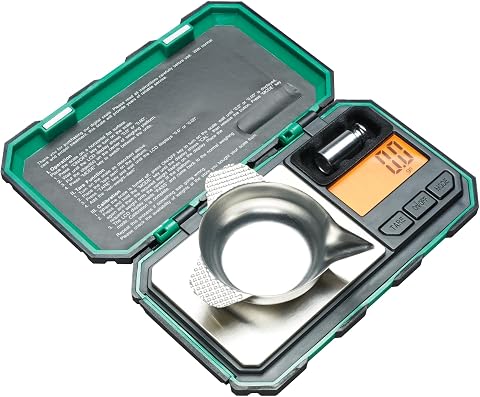
This compact digital scale has a 1500 grain capacity, ideal for weighing powder charges, bullets, and components. It provides 0.1 grain accuracy and includes a powder pan, check weight, and batteries, making it ready to use out of the box.
Pros:
- Compact and portable design
- High precision with 0.1 grain readability
- Includes necessary accessories and batteries
Cons:
- Limited to 1500 grains capacity, may not suit larger weighing needs
Best for: Projects that require weighing quantities within the scale’s range
Not ideal for: Projects whose required units or measurement detail do not fit the scale
Bottom line: Confirm the scale’s range, units, and measurement detail against the experiment.
Laboratory Safety Goggles
Eye protection matters when a project’s activity calls for it, so choose goggles with the experiment and the student in mind. The listed pick is “Anti-Fog Indirectly Vented Lab Safety Goggles Over Glasses.” Its name indicates an over-glasses design; confirm fit and suitability against the project’s safety instructions. Follow the safety guidance provided by the school or supervising adult.
A common mistake is assuming that a product description alone confirms the right protection for every activity. Check what the experiment involves and what protective equipment the teacher or school requires. If the student wears prescription glasses, assess whether the goggles fit comfortably over them and stay in place during the activity. Check the fit with glasses if they will be worn together.
Comfort and visibility affect whether goggles can be worn as intended. Have the student try them on before the project session, and confirm that the fit does not interfere with seeing the work area. Follow the product instructions for use and care, and check that the goggles are in suitable condition before each session. Test fit and visibility ahead of the experiment.
What to look for:
- Confirm the goggles meet the school’s requirements for the activity.
- Check whether the over-glasses design fits the student’s prescription glasses.
- Assess comfort and visibility while worn.
- Follow the product’s instructions for use and care.
- Inspect the goggles before the project session.
Anti-Fog Indirectly Vented Lab Safety Goggles Over Glasses

These safety goggles are made of environmentally friendly PVC, offering a soft, bendable, and comfortable fit. They are adjustable to fit various head sizes and provide protection against splashes, smoke, dust, and other hazards in laboratories, workshops, and kitchens.
Pros:
- Made from environmentally friendly, soft, and bendable PVC material
- Adjustable head size for a comfortable fit
- Provides protection against splashes, dust, and smoke
Cons:
- No specific durability information provided
- May not be suitable for high-impact activities
- Limited details on lens clarity or anti-fog effectiveness
Best for: Students who need goggles worn over prescription glasses
Not ideal for: Activities requiring protection beyond what the school approves for this pick
Bottom line: Confirm the required protection and try the fit before the experiment.
Graduated Measuring Cylinders
Graduated cylinders help students measure liquid volumes for a project. The listed pick is “EISCO Premium Graduated Cylinder Set – 50mL, 100mL & 250mL – ASTM, Cla”; the name identifies three capacities. Choose capacity for the procedure: the planned volumes should fit the available cylinders and the project method.
A common mistake is selecting a cylinder that is too large or too small for the volumes being measured. Review the experiment steps and identify the quantities needed before choosing which cylinder to use. Check the graduations and confirm the student can read them for the intended measurement. Check the graduation markings against the detail the project requires.
For consistent readings, follow the project instructions for how to position and read the cylinder, and use the appropriate capacity for each measurement. Plan how the cylinders will be cleaned, stored, and handled between uses according to school guidance. If the project requires a particular material, certification, or method, verify that the listed set meets those requirements rather than inferring it from the abbreviated product name. Verify requirements directly before relying on the set.
What to look for:
- Check whether the 50 mL, 100 mL, and 250 mL capacities cover the planned volumes.
- Review graduation markings for the project’s measurement needs.
- Confirm any material or certification requirements with the school.
- Choose the appropriate cylinder for each volume being measured.
- Follow instructions for reading, handling, cleaning, and storage.
EISCO Premium Graduated Cylinder Set – 50mL, 100mL & 250mL – ASTM, Class A – Bor

This set includes three high-quality borosilicate glass graduated cylinders with capacities of 50mL, 100mL, and 250mL. Designed for professional laboratory use, each cylinder features a hexagonal base for stability and protective collars for safety.
Pros:
- High-quality borosilicate glass for durability
- Includes three different sizes for versatile use
- Hexagonal base provides stability
- Protective collars enhance safety
Cons:
- May be fragile if mishandled
- Requires careful cleaning to avoid scratches
- Not suitable for extremely high-temperature applications
Best for: Projects whose liquid volumes fit the listed cylinder capacities
Not ideal for: Procedures needing capacities or specifications not confirmed for this set
Bottom line: Compare the set’s capacities and requirements with the experiment before use.
Reusable Pipette Set
Pipettes can be useful when a project requires transferring small amounts of liquid, but the right kind depends on the procedure. No product is specified for this slot, so choose only after checking the experiment’s instructions and the level of control needed. Start with the transfer task: identify the liquid, volume, and frequency of use.
A common buying mistake is assuming all pipettes measure and dispense in the same way. Check whether the procedure calls for a specific volume, adjustable control, or a particular material, and confirm that the selected pipette is intended for the liquid and setting. Make sure the student can operate it comfortably and understand how to read or control the volume. Match the pipette to the method rather than selecting by appearance.
For reusable options, read the care instructions and consider whether the pipette can be cleaned as the project requires. Keep transfer tools appropriate to the substances being used, and follow teacher guidance for handling and disposal. If a pipette is not needed for the planned steps, there is no need to add one just to fill the checklist slot. Buy only what the procedure uses.
What to look for:
- Identify the volumes and transfer steps in the project method.
- Check whether a fixed or adjustable volume is needed.
- Confirm material suitability for the liquid and school setting.
- Choose a design the student can operate and read comfortably.
- Review cleaning and care instructions for reusable use.
Poster Lettering Kit
Lettering supplies help make a project display easier to scan, but no specific product is named for this slot. Decide what titles and labels the board needs, then choose a lettering approach that suits the board size and the student’s presentation plan. Prioritize readable headings that make the project structure clear.
A common mistake is choosing lettering that looks appealing up close but is difficult to read from the viewing distance, or making headings too large for the available space. Sketch the board layout first and estimate how much room titles, labels, and project content will need. Consider the student’s handwriting comfort, the board surface, and whether the lettering needs to be repositioned during layout. Test size and spacing on a draft before applying letters.
Keep the style consistent across the main title and section labels, and leave adequate room for charts, text, and any project components. Follow any school guidance on materials used for displays. A kit is optional if the student can create clear lettering with supplies already available. Clarity matters more than decoration for a readable presentation.
What to look for:
- Draft the board layout before choosing lettering supplies.
- Check title and label size from the expected viewing distance.
- Choose materials compatible with the board surface.
- Leave space for project text, charts, and components.
- Follow school guidance and use a consistent style.
Start with the supplies required by the experiment and school: check safety needs, measuring tools, and any specified display format first. Then choose capacities, units, and transfer tools that match the method, followed by lettering or other presentation supplies that fit the planned layout. Let the project instructions lead the buying order.
Use this checklist as a practical starting point, and verify product details where the name leaves a requirement unclear. A well-prepared project depends on supplies that suit the work and a display that communicates it clearly. Take it one step at a time, and the setup will feel manageable.