
TL;DR
Eco-friendly dorm bedding and decor rely on trusted certifications like GOTS and OEKO-TEX. Prioritize durable, low-impact materials, and consider secondhand options for cost savings and waste reduction.
Furnishing a dorm room is a balancing act — space, rules, budgets, and sustainability. But making eco-friendly choices doesn’t mean sacrificing comfort or style. Every fabric, finish, and decor piece can impact your health and the planet, even in a tiny space.
In this guide, you’ll learn how to spot trustworthy certifications, choose materials that reduce environmental harm, and decorate smartly within dorm constraints. These tips help you create a greener, healthier dorm room — without the sticker shock.
Always prioritize certifications like GOTS and OEKO-TEX to verify eco-claims.
Choose natural, durable materials like organic cotton, linen, or Tencel over chemical-heavy options.
Secondhand shopping and renting reduce waste and save money while helping the planet.
Avoid treatments with PFAS, formaldehyde, and VOCs — air out new items before use.
Plan for end-of-year recycling or donation to keep your eco footprint small.
Campus Ready Guide · Sustainable Living
Choosing Eco-Friendly Bedding & Decor for Dorms
Furnishing a dorm is a balancing act of space, rules, budgets and sustainability. Every fabric and finish affects your health and the planet — even in a tiny room. Here’s how to spot real certifications, pick low-impact materials, and decorate smart without the sticker shock.
Certifications That Cut Through Greenwashing
Vague words like “natural,” “green” and “eco” are unregulated. These labels require rigorous third-party testing — a product with multiple certifications offers the most peace of mind.
GOTS
Global Organic Textile Standard verifies organic fiber content plus strict environmental and social criteria across the whole supply chain.
OEKO-TEX Standard 100
Tests every component for harmful chemicals — so you’re not sleeping on residues linked to health risks.
MADE IN GREEN
OEKO-TEX’s traceable label confirming safe manufacturing in environmentally friendly, socially responsible facilities.
CertiPUR-US
Foam made without certain flame retardants, formaldehyde and heavy metals, with low VOC emissions — key for mattress toppers.
GREENGUARD Gold
Certifies low chemical emissions from furniture and foam — crucial in small, often poorly ventilated dorm rooms.
Fair Trade · FSC · GRS
Fair Trade for worker welfare, FSC for wood/paper decor, Global Recycled Standard for verified recycled content.
The Trust Spectrum
From marketing fluff to verified proof — where claims land.
Water Footprint Per Pound of Fiber
Relative comparison — cotton is the thirstiest common option.
Materials That Actually Help the Planet
Eco-friendly bedding isn’t just about labels — every fiber carries trade-offs in water, durability, cost and end-of-life. Prioritize what matters most to you.
| Material | Planet Upside | The Trade-Off | Dorm Verdict |
|---|---|---|---|
| Organic Cotton | Eliminates synthetic pesticides — better for farmers & ecosystems | Still thirsty: ~2,900 gal of water per pound | ✓Best all-rounder |
| Linen (Flax) | Highly durable & breathable — lasts for years, fewer replacements | Higher upfront cost; longer production times | ✓Buy once, keep long |
| Tencel / Lyocell | Biodegradable eucalyptus, low water use, soft & luxurious | Pricier than basic cotton | ✓Practical eco pick |
| Hemp | Low-input crop, strong and long-lasting fiber | Can feel coarse until broken in | ✓Durable choice |
| Bamboo Viscose | Marketed as “green” — bamboo grows fast | Chemical-intensive process with toxic fumes; classic greenwash | ✗Avoid |
| Bamboo Lyocell | Closed-loop process recycles chemicals — far lower harm | Harder to find; costs more | ~The good bamboo |
| Recycled Poly / Cotton | Repurposes waste, avoids virgin resource extraction | Synthetics shed microplastics — wash with fiber-catching bags | ~Handle with care |
Chemicals to Skip in a Small, Stuffy Room
You spend a third of dorm life in bed. These treatments off-gas and linger — and several are increasingly regulated or banned.
Stain & Water Repellents
Persistent “forever chemicals” linked to hormonal disruption and increased cancer risk. Use baking soda, vinegar or washable covers instead.
“Wrinkle-Free” Finishes
Easy-care finishes often rely on formaldehyde resins. A few wrinkles beat sleeping on a known irritant every night.
Cheap Foam Toppers
Uncertified foam off-gasses volatile organic compounds. Choose CertiPUR-US certified foam and air items out before move-in.
Regulatory momentum: California, New York and other states are phasing in bans on intentionally added PFAS in textiles through 2025–2027 — reformulated “dorm protectors” are already hitting shelves.
Safe, Low-Impact Picks That Fit Dorm Constraints
No nails, no paint, fire codes, shared laundry — sustainable choices that keep your deposit and your air clean.
Twin XL Is Non-Negotiable
Standard twin sheets won’t fit the 38″ × 80″ dorm mattress. Buy Twin XL once — returns and wrong sizes are waste too.
Removable Decor Only
Command strips, peel-and-stick wallpaper, tension rods and tapestries leave walls intact and come down clean at move-out.
Respect Fire Codes
Candles and halogen lamps are typically banned. Choose LED lighting — safer, permitted, and a fraction of the energy.
Durable & Washable Wins
Easy-clean materials survive shared laundry and spills, staying adaptable and reusable across all four years — and the next student too.
Save Money and Reduce Waste
Eco can cost more upfront but wins on cost-per-use. The cheapest path is also the greenest one: skip new production entirely.
Secondhand First
Thrift stores, campus Buy Nothing groups, Depop and Facebook Marketplace deliver style at a fraction of retail — with zero new resource extraction and unique vintage character.
Rent & Swap
Startups now rent bedding and dorm essentials, cutting single-use purchases and building a sharing community that shrinks everyone’s footprint.
Remanufactured Gear
Secondhand lamps, remanufactured desks and ENERGY STAR mini-fridges withstand wear — saving money and covering the non-textile side of dorm sustainability.
Cheap set replaced every year — more cost, more landfill
From Move-In Day to Move-Out Diversion
May is the moment that matters most. Campuses run free move-out donation programs — give your gear a second life instead of a landfill slot.
Buy Certified or Used
GOTS / OEKO-TEX new — or thrifted, rented, swapped
Wash Smart
Microfiber-catching bags trap shed plastics from synthetics
Donate or Resell
Campus move-out programs redirect gear to charities
Recycle Textiles
Old sheets become insulation or cleaning rags — not trash
Tiny Footprint
A greener, healthier dorm — without the sticker shock
How to Spot Real Eco-Friendly Bedding Certifications
Certifications are your best tool against greenwashing. Look for labels like GOTS (Global Organic Textile Standard), OEKO-TEX Standard 100, and Made in Green. These verify organic content, low chemical emissions, and safe manufacturing.
For example, a GOTS-certified sheet ensures organic cotton and strict environmental standards. OEKO-TEX tests for harmful substances, so you won’t sleep on toxic chemicals. These labels cut through vague claims like “natural” or “green”.
Always check the label details. A product with multiple certifications offers more peace of mind. Be wary of brands that avoid transparent info or use vague eco-claims.
Understanding these certifications helps you make informed decisions. They are not just marketing buzzwords but standards that require rigorous testing and adherence. Choosing certified products reduces the risk of exposure to harmful chemicals and supports sustainable practices, which are crucial for your health and the environment.
eco-friendly dorm bedding organic cotton
As an affiliate, we earn on qualifying purchases.
As an affiliate, we earn on qualifying purchases.
Choosing Materials That Actually Help the Planet
Eco-friendly bedding isn’t just about labels — it’s about what’s inside. Organic cotton, linen, hemp, and Tencel (lyocell) are popular options. They each have trade-offs that impact their overall sustainability and usability.
Organic cotton reduces pesticide use, which is better for farmers and ecosystems, but it still requires significant water—about 2,900 gallons per pound—raising concerns about water scarcity, especially in arid regions. Linen, derived from flax, is highly durable and breathable, meaning it lasts longer and can reduce replacement frequency, but its higher cost and longer production times can be barriers. Tencel made from sustainably harvested eucalyptus trees is biodegradable, uses less water than cotton, and has a soft, luxurious feel, making it a practical eco choice if you can afford it.
Understanding these trade-offs helps you prioritize what matters most—whether it’s water conservation, durability, or biodegradability. For instance, choosing linen for its longevity might offset its higher cost, while Tencel’s lower water footprint aligns with water-saving goals. Recognizing these nuances ensures your choices genuinely support sustainability rather than just marketing claims.
Beware of bamboo viscose, often marketed as green. Most bamboo bedding is made through chemical-intensive processes that involve toxic fumes, which can have environmental and health impacts. The better choice is bamboo lyocell, produced via a closed-loop process that recycles chemicals, significantly reducing environmental harm. Understanding these nuances helps you make choices that truly support sustainability rather than just marketing claims.
Recycled polyester or reclaimed cotton can also lower environmental impact by repurposing waste materials, but they shed microplastics during washing. This microplastic pollution can enter waterways and harm marine life. Washing these items with microfiber-catching bags or filters is crucial to mitigate this issue, highlighting that even eco-friendly synthetic fibers have tradeoffs that require responsible handling.
As an affiliate, we earn on qualifying purchases.
How to Choose Safe, Low-Impact Bedding That Fits Dorm Rules
Most dorm rules limit certain finishes and materials. Twin XL sheets are a must — standard twin sheets won’t fit the 38″ x 80″ mattress. Look for certifications like OEKO-TEX or CertiPUR-US to avoid harmful chemicals in foam toppers or pillows.
Skip stain-resistant or water-repellent treatments with PFAS chemicals. These persistent chemicals are linked to health issues, including hormonal disruption and increased cancer risk, and are increasingly regulated or banned in many regions. Instead, opt for natural stain guards like baking soda, vinegar, or washable covers, which are safer and still effective in maintaining cleanliness and longevity.
Choose removable decor like command strips, peel-and-stick wallpaper, or tension rods. They won’t damage walls and are easy to take down when you leave, reducing waste and potential damage. These options also support eco-conscious living by avoiding permanent modifications that might lead to disposal or renovation waste.
Think durable, easy-to-clean materials that match dorm constraints — no nails, paint, or permanent fixtures. This approach ensures your space remains adaptable, reusable, and less wasteful, aligning with sustainable principles.
Understanding dorm rules and choosing safe, low-impact materials not only protects your health but also minimizes environmental harm. It encourages a mindset of responsible living, where every choice supports your well-being and the planet’s health.
As an affiliate, we earn on qualifying purchases.
Smart Budget Picks: Save Money & Reduce Waste
Eco options can cost more upfront, but they often last longer, making them a wise investment. Think of it as getting better value over time. For instance, a well-made organic cotton sheet set might cost $80 but can last for years with proper care, reducing the need for frequent replacements and thus lowering overall consumption.
Secondhand shopping is a game-changer. Thrift stores, campus buy-nothing groups, and online marketplaces allow you to find stylish, eco-friendly decor at a fraction of retail prices. Reusing items reduces waste and prevents new resource extraction, which is vital for minimizing your environmental footprint. Plus, vintage and secondhand items often have unique character, adding personality to your space.
Consider renting or swapping dorm essentials through circular models. Some startups now offer bedding and decor rentals, which reduces the demand for single-use purchases and encourages reuse. This approach also fosters community and sharing, further decreasing waste.
Finally, choose durable furniture like remanufactured desks or secondhand lamps. They’re built to withstand wear and tear, saving you money and reducing waste when items are discarded prematurely. Investing in quality and secondhand options aligns with sustainable living principles and can help you build a more eco-conscious dorm environment.
As an affiliate, we earn on qualifying purchases.
What Happens to Your Eco Dorm Gear After Graduation?
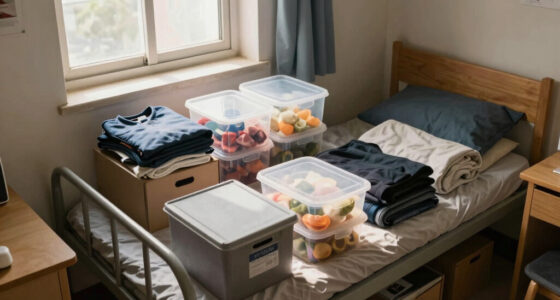
End-of-year is a key moment. Instead of tossing everything, donate or resell your items. Many campuses run free move-out donation programs that redirect gear to local charities or thrift stores, giving your items a second life and preventing unnecessary waste.
Textile recycling programs are expanding — some companies turn old sheets and clothes into insulation or cleaning rags. These initiatives help divert waste from landfills and give textiles a new purpose, reducing environmental impact. Check if your campus or local recycling center offers such services, and participate to keep your eco footprint small.
Buying durable, quality items from the start makes reuse easier. Items built to last are less likely to be discarded prematurely, and eco-friendly materials often degrade less over time, minimizing chemical leaching and pollution. Being mindful of end-of-life options ensures your efforts in sustainability extend beyond just purchase decisions, creating a continuous cycle of responsible disposal and reuse.
Overall, responsible handling and disposal of dorm bedding and decor at the end of the year help reduce waste, conserve resources, and promote a sustainable lifestyle—small acts that make a significant difference.
Frequently Asked Questions
Are eco-friendly dorm bedding options affordable?
Yes, especially if you shop secondhand or buy durable, quality pieces that last. While some organic or certified options cost more upfront, they often pay off in longevity and health benefits.
What certifications should I look for in eco dorm bedding?
Look for GOTS (organic textiles), OEKO-TEX Standard 100 (safe chemicals), and CertiPUR-US (foam safety). These labels are the best way to avoid greenwashed claims and ensure genuine eco-standards.
Is bamboo bedding sustainable?
Most bamboo bedding is made with chemical-heavy processes that aren’t eco-friendly. The better choice is bamboo lyocell, produced via a closed-loop process that recycles chemicals and uses less water.
What size bedding do dorms require?
Most dorms have Twin XL mattresses measuring 38″ x 80″. Always verify your school’s size before buying to avoid ill-fitting sheets or comforters.
How do I handle microplastic shedding from synthetic bedding?
Use microfiber-catching laundry bags or filters, wash in cold water, and consider natural fibers when possible. These steps help reduce plastic pollution from your laundry routine.
Conclusion
Making eco-friendly choices in your dorm isn’t just about the environment — it’s about your health, your budget, and being a conscious consumer. Focus on trusted labels, durable materials, and secondhand finds to build a greener space that feels like home.
Every small decision adds up. When you choose eco-friendly bedding and decor, you’re creating a healthier space for yourself and setting an example for others. Keep it simple, smart, and sustainable.