
TL;DR
The best ergonomic desk chairs for long study sessions combine adjustable lumbar support, breathable cushions, and sturdy build quality. An investment in a well-designed chair helps prevent back pain and boosts focus for hours.
Long study sessions can turn into pain traps without the right chair supporting your body. You might not realize how much your sitting posture affects your focus, energy, and comfort — until discomfort creeps in. Finding a chair that offers genuine ergonomic support isn’t about luxury; it’s about smart, practical investment in your study success.
In this guide, you’ll learn what features make a chair truly ergonomic, how to tell the difference between hype and real support, and which options fit small dorm spaces or tight budgets. Ready to sit smarter and study longer? Let’s get started.
Prioritize adjustable lumbar support, seat height, and tilt for long study comfort.
Compare chairs side-by-side to find a model balancing support, budget, and space needs.
Learn quick ergonomic adjustments to make your chair fit perfectly in seconds.
Consider smart, tech-enabled chairs for posture reminders and health monitoring.
Opt for space-saving designs like foldable or compact chairs suitable for dorm rooms.
Best Ergonomic Desk Chairs for Long Study Sessions
Sit smarter, focus longer. The best study chairs combine adjustable lumbar support, breathable cushioning and dependable build quality—turning comfort from a luxury into practical support for sustained concentration.
The four must-have features
Marketing language is easy. Useful ergonomics is measurable: the chair must adjust to your proportions, support neutral posture and remain comfortable as the hours accumulate.
Adjustable lumbar support
Supports the natural inward curve of the lower spine. Height or depth adjustment matters because a fixed pad may miss the correct position entirely.
Reduces slouching + fatigueSeat height and depth
Feet should rest flat while the back reaches the lumbar support. A useful seat-depth setting leaves a small gap behind the knees.
Supports circulation + thighsHead and neck support
A properly positioned headrest reduces the urge to crane forward. It is most valuable when reclining, reading or working with a raised display.
Eases neck + shoulder tensionBreathable, balanced seating
Mesh promotes airflow, while medium-firm cushioning distributes pressure without collapsing. Comfort should feel stable—not soft enough to distort posture.
Controls heat + pressure pointsWhich chair fits your space and budget?
Model B provides the strongest adjustment package, Model A protects a tight budget, and Model C offers the most balanced middle ground.
| Feature | Model A / Essential | Model B / Advanced | Model C / Balanced |
|---|---|---|---|
| Price range | $150–$200 | $250–$350 | $180–$250 |
| Adjustable lumbar | ✓ Yes | ✓ Adjustable pad | ✓ Yes |
| Seat-depth adjustment | ✗ No | ✓ Yes | ✓ Yes |
| Breathable mesh | ✓ Yes | ✓ Yes | ✓ Yes |
| Weight capacity | 250 lb | 300 lb | 275 lb |
| Best fit | ~ Tight budget | ✓ Maximum support | ~ Everyday value |
Adjust your chair in under two minutes
Plant your feet
Set seat height so both feet are flat and knees sit near 90 degrees.
Find the curve
Move lumbar support into the natural inward curve of your lower back.
Relax the arms
Raise armrests until elbows rest near 90 degrees without lifting shoulders.
Add a slight recline
Tilt back gently to redistribute pressure while maintaining screen visibility.
Align the screen
Place the monitor near eye level and keep wrists straight while typing.
Prioritize fit before extras
The feature-coverage bars reflect the supplied comparison: lumbar support and mesh appear across all three models, while seat-depth adjustment appears in two.
Smart features can turn feedback into healthier habits
Sensors and connected controls can flag poor posture, encourage movement and simplify adjustment. Their value comes from prompting action—not from replacing good chair fit or regular breaks.
Posture sensing
Detects prolonged asymmetry or slouching patterns.
Movement prompts
Encourages position changes before stiffness develops.
Saved settings
Restores preferred positions on shared or connected chairs.
Health patterns
Shows sitting trends that can guide better study routines.
From chair fit to better study focus
Green flags
- Controls are reachable while seated.
- Lumbar support moves to match your back.
- Seat depth leaves clearance behind the knees.
- Armrests allow relaxed shoulders and neutral wrists.
- Frame, casters and upholstery feel stable and durable.
Marketing red flags
- “Ergonomic” is claimed without listing adjustments.
- A thick cushion substitutes for structural support.
- The headrest pushes the head forward.
- The seat pan is too deep for smaller users.
- The chair fits the room but cannot fit the person.
How to Spot an Ergonomic Chair That Actually Supports Long Study Hours
Not all chairs labeled “ergonomic” deliver the support you need for hours of studying. Look for a chair that offers adjustable lumbar support, seat height, and tilt. These features let you customize your sitting position and prevent slouching or neck strain.
Imagine sitting for three hours straight — your chair should cradle your lower back, keep your feet flat on the floor, and your monitor at eye level. A chair with adjustable lumbar support and seat depth ensures your thighs aren’t squeezing or dangling. These are the keys to comfort.
Recent research confirms that chairs with multiple adjustment points significantly reduce fatigue and discomfort during prolonged sitting [2].
Why does this matter? Because a chair that doesn’t support your natural posture forces your muscles to work harder to compensate, leading to fatigue, discomfort, and even long-term musculoskeletal issues. Conversely, a well-adjusted ergonomic chair distributes your weight evenly, minimizes pressure points, and maintains spinal alignment, enabling you to focus longer without distraction from pain or discomfort. The tradeoff? More adjustable features often mean a higher price point, but the benefits for your health and focus are well worth the investment.
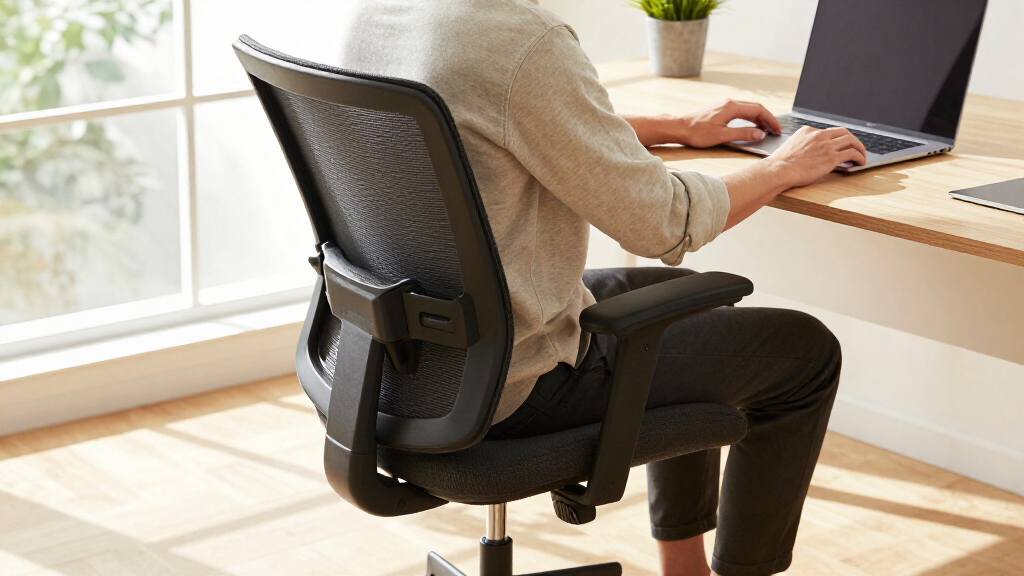
ergonomic desk chair with adjustable lumbar support
As an affiliate, we earn on qualifying purchases.
As an affiliate, we earn on qualifying purchases.
The 4 Must-Have Features for a Study-Ready Ergonomic Chair
- Adjustable Lumbar Support: Prevents lower back pain by maintaining your spine’s natural curve. Without proper lumbar support, your lower back may arch excessively or sag, leading to strain and discomfort over time. The ability to customize this support ensures your spine stays aligned, reducing fatigue and potential long-term damage.
- Seat Height & Depth Adjustment: Ensures your feet rest flat on the ground and thighs are supported. Proper seat height keeps your hips level and knees at a 90-degree angle, promoting good circulation. Seat depth adjustment allows you to sit back comfortably against the lumbar support without pressure behind your knees, which can cut off circulation and cause numbness.
- Head and Neck Support: Keeps your neck relaxed during long hours. A headrest that supports the natural curve of your neck reduces tension and prevents headaches caused by craning or tilting your head forward. This support is especially crucial if you use a laptop or monitor positioned higher than eye level, as it helps maintain a neutral head position.
- Breathable Material & Cushioned Seat: Prevents overheating and discomfort. Breathable mesh materials promote airflow, reducing sweat and heat buildup during extended sitting periods. A cushioned seat with appropriate firmness offers comfort while supporting your sit bones, preventing pressure points that can lead to soreness and distraction.
For example, a student might spend 8 hours in front of their laptop during finals week. A chair with these features helps keep them comfortable and focused, reducing the need to shift constantly or stand up for relief. The tradeoff? Chairs with advanced features tend to be more expensive, but investing in quality support can pay off in better concentration and fewer health issues over time.
breathable mesh ergonomic office chair
As an affiliate, we earn on qualifying purchases.
As an affiliate, we earn on qualifying purchases.
Compare Top Ergonomic Chairs for Students — Which One Fits Your Space and Budget?
| Feature | Model A | Model B | Model C |
|---|---|---|---|
| Price Range | $150-$200 | $250-$350 | $180-$250 |
| Adjustable Lumbar Support | Yes | Yes with adjustable pad | Yes |
| Seat Depth Adjustment | No | Yes | Yes |
| Breathable Mesh | Yes | Yes | Yes |
| Weight Capacity | 250 lbs | 300 lbs | 275 lbs |
In this comparison, Model B offers superior adjustability and support but costs more. Model A is budget-friendly, fitting tight dorm budgets but lacks seat depth adjustment. Model C hits a middle ground, suitable for most students who want comfort without overspending. Choosing the right model depends on balancing your specific ergonomic needs with your financial constraints. For instance, if you have back issues or spend many hours studying, investing in a model with more adjustability might save you from future health costs and discomfort. Conversely, if your budget is limited, selecting a basic yet adjustable model can still provide significant benefits, especially if you make proper ergonomic adjustments.
compact ergonomic study chair for small spaces
As an affiliate, we earn on qualifying purchases.
As an affiliate, we earn on qualifying purchases.
Quick Steps to Adjust Your Chair for Peak Comfort During Study
- Start by setting your seat height so your feet are flat on the ground and your knees are at a 90-degree angle, promoting good circulation and reducing strain on your lower back.
- Adjust the lumbar support to fit the curve of your lower back, ensuring no pressure points develop. Proper lumbar support maintains the natural inward curve of your lumbar spine, preventing slouching and reducing fatigue.
- Set armrests so your shoulders relax and elbows rest comfortably at 90 degrees. Proper arm positioning reduces tension in your neck and shoulders, which can become strained during extended periods of typing or writing.
- Tilt the chair slightly back to redistribute weight and reduce pressure on your spine. This slight recline helps maintain natural spinal curves and prevents stiffness or soreness.
- Check that your monitor is at eye level, and your wrists are straight when typing. Maintaining these positions minimizes neck and wrist strain, crucial for preventing repetitive strain injuries.
Imagine sitting at a desk where your back feels supported, and your eyes look naturally at your screen. That’s the goal of these simple adjustments, which can dramatically improve comfort and focus during long study hours. Remember, small tweaks can make a big difference in how your body feels after hours at your desk.
adjustable height ergonomic desk chair
As an affiliate, we earn on qualifying purchases.
As an affiliate, we earn on qualifying purchases.
Why Smart Features Make a Difference for Long Study Hours
Smart chairs with sensors and connectivity are changing the game. These chairs monitor your posture and remind you to move, stretch, or adjust. For instance, a student using a smart chair might receive a gentle alert after 30 minutes of poor posture — prompting a quick stretch or shift.
With rising awareness of sedentary health risks, features like automatic height adjustments or built-in posture reminders help prevent aches before they start. These technological enhancements are not just gimmicks; they serve a practical purpose by fostering healthier sitting habits. Research indicates that such features can improve posture compliance by up to 25%, which over time can reduce the incidence of musculoskeletal issues and enhance overall well-being. Incorporating these features into your study setup turns passive sitting into an active health practice, encouraging better habits and reducing the risk of pain or injury during long sessions.
Choosing a chair with some smart features can turn your study setup into a proactive health tool, especially during marathon sessions, helping you stay focused and pain-free.
Space-Saving Tips for Dorm Rooms: Fit an Ergonomic Chair Without Cluttering
Living in a dorm means space is tight. Look for chairs that fold or have a compact design. For example, a student might opt for a mesh-backed, foldable chair that tucks into a corner when not in use.
Choose models with a small footprint—around 24 inches wide—so they don’t crowd your desk or bed area. Multi-use chairs that double as storage or can stack are also worth considering.
Imagine easily slipping your chair under your desk after studying or stacking it away during cleaning. Small, versatile, and supportive—that’s the winning combo. Remember, the key is to select a design that doesn’t sacrifice ergonomic support for space-saving features. Look for chairs with adjustable features that can be locked into a compact position or folded flat, ensuring you don’t compromise on support or comfort just to save space.
Frequently Asked Questions
How long can I sit comfortably in an ergonomic chair without risking health issues?
Most ergonomic chairs are designed for prolonged sitting, but experts recommend taking a 5-minute break every hour to stretch or stand. This helps reduce strain and promotes circulation, especially during long study sessions.Are expensive ergonomic chairs worth the extra cost?
Yes, higher-end chairs often provide better durability, more adjustment options, and superior support, which can significantly improve comfort over many years. However, even budget models with key features can support long study hours effectively.What features should I look for if I want a chair that fits into a small dorm space?
Choose a compact, lightweight chair with a small footprint—around 24 inches wide—that can fold or stack easily. Look for models with breathable mesh and adjustable features for maximum flexibility in tight spaces.Can ergonomic chairs help with existing back or neck pain?
They can certainly help reduce discomfort by supporting natural posture and reducing strain. But if you already experience pain, consider consulting a healthcare professional for personalized advice in addition to choosing a supportive chair.Conclusion
Investing in an ergonomic chair isn’t just about comfort — it’s about protecting your body during those marathon study nights. Small adjustments and the right support can make hours at your desk feel less like a pain and more like a productive, pain-free session.
Think of your chair as your silent study partner. Choose wisely, adjust often, and your back will thank you. Now, go find the one that helps you sit smarter, study longer, and stay healthy.