
TL;DR
Effective noise-canceling headphones block distractions, enhancing focus. Prioritize comfort, sound quality, and battery life. New tech like adaptive ANC makes the experience even better.
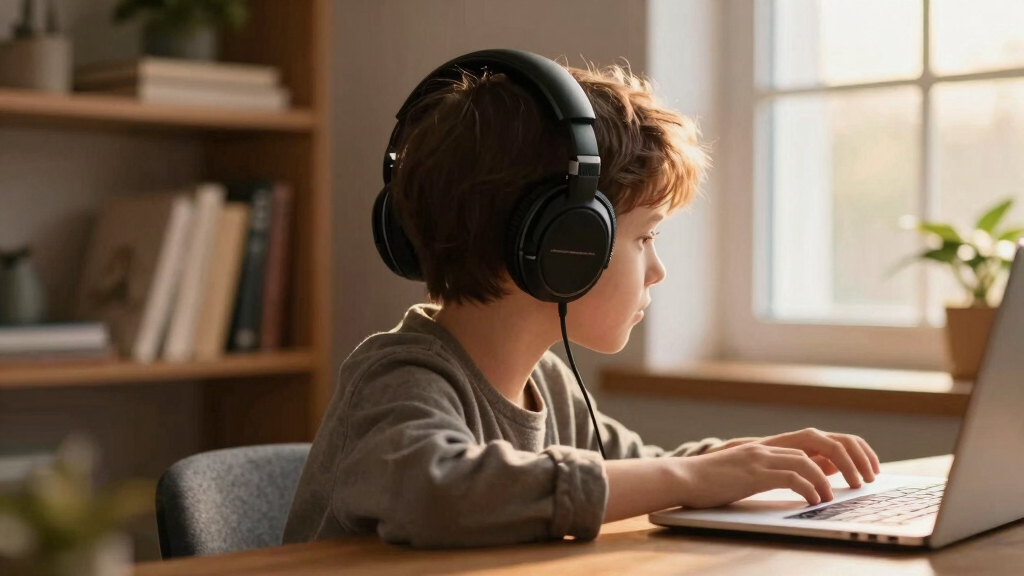
Imagine trying to study in a bustling dorm—loud neighbors, street noise, chatter. Now picture slipping on headphones that drown all that out, sharpening your focus instantly.
Choosing the right noise-canceling headphones isn’t just about blocking sound; it’s about finding a comfortable, reliable partner for hours of study. This guide covers what to look for, recent tech updates, and practical tips so you can pick the best fit for your study routine.
Prioritize noise cancellation style to match your environment—active, passive, or hybrid.
Comfort and fit are just as vital as sound quality for long study sessions.
Wireless headphones offer freedom, but check for at least 20 hours of battery life.
Recent tech like adaptive ANC and transparency modes boost usability and focus.
Match features like controls and connectivity to your study habits and budget.
Choosing the Right Noise-Canceling Headphones for Focused Study
The right pair does more than mute a bustling dorm, loud neighbors, street noise, or café chatter. It becomes a comfortable, dependable study partner that protects your attention for hours.
Prioritize the cancellation style for your environment, then balance comfort, clear sound, battery life, connectivity, and budget. Adaptive ANC makes that balance increasingly seamless.
Reported increase in noise-reduction effectiveness from recent algorithm improvements.
A practical minimum for covering multiple study sessions between charges.
“Choose for the room you study in—and the hours you intend to stay there.”
Three ways to quiet the world
Consistent low-frequency noise, sudden voices, and quiet-room distractions behave differently. Start with where you study most often.
Active ANC
Microphones and electronic processing counter ambient sound. It is especially useful against steady engine hum, HVAC noise, and continuous background chatter.
Best: cafés + commutingPassive Isolation
Thick earcups, padding, and a snug seal physically block sound. This can help with sudden or higher-frequency distractions without using battery power.
Best: libraries + quiet roomsHybrid ANC
Combines electronic cancellation with strong physical isolation for broader coverage. Expect greater flexibility, often with extra cost and weight.
Best: changing environmentsAt-a-glance comparison
| Option | Steady low noise | Sudden voices | Study flexibility | Typical tradeoff |
|---|---|---|---|---|
| Active ANC | ✓ Strong | ~ Moderate | ✓ High | Battery dependence |
| Passive isolation | ~ Moderate | ✓ Strong seal | ~ Medium | Clamp and heat |
| Hybrid ANC | ✓ Strongest | ✓ Broad coverage | ✓ Highest | Cost and weight |
| No isolation | ✗ Weak | ✗ Weak | ✗ Low | Frequent distraction |
Noise reduction gets you in. Comfort keeps you studying.
Use this weighting as a practical decision framework—not a laboratory score. Your environment may shift the balance, but no premium feature compensates for a painful fit.
Pick the right pair in five moves
Treat specifications as filters. The final decision should come from your real study routine, wearing comfort, and listening experience.
Map the noise
Identify your usual setting: busy dorm, commute, café, outdoor space, or quiet library.
Choose the method
Select active, passive, or hybrid cancellation based on the sound patterns around you.
Wear-test the fit
Check clamp pressure, earcup depth, heat, padding, weight, and headband adjustment.
Test real audio
Play familiar speech and music at a moderate volume; listen for clarity and distortion.
Verify daily utility
Confirm battery, quick charge, controls, pairing, portability, and price all fit your habits.
Comfort benchmark
Memory foam, breathable cushions, an adjustable headband, and evenly distributed pressure matter during long sessions.
Test beyond 30 minutesBattery benchmark
Wireless models improve mobility but need charging. For frequent three-hour sessions, extra capacity provides useful peace of mind.
20+ hours minimumSmarter headphones adapt instead of merely blocking
Recent improvements focus on changing environments, easier awareness, efficient power use, smoother pairing, and more responsible materials.
Automatic adjustment
Cancellation strength responds to the environment, helping avoid ineffective under-cancellation or uncomfortable over-cancellation.
Awareness on demand
Hear announcements, traffic, or a quick conversation without repeatedly removing the headphones.
Longer, easier use
Faster charging, longer playback, seamless smart-device pairing, and customizable sound profiles reduce friction.
Fewer interruptions
Touch controls and voice-assistant integration make it easier to change modes or playback without breaking concentration.
Study anywhere
Foldable designs and protective cases help headphones move safely between home, class, library, and commute.
Lower-impact choices
Some newer models incorporate sustainable or recyclable materials while retaining everyday durability.
Recent improvements in adaptive noise-canceling algorithms have increased noise-reduction effectiveness by up to 35%, making compatible headphones more reliable in noisy environments.
How the right choice reaches your study outcome
The best pair is the one you can forget you are wearing.
Balance performance and affordability. Budget options can cover essentials; premium pricing is most worthwhile when the added comfort, adaptive features, and battery gains match your routine.
What Type of Noise Cancellation Works Best for Study? Focus on These Three Options
Effective noise cancellation comes in three main styles: active, passive, and hybrid. Active Noise Cancellation (ANC) uses microphones and electronic circuitry to reduce ambient sound, which is especially effective against consistent, low-frequency noises like engine hum or chatter. Passive noise isolation relies on the physical design—thick ear cups and snug fit—to block sound naturally, which is crucial in environments with sudden or high-frequency noises. Hybrid models combine both approaches, offering flexibility and a broader range of noise reduction.
Understanding these differences helps you choose based on your typical study environment. For example, passive isolation is ideal in quiet settings where minimal external noise is present, while ANC can be a game-changer in noisy cafes or outdoor spaces. Hybrid models give you the ability to switch modes or benefit from both types, providing a customizable experience that adapts to your needs. The tradeoff often involves cost and weight—hybrids tend to be more expensive and slightly heavier—so consider what balance of features and comfort suits your routine best.

ProCase Hearing Protection Ear Muffs NRR 28dB, Noise Cancelling Headphones
- Hearing Protection Level: NRR 28 dB, ANSI S3.19 certified
- Adjustable Headband: Fits most adults and teens
- Comfortable Fit: Even pressure, no pinching
As an affiliate, we earn on qualifying purchases.
As an affiliate, we earn on qualifying purchases.
Why Sound Quality Matters and How to Spot Good Audio for Studying
Sound quality isn’t just about listening pleasure—it directly impacts your ability to concentrate. Clear, well-balanced audio ensures that speech, music, or lecture recordings come through without distortion or muddiness, which could otherwise distract or fatigue your ears over extended periods. When audio is crisp and detailed, your brain can process information more efficiently, reducing the cognitive load involved in deciphering unclear sounds.
High-quality headphones reproduce a wide range of frequencies—roughly 20Hz to 20kHz—allowing you to pick up subtle cues in speech or music. Furthermore, minimal distortion at higher volumes preserves audio integrity without causing ear strain. This means you can listen comfortably at lower volumes, which is healthier and less fatiguing in the long run. The implication is that investing in good audio quality enhances focus, reduces fatigue, and improves overall study efficiency. Conversely, poor sound quality can lead to frustration, misinterpretation of spoken content, and ultimately, decreased productivity. To gauge this, listen to familiar recordings or speech and assess whether the sound feels natural, balanced, and free of static or crackling—these are signs of good audio fidelity that support sustained concentration.

JBL Tune 770NC – Adaptive Noise Cancelling with Smart Ambient Wireless Over-Ear Headphones, Bluetooth 5.3, Up to 70H Battery Life with Speed Charge, Lightweight, Comfortable & Foldable Design (Black)
- Adaptive Noise Cancelling: Zero distractions with Smart Ambient
- Wireless Bluetooth 5.3: High-quality audio streaming with LE Audio
- JBL Pure Bass Sound: Rich, deep bass for immersive listening
As an affiliate, we earn on qualifying purchases.
As an affiliate, we earn on qualifying purchases.
Comfort and Fit: How to Stay Relaxed During Long Study Sessions
If your headphones cause discomfort after just 30 minutes, your focus will inevitably suffer. Long study sessions demand ergonomic designs that distribute pressure evenly and prevent fatigue. Over-ear headphones with plush ear cushions and adjustable headbands are typically better suited for extended wear, but not all models are created equal. Materials like memory foam conform to your ears, reducing pressure points, while breathable padding prevents sweating, which can be distracting and uncomfortable.
Imagine settling into a cozy library chair, slipping on headphones that feel like a gentle hug rather than a constricting clamp. That’s the experience you should aim for—no pinching, slipping, or overheating. Some models feature customizable ear cups or lightweight frames that reduce fatigue over hours of use. The tradeoff is that more comfortable, ergonomic designs might come at a higher price or slightly larger size, but the payoff is sustained comfort, which directly correlates with your ability to focus for longer periods. Prioritizing fit and comfort ensures your study sessions are uninterrupted by physical discomfort, allowing your mind to stay engaged without distraction from the equipment itself.

Soundcore by Anker Q20i Hybrid Active Noise Cancelling Headphones, Wireless Over-Ear Bluetooth, 40H Long ANC Playtime, Hi-Res Audio, Big Bass, Customize via an App, Transparency Mode (Black)
- Hybrid Noise Cancelling: Reduces up to 90% external noise
- Detailed Hi-Res Audio: Oversized 40mm drivers with BassUp technology
- Long Battery Life: 40 hours with ANC, 60 hours in normal mode
As an affiliate, we earn on qualifying purchases.
As an affiliate, we earn on qualifying purchases.
Battery Life and Connectivity: What You Need to Keep Focused Longer
Wireless headphones are popular because they eliminate the clutter of cords, providing freedom of movement that’s especially valuable during active or multi-tasking study sessions. However, battery life becomes a critical factor—no one wants their headphones dying halfway through a long session. Aim for models with at least 20 hours of playback, which allows for multiple study periods without recharging. Some advanced models offer fast-charging features, giving you several hours of use after just a few minutes of charging, which is especially helpful when you’re pressed for time.
Consider your typical study routine: if you often study for three hours or more, choosing headphones with 30+ hours of battery life provides peace of mind. Wired options eliminate battery worries altogether, but they restrict movement and can be less convenient if you move around a lot. The tradeoff involves convenience versus flexibility—wireless offers mobility but requires charging, while wired models are always ready but limit your range. Matching your choice to your study habits ensures you won’t be interrupted by low battery alerts or tangled cords, maintaining your focus and productivity.

Hybrid Active Noise Cancelling Bluetooth 6.0 Headphones 120H Long Playtime, 6 ENC Mic, Over Ear Headphones Wireless, Hi-Res Audio, Memory Foam Earcup, Transparency Mode ANC Headphone for Travel Office
- Hybrid Active Noise Cancelling: Reduces noise by up to 45dB
- Immersive Sound Quality: 40mm drivers deliver deep bass and clear highs
- Long Battery Life: Up to 120 hours of playback
As an affiliate, we earn on qualifying purchases.
As an affiliate, we earn on qualifying purchases.
Recent Tech Advances That Make Noise-Canceling Headphones Better Than Ever
Up to 2023, noise-canceling technology has seen rapid innovation, significantly enhancing user experience. Adaptive ANC is a breakthrough—this feature automatically adjusts the level of noise reduction based on your environment, providing optimal silence whether you’re in a quiet library or a bustling street. This dynamic adjustment prevents over- or under-cancellation, which can cause discomfort or ineffective noise reduction. Transparency modes have also become more sophisticated, allowing you to hear your surroundings clearly without removing your headphones—crucial for crossing streets or quick interactions without losing focus.
For example, a student walking between classes can switch to transparency mode to stay aware of traffic or announcements without removing their headphones. Longer-lasting batteries, eco-friendly materials, and seamless device pairing with smartphones or tablets further improve usability. These advances mean headphones are now more adaptable, comfortable, and efficient, directly translating into better focus and less frustration during study sessions. The implication is that investing in models with these features can significantly enhance your study environment, especially in dynamic or unpredictable settings.
How to Pick the Perfect Noise-Canceling Headphones in 5 Simple Steps
- Assess your typical environment—busy dorms, outdoor, quiet library—to determine which noise cancellation features will be most effective. For example, if you frequently study outdoors, look for models with strong ANC and good wind noise reduction.
- Decide on wired or wireless based on your mobility needs, budget, and whether you prefer hassle-free connectivity or consistent sound quality without battery concerns. Consider whether your environment involves a lot of movement or fixed locations.
- Prioritize comfort—try on different models if possible, and look for ergonomic designs with adjustable features. Remember, longer sessions demand a snug but not tight fit, with breathable materials to prevent discomfort.
- Check battery life—aim for 20+ hours for all-day study sessions, and consider models with quick-charging capabilities if you’re often pressed for time. Longer battery life reduces interruptions.
- Match features—evaluate ANC effectiveness, transparency mode, controls, and price—based on your specific needs and budget. Balance what’s essential versus optional to find the best fit for your routine.
For example, if your primary environment is noisy cafes, focus on ANC and battery life. If you study mainly in quiet libraries, passive isolation might suffice, saving you money and weight. This step-by-step approach ensures you select headphones that truly support your focus and comfort.
Comparison Table: Wired vs. Wireless Noise-Canceling Headphones
| Feature | Wired Headphones | Wireless Headphones |
|---|---|---|
| Sound Quality | Consistent, no latency, often higher fidelity due to direct connection | Comparable to wired, but may introduce slight latency depending on Bluetooth version |
| Battery Life | None required, always ready | Typically 20-40+ hours, enabling extended use without charging |
| Mobility | Limited by cord length, restricts movement | High, allows free movement during study or activity |
| Convenience | Less hassle, always ready, no need to charge | Requires charging and pairing, but offers more flexibility |
| Durability | Less prone to connection issues, generally more robust | Vulnerable to connectivity drops or interference, but modern models are improving |
Frequently Asked Questions
How do noise-canceling headphones improve focus during study?
They block out distracting sounds, creating a quieter environment that helps your brain concentrate on the task at hand. This reduction in noise can boost productivity by up to 40%, according to recent studies.
Are wired or wireless noise-canceling headphones better for studying?
Wireless headphones offer more freedom of movement and less clutter, but wired ones provide consistent sound quality without battery concerns. Choose based on your study environment and preference for convenience.
What is the difference between active and passive noise cancellation?
Active noise cancellation uses microphones and electronics to reduce ambient sounds, while passive relies on physical barriers like ear cups and padding. Combining both in hybrid models offers the best of both worlds.
How long should the battery last for effective study sessions?
Look for headphones with at least 20 hours of playback, so you can study multiple sessions without recharging. Longer battery life means fewer interruptions.
Are noise-canceling headphones safe for long-term use?
Yes, when used at moderate volume levels. Prolonged exposure to high volumes can cause hearing damage, so set your volume wisely and take breaks.
Conclusion
Picking the right noise-canceling headphones isn’t just about shutting out noise; it’s about creating a quiet, comfortable space for your mind to thrive. When you focus better, studying becomes less of a chore—more of a conversation with your goals.
Remember, the best headphones fit your environment, your comfort, and your budget. A good pair can turn a noisy dorm into your personal sanctuary of concentration. Now, grab your favorite playlist and get ready to dive into deep focus.