TL;DR
In small dorm rooms, multi-functional furniture is a game-changer. Items like bed risers with outlets, foldable desks, and storage ottomans maximize space, making your room both practical and cozy. Choosing versatile pieces saves money and reduces clutter over four years.
Imagine a dorm room where every inch works for you—where your bed, study area, and storage all coexist without feeling cramped. That’s the power of multi-functional furniture. It’s not just about saving space; it’s about creating a room that feels open, organized, and personalized. You want furniture that adapts to your needs, withstands the chaos of move-in day, and fits within your budget.
Whether you’re sharing a room or flying solo, smart choices in furniture can turn a tiny space into a sanctuary. This guide walks you through the best pieces that do more than one job—so you can study, sleep, and relax without sacrificing square footage or style.
Prioritize multi-use furniture that combines storage, seating, and sleeping functions to maximize tiny dorm rooms.
Measure your space and check university rules before buying to avoid surprises and ensure safety.
Opt for lightweight, foldable, and easy-to-disassemble pieces for hassle-free move-in/move-out.
Vertical storage and Wall-mounted solutions make full use of limited space, keeping clutter out of sight.
Invest in durable, quality pieces—these will serve you through college and into your first apartment.
Best Multi-Functional Furniture Pieces for Dorm Rooms
Make every square foot work twice. The smartest dorm furniture combines storage, seating, studying, sleeping, and charging—without turning a compact room into an obstacle course.
Six pieces that earn their footprint
Prioritize furniture that solves an everyday problem while adding a second useful function. Portability and damage-free installation matter nearly as much as capacity.
Powered bed risers
Lift a Twin XL bed 6–12 inches to unlock storage below while adding convenient outlets or USB charging near the mattress.
Storage ottoman
A compact seat, footrest, side table, and hidden closet for blankets, shoes, linens, or out-of-season clothing.
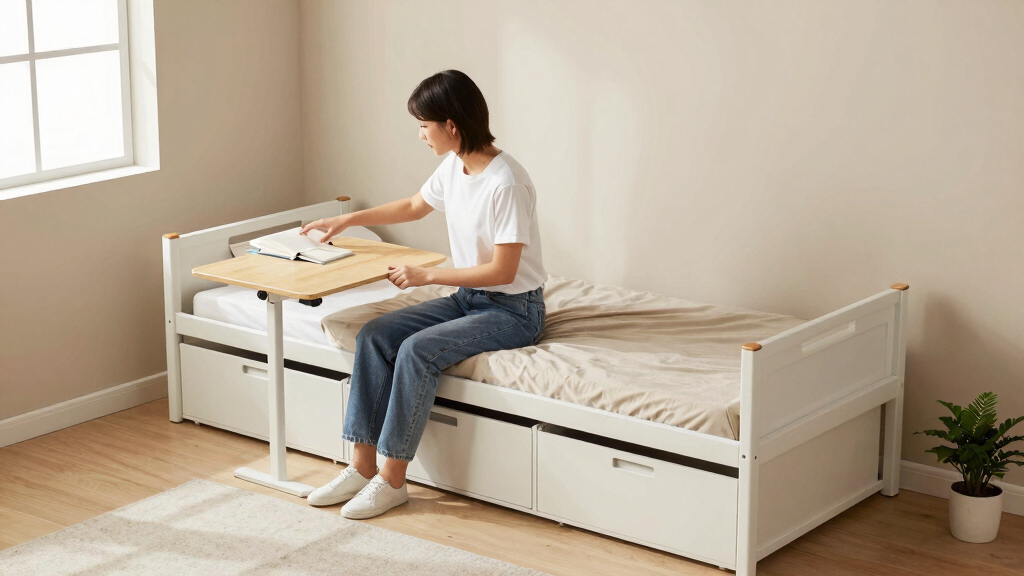
Foldable desk
Creates a focused study surface, then folds flat when floor space is needed. Freestanding versions avoid wall damage.
Three-tier cart
Switches between nightstand, pantry, bathroom caddy, printer station, and mobile study-supply hub.
Convertible chair
Offers daytime seating and unfolds into a guest bed. Best where comfort matters more than ultra-low weight.
Cube organizer
Works as a bookshelf, closet supplement, TV stand, or subtle room divider; fabric bins keep visual clutter hidden.
Match the piece to your priority
The “best” option depends on the job your room needs most: concealed storage, flexible floor area, portability, or overnight comfort.
| Furniture piece | Typical size | Price | Storage | Seating | Portable | Rule risk |
|---|---|---|---|---|---|---|
| Powered bed risers | 6–12 in tall | $20–$50 | ✓ | ✗ | ✓ | ~ |
| Storage ottoman | 16–20 in wide | $30–$80 | ✓ | ✓ | ✓ | ✓ |
| Foldable desk | 24–36 in wide | $50–$150 | ~ | ✗ | ✓ | ~ |
| Rolling cart | 12–15 in wide | $25–$60 | ✓ | ✗ | ✓ | ✓ |
| Convertible chair | 24–30 in seat | $100–$250 | ✗ | ✓ | ~ | ✓ |
| Cube organizer | 6–8 cube unit | $40–$120 | ✓ | ✗ | ~ | ✓ |
Utility beats novelty
The strongest dorm-room purchases combine daily usefulness with easy moving. A rolling cart or ottoman may look simple, but both adapt to far more situations than a single-purpose accent piece.
From room rules to move-in ready
A five-step filter prevents expensive surprises and keeps furniture aligned with how you actually live.
Read the rules
Check loft, riser, adhesive, drilling, appliance, and electrical restrictions.
Map the route
Measure the room, doorway, hall, elevator, and available wall height.
Name the main job
Choose storage, seating, sleep, study, or charging as the primary need.
Check the tradeoff
Balance stability, comfort, weight, assembly, access, and useful capacity.
Buy for four years
Favor durable, reusable pieces that can transition into a first apartment.
Move smarter, replace less
Temporary rooms reward furniture that can fold, stack, disassemble, and reappear next semester without missing hardware.
Photograph assembly
Capture each connection and hardware position so next year’s setup is faster and less frustrating.
Label every fastener
Keep screws, brackets, and tools in a labeled bag attached securely to the matching furniture piece.
Fold, nest, and stack
Reduce storage volume by nesting bins, collapsing ottomans, and selecting furniture with a flat-pack profile.
Reuse, resell, donate
Neutral, durable, modular pieces transition more easily to an apartment or retain value for resale.
Measure twice. Buy once.
Good multi-functional furniture does not merely fit the room—it fits the rules, daily routine, move-out plan, and budget.
Fit and safety
- Confirm Twin XL dimensions for every bed-adjacent product.
- Verify manufacturer weight limits and reinforced joints.
- Leave clear walking paths and access to doors and windows.
- Use freestanding, clamp-on, tension, or approved adhesive solutions.
- Check that powered products are permitted by housing policy.
Value and longevity
- Look for at least two genuinely useful functions per piece.
- Choose tool-free, foldable, stackable, or simple flat-pack designs.
- Read reviews focused on stability after months of daily use.
- Prefer wipe-clean surfaces and replaceable fabric storage bins.
- Consider secondhand, campus surplus, or take-back options.
The winning dorm-room formula
One elevated sleep zone + one mobile storage piece + one hidden-storage seat + vertical, damage-free organization.
How to Choose Furniture That Does Double Duty Without Breaking the Rules
Start with your dorm’s rules. Many schools ban lofts or drilling into cinder blocks. Look for freestanding, damage-free options that clip, clamp, or rest without tools. Measure your room and doorways to pick pieces that actually fit in—nothing worse than ordering a giant storage cube only to find it won’t get through the hall.
Think about what you need most: storage, seating, or sleeping space? Prioritize versatile pieces that serve multiple roles. For example, a storage ottoman can be a seat, footrest, and hidden closet all in one. Budget-wise, aim for items in the $50–$150 range—these often balance quality with affordability and durability.
Finally, consider the weight and disassembly. Lightweight, foldable, or flat-pack furniture makes move-in and move-out a breeze. Your goal? Pieces that survive the semester and can be stored or reused next year.
Understanding the tradeoffs is key: opting for damage-free, lightweight furniture might mean sacrificing some durability or style. Weigh your priorities—if frequent moving is expected, portability might matter more than ornate design. Conversely, if you want something sturdy that lasts, be prepared for slightly heavier or more complex assembly, which could make future moves a bit more challenging but offer long-term durability.
multi-functional dorm room furniture
As an affiliate, we earn on qualifying purchases.
As an affiliate, we earn on qualifying purchases.
Top 5 Multi-Functional Furniture Pieces That Save Space and Stress
| Piece | Functions | Size & Dimensions | Price Range |
|---|---|---|---|
| Bed risers with outlets | Raises bed, creates under-bed storage, provides charging | Usually 6-12″ tall, fits Twin XL beds (~38″ wide) | $20–$50 |
| Storage ottoman | Seating + hidden storage + footrest | 16–20″ diameter, 16–18″ tall | $30–$80 |
| Fold-down desk | Desk + wall-mounted surface, folds away | Work surface 24–36″ wide, 20″ deep | $50–$150 |
| Rolling storage cart | Storage + movable surface | 3 tiers, 12–15″ wide each | $25–$60 |
| Convertible sofa chair | Seating + guest bed | Seat width 24–30″, unfolds into twin-size bed | $100–$250 |
These pieces prove you don’t need a large room to have everything you want. They help you create zones for sleeping, studying, and relaxing—without cluttering your tiny space. However, consider the tradeoffs: some multi-functional furniture might compromise on comfort, style, or ease of access. For example, fold-down desks may be less stable than traditional desks, and convertible sofas might take time to set up. Weigh these factors based on your lifestyle—if quick access and comfort are priorities, choose carefully to balance function and convenience.
space-saving foldable desk for dorms
As an affiliate, we earn on qualifying purchases.
As an affiliate, we earn on qualifying purchases.
How to Maximize Storage Using Multi-Functional Pieces
Imagine your bed as a treasure chest. Bed risers with built-in outlets lift your mattress, revealing space for storage bins or a small shoe rack underneath. Use fabric bins inside cube organizers to hide clutter and keep things tidy.
Attach over-the-door organizers for shoes, accessories, or snacks—no drilling needed. A rolling cart can slide between your desk and bed, acting as a mobile pantry or study supply station. When you’re done, fold or tuck away these pieces to open up space for sleeping or relaxing.
Pro tip: Use vertical space! Wall-mounted shelves or clip-on pockets turn boring walls into storage hubs. This is especially handy for holding chargers, books, or small decor that makes your room feel more like home. Keep in mind that adding too many storage solutions can make a small space feel cluttered if not organized carefully. Balance is key: choose a few strategic pieces and maintain a tidy arrangement to maximize the sense of openness while still benefiting from extra storage.
As an affiliate, we earn on qualifying purchases.
The Secret to Choosing Furniture That Lasts Four Years
Durability matters more than you think. Lightweight, sturdy materials—like engineered wood or high-quality plastic—stand up to frequent moves and daily use. Check product reviews for real-world feedback on how furniture holds up after semester-long wear and tear.
Look for pieces with simple assembly—tool-free or snap-together designs save time and frustration. Consider investing a bit more in versatile, well-made items that can double as furniture for your first apartment after college. Remember, the initial investment in durable furniture can pay off over time, as replacing cheap, fragile pieces frequently can become costly and inconvenient. Also, think about the long-term implications: choosing quality now can mean fewer headaches and better aesthetics as you transition from dorm to apartment.
And don’t forget to verify weight limits—overloaded storage or lofts can be unsafe. A good rule? If it feels flimsy or unstable, keep shopping. Prioritize safety and longevity by selecting furniture with reinforced joints and quality materials, even if it costs a bit more upfront.
As an affiliate, we earn on qualifying purchases.
Smart Tips for Moving and Storing Your Multi-Functional Furniture
Over the four-year college journey, you’ll move multiple times. Choose furniture that’s easy to disassemble, fold flat, or stack. Keep hardware in labeled bags or small containers—no lost screws here.
Store pieces in a closet, under your bed, or in a dorm closet bin during breaks. When summer hits, lightweight items can be carried in a single trip, saving stress and time.
Pro tip: Take photos during assembly for quick reassembly next year. Additionally, consider the long-term value of your furniture—if you plan to upgrade or downsize after college, select pieces that can be easily resold or donated. This approach reduces waste and can even help recover some of your initial investment.
Frequently Asked Questions
What furniture is actually allowed in dorms?
Most dorms ban lofts, nails, and heavy drilling. Look for freestanding, damage-free options like tension rod shelves, clip-on lamps, and furniture that rests on the floor or attaches without tools. Always check your school’s specific rules before buying.
What size is a dorm bed, and will my furniture fit?
Most dorm beds are Twin XL, measuring roughly 38″ wide by 80″ long. When shopping, double-check bed dimensions and mattress thickness. Measure doorways, hallways, and elevators to ensure your furniture can get into your room without a hitch.
How do I add storage without drilling holes?
Use tension rods, adhesive hooks, over-the-door organizers, and stackable storage bins. These options hold up well in dorms and keep your space neat without risking damage or violating rules.
Are bed risers safe? Do colleges allow them?
Bed risers are generally safe when used within weight limits and with sturdy beds. Most colleges permit them, but always verify your housing policies. Ensure your bed frame can handle the added height and weight.
Conclusion
Every square foot in a dorm counts—choose furniture that does more with less. The right multi-functional pieces turn your cramped room into a personal oasis of order and comfort. Remember, smart furniture isn’t just about space; it’s about making your college years smoother and more enjoyable.
Start with a plan, measure twice, and pick versatile pieces that grow with you. Your tiny dorm can become a surprisingly cozy, organized home—one piece of furniture at a time.