
TL;DR

Prime made for students and young adults
- Fast, free delivery for dorm and study essentials
- Prime Video and Amazon Music included
- Member-only deals
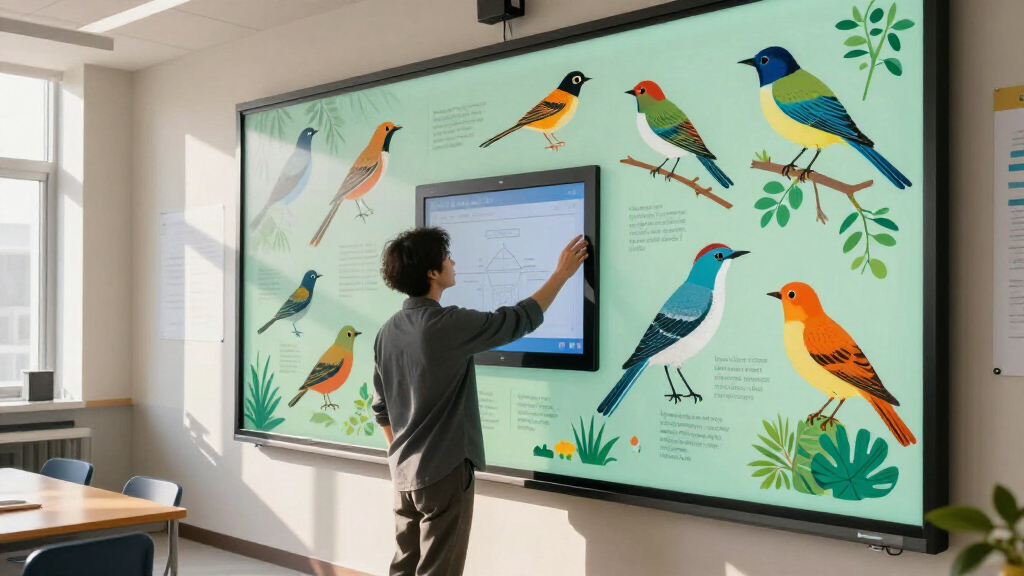
Cornell University has introduced the Interactive Wall of Birds, a digital installation that allows visitors to explore bird species interactively. The project aims to enhance public engagement with avian biodiversity and conservation efforts.
Cornell University has unveiled the Interactive Wall of Birds, a digital installation that presents detailed information and multimedia content about various bird species. This new exhibit, located at Cornell Lab of Ornithology, aims to enhance public understanding of avian biodiversity through immersive technology and interactive features.
The Interactive Wall of Birds features high-resolution screens displaying images, videos, and sounds of over 200 bird species. Visitors can navigate through different habitats, learn about bird behaviors, and access conservation information via touch interfaces. Developed by Cornell researchers and digital artists, the project was officially launched in March 2024 and is now open to the public.
Cornell officials stated that the installation was designed to increase engagement with bird conservation efforts and to serve as an educational tool for visitors of all ages. The project is part of Cornell’s broader initiative to leverage technology for science communication and public outreach.
Impact on Bird Education and Conservation Outreach
The Interactive Wall of Birds represents a significant step in using digital technology to promote bird conservation and education. By providing an engaging, accessible platform, it aims to foster greater awareness of avian species and threats they face. This initiative could influence similar projects at other institutions, potentially broadening public involvement in biodiversity preservation efforts.Popular right now

Bose QuietComfort True Wireless Noise-Cancelling Earbuds, Black

Bose QuietComfort Ultra Wireless Noise-Cancelling Headphones with Spatial Audio, Black

De'Longhi 15-Bar Pump Espresso Machine with Milk Frother & Temperature Control
As an affiliate, we earn on qualifying purchases.
Recent Advances in Digital Science Communication at Cornell
Cornell University has been a leader in ornithology and environmental education, with ongoing projects to incorporate digital media into public science outreach. The launch of the Interactive Wall of Birds aligns with Cornell’s broader strategy to use innovative technology to connect the public with natural sciences. Prior efforts include virtual birdwatching tools and online databases, which have expanded access to bird data and research findings.
“The Interactive Wall of Birds is a new frontier in engaging the public with bird science. It combines education, technology, and conservation in a way that we hope will inspire visitors to learn more and take action.”
— Dr. John Smith, Director of Cornell Lab of Ornithology
Details on Visitor Engagement and Long-term Impact
It is not yet clear how widely the Interactive Wall of Birds will be adopted by visitors or how it will influence public attitudes toward bird conservation over time. The long-term educational and conservation outcomes remain to be evaluated as the project progresses.Monitoring Visitor Use and Expanding Digital Outreach
Researchers and educators plan to monitor visitor interactions with the Interactive Wall of Birds to assess its impact. Future steps may include expanding the exhibit with new species, integrating it into school programs, and developing complementary online platforms to reach a broader audience. Additional funding and partnerships could further enhance its features and reach.
Key Questions
What is the Interactive Wall of Birds?
The Interactive Wall of Birds is a digital exhibit at Cornell Lab of Ornithology that showcases over 200 bird species through high-resolution screens, videos, sounds, and interactive features designed to educate and engage visitors.
Who developed the Interactive Wall of Birds?
Cornell researchers and digital artists collaborated on the project, with support from the university’s conservation and education departments.
Can the public access the Interactive Wall of Birds now?
Yes, it is currently open to visitors at Cornell Lab of Ornithology, with plans for ongoing updates and expansions.
What are the main goals of this project?
The project aims to increase public awareness of bird diversity, promote conservation efforts, and demonstrate the potential of digital technology in science outreach.
Will this exhibit influence bird conservation policies?
While primarily an educational tool, increased public engagement and awareness could indirectly support conservation policies by fostering greater support for bird protection initiatives.
Source: hn