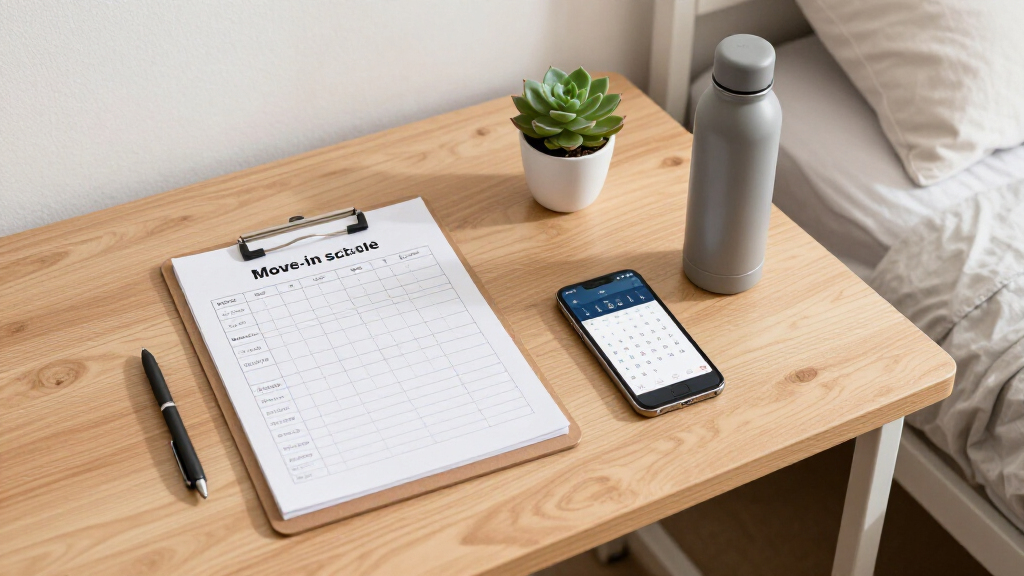

TL;DR
Start early with clear communication. Stagger arrival times within your assigned slots. Decide who sets up first based on logistics. Use shared checklists to split shared items. Planning ahead prevents chaos and awkwardness on move-in day.
Imagine dragging your heavy suitcase and boxes into a tiny dorm room, only to find your roommate already unpacked, claiming the best bed and closet space. That first chaotic hour can shape your entire living experience. But a little planning—and honest communication—can turn move-in day into a smooth, even enjoyable, start.
In this guide, you’ll learn how to coordinate schedules, split shared items, and set the tone for a positive roommate relationship from day one. Moving in together isn’t just about logistics — it’s about setting a foundation for your college years.
Contact your roommate early and discuss move-in plans, shared items, and schedules.
Stagger arrival times within your assigned window to reduce hallway congestion.
Agree on who claims beds and setups in advance to avoid conflicts.
Use shared checklists for splitting shared items fairly and clearly.
Coordinate deliveries and family helpers to avoid overcrowding and chaos.
Tips for Coordinating Dorm Move-In Schedules with Roommates
Start early, stagger arrival times, and decide who sets up what before the first box reaches the hallway. A simple shared plan prevents gridlock, duplicate purchases, territorial tension, and an awkward beginning to life together.
The six-part roommate move-in playbook
Handle the choices that cause friction while everyone is still calm, rested, and nowhere near a crowded elevator.
Reach out early
Use the housing portal, a group chat, email, or social media. Compare arrival plans, sleep schedules, study habits, and what each person already owns.
Stagger arrivals
Choose different times inside assigned windows—or consecutive slots when permitted—so two families are not unloading into the same tiny space.
Put logistics first
The roommate with a loft, bulky furniture, or more boxes should usually set up first. The lighter mover benefits from clearer paths later.
Divide common items
Assign the mini-fridge, microwave, rug, fan, TV, curtains, and cleaning supplies in a shared checklist. Record ownership as well as responsibility.
Coordinate packages
Send large orders to a parcel center or arrange delivery after both roommates arrive. Confirm who can receive anything shipped early.
Manage the helpers
Agree on family headcount, unloading order, parking responsibilities, and departure times. More helpers do not always mean faster progress.
Turn one crowded slot into three clean phases
If both roommates receive a 9–11 AM window, offset unloading and setup inside that window while respecting the university’s check-in rules.
Roommate A checks in
Unload loft parts, furniture, and bulky boxes first. Keep shared floor space clear.
Paths begin to clear
Helpers finish heavy assembly, break down packaging, and move the vehicle.
Roommate B arrives
Unload lighter belongings with less elevator traffic and more usable room space.
Never assume that “staggering” means ignoring campus rules. Showing up outside an assigned appointment may lead to a long wait or refused entry.
Who goes first—and who brings what?
Fair does not always mean identical. Use practical needs to decide setup order, then use a visible checklist to make shared-item responsibilities transparent.
First-setup decision rule
Shared-item checklist
Record three things: who buys it, who owns it, and what happens to it at the end of the year.
Compare the common arrival strategies
The best arrangement balances campus restrictions, heavy setup needs, travel realities, and shared access to the room.
| Strategy | Congestion | Setup efficiency | Fairness | Best use |
|---|---|---|---|---|
| Same exact arrival | ✗ High | ✗ Low | ~ Neutral | Only when campus rules leave no alternative |
| Stagger inside one slot | ✓ Lower | ✓ Strong | ✓ Strong | Roommates assigned the same appointment window |
| Consecutive slots | ✓ Lowest | ✓ Strong | ✓ Strong | Large campuses with selectable appointment times |
| Different move-in dates | ✓ Lowest | ~ Variable | ~ Needs rules | International, out-of-state, or early-arrival students |
| Unannounced early claim | ✓ Lower | ~ Fast | ✗ Poor | Never recommended; likely to create resentment |
Every extra arrival compounds the bottleneck
A typical double room, narrow hallway, limited elevator, and tight unloading zone leave little margin for two households moving at once.
Illustrative reduction in hallway congestion associated with coordinated arrival timing.
A small plan creates a better first day
Move-in coordination is not merely logistical. Each decision signals respect, reliability, and willingness to share a limited space.
Start the conversation
Share timing, needs, and expectations.
Stagger arrivals
Reduce hallway and elevator competition.
Assign responsibilities
Prevent duplicates and unclear ownership.
Control the setup
Sequence helpers, furniture, and deliveries.
Build trust
Begin the roommate relationship cooperatively.
Confirm the plan one final time
Send a short message with arrival times, helper counts, large items, delivery details, and the agreed bed or desk process. Screenshots are useful when cell service becomes unreliable on campus.
Follow the official appointment, bring only personal essentials, label your belongings, avoid claiming more than half the storage, and ask housing staff how to document unresolved room assignments.
Move-in confirmation
When to Reach Out and What to Talk About Before Move-In
The moment your housing assignment hits your inbox, it’s time to reach out. Contact your roommate early, ideally in June or July. Use the school’s messaging system, social media, or email to introduce yourself. Ask about their move-in plans, what they’re bringing, and whether they want to coordinate shared items like a mini-fridge or microwave.
Make it a two-way street. Discuss your sleep schedule, study habits, and even your decorating style. Being upfront helps avoid surprises and awkward moments later. For example, if your roommate plans to sleep late and you’re an early riser, you can plan your mornings accordingly.
dorm room moving organizer checklist
As an affiliate, we earn on qualifying purchases.
As an affiliate, we earn on qualifying purchases.
How to Stagger Your Arrival Times for a Stress-Free Move-In Day
Most colleges assign specific move-in time slots, often spanning a few hours. Use this window to plan staggered arrivals. For example, if your slot is 9–11 AM, coordinate with your roommate to arrive at different times within that window—say, one at 9:30, the other at 10:30.
This strategy is crucial because it directly impacts how smoothly the day unfolds. By arriving at different times, you reduce the chaos of multiple people trying to access elevators or hallways simultaneously. It also allows each person to settle in without feeling rushed or overwhelmed, which can help foster a more cooperative relationship from the start. Remember, a crowded hallway or elevator can cause frustration and even minor conflicts, so spreading out arrivals helps maintain a calm environment. Additionally, arriving in shifts can give each roommate the chance to prioritize which items to unpack first, making the process more organized and less stressful.
collapsible moving boxes for college dorm
As an affiliate, we earn on qualifying purchases.
As an affiliate, we earn on qualifying purchases.
Who Gets to the Room First and How to Decide Beds and Setup
Deciding who claims the bed or desk first can get tense if left unspoken. Agree on a plan beforehand: some choose first-come, first-served; others flip a coin or pick based on who arrives first. If one of you has more heavy furniture or plans to loft the bed, that person should probably go first.
Having this plan in place is important because it prevents misunderstandings and feelings of unfairness. For example, if you have a loft bed that requires heavy lifting, it makes sense for you to go first to get it set up properly. Conversely, if one roommate has minimal belongings, they might be able to start unpacking and organizing more quickly. Clarifying these roles helps avoid last-minute disputes and ensures each person’s needs are considered, ultimately leading to a smoother setup process. Moreover, this early agreement can set a tone of respect and cooperation, which is vital for a positive roommate relationship.
As an affiliate, we earn on qualifying purchases.
Splitting Shared Items Without Drama — Use a Checklist
Shared items like a mini-fridge, microwave, rug, or TV can spark fights if not allocated fairly. Use a shared spreadsheet or checklist—Google Sheets or a simple list works wonders. List everyone’s items and mark who is responsible for what.
Creating this checklist is more than just dividing belongings; it’s about establishing transparency and mutual understanding. When both roommates see what is being shared and who is responsible for each item, it minimizes the chance of last-minute disputes. For example, if one person is responsible for the mini-fridge and the other for the microwave, each knows their role, which reduces confusion and potential conflicts. Discussing and agreeing on responsibilities early also encourages accountability and respect. This proactive approach can prevent awkward conversations or disagreements later, making the move-in process smoother and more collaborative.
As an affiliate, we earn on qualifying purchases.
Coordinating Large Deliveries and Shipping Items
If you’re ordering furniture or supplies online, coordinate delivery timing. Schedule shipments to arrive after both of you are there, or to a designated pickup point. Many schools offer campus lockers or parcel centers for safe drop-off.
This coordination is vital because it directly influences how efficiently your room gets set up. Receiving packages when both roommates are present ensures that neither of you has to handle heavy or fragile items alone, which can be physically taxing and stressful. It also prevents packages from sitting unattended, which could lead to loss or theft. Planning delivery dates carefully—such as scheduling shipments to arrive after your roommate’s arrival—demonstrates respect for each other’s schedules and avoids unnecessary logistical challenges. It also helps prevent last-minute scrambling or missed deliveries, which can delay setup and cause frustration.
Getting Family Involved Without Causing Chaos
Family help can be a blessing or a bottleneck. Agree on how many helpers each person brings and when they leave. Two adults per student usually work best; more can make tight spaces feel cramped.
This planning is crucial because too many helpers or poorly coordinated visits can turn move-in into a chaotic scene. Overcrowding can make the space feel claustrophobic and hinder the unpacking process. Additionally, having a clear plan for when family members arrive and depart helps keep the process organized and reduces stress for everyone involved. For example, if parents are helping unload, scheduling their arrival at different times or asking them to leave once the essentials are in place ensures the room remains manageable. This approach fosters a respectful environment and allows the students to take ownership of their space, which is important for developing independence and confidence.
Handling Different Move-In Dates or International Arrivals
If your roommate is arriving days before or after you, plan accordingly. Coordinate what gets shipped or brought early and who will be there to receive deliveries. For international students, consider shipping essentials ahead of time to avoid delays or missed pickups.
This coordination is essential because mismatched arrival times can complicate setup and lead to duplicated efforts or forgotten items. When one roommate arrives early, they can set up the room and receive packages, which benefits both of you by ensuring the space is ready and your belongings are secure. Conversely, if you arrive later, you can avoid unnecessary hauling or re-arranging. Planning in advance prevents logistical headaches and helps both of you feel prepared, fostering a smoother transition into college life.
Clashing Styles? How to Respect Different Decor Choices
Roommate style clashes happen. Discuss decor preferences early. Agree on a color scheme, posters, or shared themes. If one likes bright neon and the other prefers muted tones, find a compromise—perhaps a colorful throw pillow or a shared tapestry.
Having this conversation early is vital because it helps set boundaries and manage expectations. When roommates understand each other’s tastes, they can find creative ways to incorporate both styles without feeling overwhelmed or disrespected. For example, setting aside a space for personal decorations or choosing neutral base items can preserve harmony. Respectful communication about decor not only prevents tension but also encourages a collaborative environment where both roommates feel comfortable and valued in their shared space.
First Week Tips to Keep Everything Running Smoothly
After move-in, keep communication open. Check in daily about shared spaces, quiet hours, and personal boundaries. Use a simple roommate agreement—cover cleaning, guests, and noise. Small issues should be addressed early, before they fester.
This ongoing communication is crucial because it helps prevent small annoyances from escalating into bigger conflicts. Establishing clear expectations early and revisiting them as needed can foster mutual respect and understanding. For example, if one roommate’s music is too loud during study hours, addressing it promptly prevents resentment. Regular check-ins create an environment where issues are dealt with constructively, strengthening your roommate relationship and making the living situation more comfortable for both of you.
Frequently Asked Questions
When should I first contact my roommate, and what should we talk about?
Reach out as soon as you get your housing assignment, ideally in June or July. Talk about move-in plans, shared items, sleep habits, and decorating styles. Early communication builds trust and prevents surprises.
What if my roommate and I are assigned the same move-in time slot?
Coordinate to arrive at different times within the slot—perhaps one at the start, the other mid-way. This reduces hallway crowding and makes unpacking more manageable. Agree on who sets up first based on furniture or logistics.
Who gets to the room first — and who picks which bed or desk?
Decide this early—some do first-come, first-served, others flip a coin. If one has a loft bed or bigger furniture, they should go first. Clear plans prevent resentment and streamline setup.
How do we decide who brings the fridge or microwave?
Use a shared checklist to split responsibilities fairly. Discuss what each person will bring, and agree on who handles large appliances. This prevents duplicates and confusion on move-in day.
Should our parents come at the same time, or stagger them?
Stagger parent visits—two adults per student usually work best. Plan for them to arrive at different times or leave after unloading. Keeping the space manageable helps everyone feel comfortable.
Conclusion
Move-in day sets the tone for your entire college experience. With clear communication, early planning, and a little flexibility, you can turn a potentially hectic day into a smooth start. Remember: the goal is to build a positive relationship from the first step—your shared space will thank you.
So, plan ahead, stay flexible, and enjoy that first awkward, exciting day. Your roommate relationship starts now — make it a good one.