TL;DR
Most dorms permit mini-fridges, microwaves under 1000 watts, coffee makers, and small fans, but prohibit open-coil appliances like toasters or space heaters. Always choose UL-certified devices, avoid overloading outlets, and follow safety practices to keep your space hazard-free.
Imagine your room filled with the smell of fresh coffee brewing or the gentle hum of a mini-fridge. Small appliances can make dorm life more comfortable and manageable. But safety and school rules aren’t optional—they’re your best friends. Knowing exactly which appliances are allowed, how to use them safely, and what recent safety innovations exist can save you trouble and keep your space hazard-free.
This guide cuts through the confusion. You’ll learn which appliances are typically permitted, how to pick safe models, and the latest safety tech designed for small spaces. Think of it as your blueprint for a cozy, compliant, and safe dorm room.
Always verify appliances are UL-certified before bringing them into your dorm.
Stick with approved devices like mini-fridges, microwaves under 1000W, and small fans.
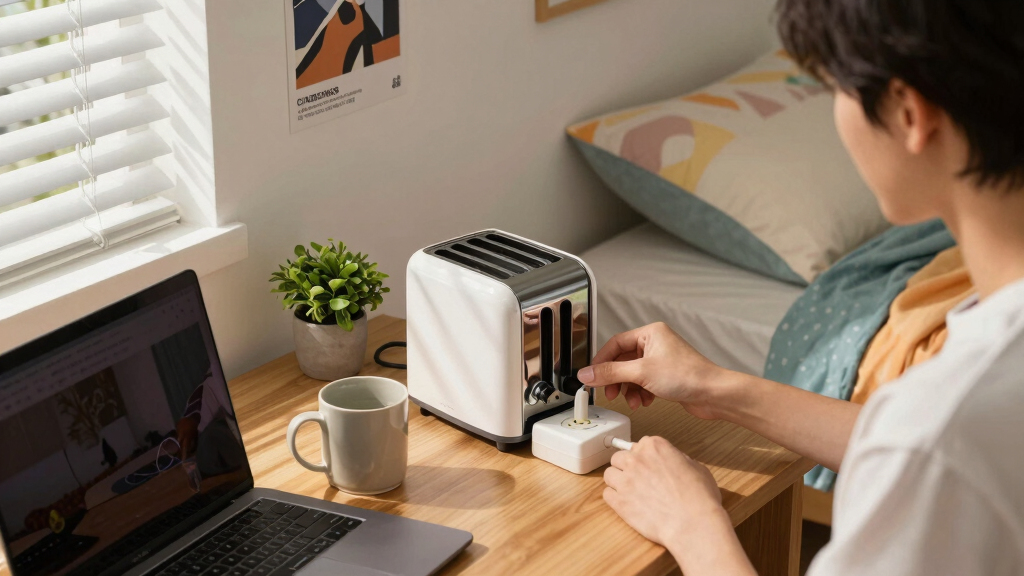
Avoid open-coil, open-flame, or space heaters—they are almost always banned.
Use surge protectors and don’t overload outlets to prevent electrical hazards.
Embrace smart safety tech—many new appliances now have automated safety features that reduce fire risk.
Guide to Safe Small Appliances Allowed in Dorms
Build a comfortable room without creating an electrical or fire hazard. Start with your housing policy, choose certified low-wattage devices, and use every appliance as if safety is part of its daily routine—because it is.
Typical compact operating range
Common dorm policy limit
Claimed fire-risk reduction for UL-listed devices
Your housing handbook before purchase
Start with appliances designed for compact spaces
Rules vary by institution, but these categories are frequently approved when they meet certification, size, wattage, and automatic-shutoff requirements.
Mini-fridge
Choose a compact, certified unit with good ventilation clearance. Many schools specify a maximum capacity near five cubic feet.
Microwave
Look for a timer, temperature protection, intact door seals, and a power rating within the dorm’s published limit.
Coffee maker
Single-serve and compact drip models are the safer candidates when they include automatic shut-off and no exposed heating coil.
Electric kettle
Select a stable, enclosed-element model with boil-dry protection and automatic shut-off. Confirm that kettles are explicitly permitted.
Small fan
A compact fan adds comfort with relatively low power demand. Keep blades guarded and cords clear of beds and walkways.
USB devices
Certified USB-powered accessories can reduce cord clutter, but their charging hub must still be undamaged and used within its rating.
Allowed, conditional, or prohibited?
The housing handbook is the final authority. Use this matrix as a pre-shopping filter, then verify the exact wattage, capacity, and heating-element rules at your school.
| Appliance | Typical status | Safer specification | Primary concern |
|---|---|---|---|
| Mini-fridge | ✓Usually allowed | UL-certified; under 5 cu. ft. | Ventilation and circuit load |
| Microwave | ✓Usually allowed | Under 1000W; timer and sensors | Overheating and unattended use |
| Coffee maker | ~Check policy | Auto-off; enclosed heating system | Hot surfaces and forgotten power |
| Electric kettle | ~Check policy | Boil-dry protection; auto shut-off | Steam, spills, and high wattage |
| Small fan | ✓Usually allowed | Guarded blades; certified plug | Damaged cords and blocked airflow |
| Toaster / hot plate | ✗Usually prohibited | Use a shared kitchen instead | Exposed heating elements |
| Space heater | ✗Usually prohibited | Request an approved alternative | High draw and ignition risk |
| Open-flame device | ✗Prohibited | No dorm-room substitute with flame | Direct ignition source |
Policy note: a device being sold as “dorm-friendly” does not mean your residence hall permits it. Written housing rules override packaging claims.
Make every appliance pass before it enters the room
A safe purchase is a chain of checks. If one gate fails—especially policy, certification, or cord condition—stop and choose another product.
Verify policy
Confirm category, wattage, capacity, and power-strip rules.
Find the mark
Look for UL or an accepted equivalent certification.
Check the load
Match wattage to the room’s permitted electrical capacity.
Inspect safety
Prefer auto-off, overheat protection, and intact cords.
Place it safely
Keep ventilation clear and combustibles at a distance.
Certification is the first line of defense—not the last.
Safety testing helps reduce risk, but certification cannot compensate for damaged cords, overloaded outlets, blocked vents, unattended cooking, or prohibited use. The device and the daily habit must both be safe.
Know what pulls power—and avoid stacking loads
High-wattage appliances demand more from a circuit. Never assume that one free socket means the circuit has enough spare capacity, especially when a refrigerator, microwave, chargers, and lights share the room.
Relative operating draw
Bars use 1000 watts as the visual maximum. Actual draw varies by model and operating cycle; use the rating printed on the appliance.
Approved appliances still need safe behavior
Most preventable hazards begin with ordinary shortcuts: unattended heating, blocked ventilation, frayed cords, combustible clutter, or a power strip carrying more than it should.
Inspect cords
Do not use a device with fraying, crushed insulation, bent pins, scorch marks, or a loose plug.
Stay nearby
Never leave a microwave, kettle, or coffee maker running while you are away or asleep.
Clear the heat zone
Keep paper, bedding, clothes, plastics, and other flammables away from hot appliances.
Clean buildup
Remove food, grease, dust, and debris before they become odor, airflow, or ignition problems.
Unplug selectively
Disconnect countertop heating devices when not in use if the manufacturer and housing policy advise it.
Check detection
Never disable a smoke detector. Report faults immediately and know the residence evacuation route.
If an appliance sparks or causes an outage
Stop using it, unplug it only if doing so is safe, keep others away, and notify residence staff or maintenance. Do not reconnect the appliance until it has been assessed or replaced.
Smarter features can shorten the path from hazard to shutdown
Modern compact appliances increasingly combine passive safeguards with sensors, timers, alerts, and remote controls. Prioritize protection features that work automatically when attention lapses.
Reported reduction in student-housing fire incidents
Associated in the supplied research with appliances using smart safety features. Treat the figure as directional and verify supporting reports when citing it academically.
Auto shut-off
Stops operation after a set time, boil-dry event, or unsafe condition.
Temperature sensors
Detect abnormal heat and interrupt operation before escalation.
Remote alerts
Compatible appliances may report status or allow remote shutdown.
Efficient modes
Lower-energy operation can reduce heat, cost, and unnecessary power use.
Audible alarms
Alert users to completed cycles, open doors, overheating, or faults.
USB power hubs
Certified consolidated charging can reduce adapters and tangled cords.
Safety works when every link stays intact
Which Small Appliances Are Usually Allowed in Dorms? Get the Clear List
Most dorms permit a handful of practical, low-wattage appliances—think mini-fridges, microwaves, coffee makers, and small fans. These keep your space functional without risking overloads or fires.
For example, a typical mini-fridge measures around 17 x 19 x 20 inches and uses about 70-100 watts. Microwaves are usually capped at 700-1000 watts, with many models fitting comfortably on a desk or shelf. Coffee makers often run under 900 watts and have simple safety features.
However, appliances with exposed coils or open flames—like toasters, hot plates, and space heaters—are almost always off-limits. These devices pose a higher risk because their heating elements or flames can ignite nearby materials or cause electrical faults. Always consult your dorm’s specific policies, but here’s a quick list:
- Mini-fridges (most schools allow)
- Microwaves (under 1000W, UL-certified)
- Coffee makers (single-serve or small drip)
- Small fans
- Electric kettles
Choosing the right appliances isn’t just about compliance; it’s about balancing convenience and safety. For example, selecting a microwave with a lower wattage and safety features reduces the chance of overheating or electrical failure, which can be catastrophic in a dorm setting. Similarly, opting for UL-certified devices ensures that they meet strict safety standards, reducing the risk of fires or electrical hazards that could endanger your belongings and others.
As an affiliate, we earn on qualifying purchases.
How to Choose Safe Small Appliances That Won’t Start a Fire
Choosing safe appliances starts with more than just looking at labels; it involves understanding why certain features matter and what tradeoffs they entail. For example, UL certification isn’t just a badge—it’s a guarantee that the product has undergone rigorous safety testing, including fire resistance, electrical safety, and durability. Using non-certified appliances might save money upfront but can lead to higher risks of electrical faults, fires, or appliance failure that could cause harm or damage your dorm.
Size is also crucial. A mini-fridge that’s too large might overload the electrical circuits, especially if multiple devices are plugged into the same outlet. Conversely, very small appliances might not meet your needs or could be less durable. Opting for models with features like overheat protection and automatic shut-off can prevent overheating, which is a leading cause of fires in dorms. For instance, a microwave with a built-in timer and temperature sensors can shut down before reaching unsafe temperatures, reducing fire risk.
To keep your room safe, follow these steps:
- Buy appliances with UL or equivalent certification—this is your first line of defense against fire and electrical hazards.
- Choose models that fit your space and power capacity—overloading outlets can cause sparks or shorts.
- Inspect cords for damage—frayed or damaged cords can cause shorts or fires.
- Follow manufacturer instructions carefully—misuse can negate safety features.
- Don’t overload outlets—use surge protectors if allowed, but avoid daisy-chaining multiple devices which can lead to overloads and fires.
For example, selecting a 700-watt microwave with a built-in timer and safety features not only ensures proper functionality but also minimizes the risk of overheating and electrical faults, which are common causes of dorm fires. Understanding the implications of these features helps you make smarter choices that prioritize safety without sacrificing convenience.
small microwave under 1000W for college
As an affiliate, we earn on qualifying purchases.
As an affiliate, we earn on qualifying purchases.
Comparison Table: Allowed vs. Prohibited Dorm Appliances
| Allowed Appliances | Prohibited Appliances | ||||||
|---|---|---|---|---|---|---|---|
| Mini-fridge (UL-certified, under 5 cubic feet) | Toaster with exposed coils | Microwave (under 1000W, UL-listed) | Hot plate or electric stove | Electric kettle (UL-certified) | Space heater | Small fan (UL-certified) | Open-flame appliances |
compact coffee maker for dorm room
As an affiliate, we earn on qualifying purchases.
As an affiliate, we earn on qualifying purchases.
Safety Tips for Using Small Appliances in Dorm Rooms
Even approved appliances can cause hazards if misused. Always keep cords away from walkways to prevent tripping and accidental unplugging, which can lead to sparks or damage. Don’t leave appliances unattended—power outages or fires can start in seconds if a device malfunctions or overheats.
For example, never leave your microwave running while you’re out or asleep. Keeping flammable items—paper, cloth, or plastics—away from hot appliances is essential because even a small spark or overheating can ignite nearby materials, causing a fire that spreads quickly in confined dorm spaces. Regularly cleaning your microwave and fridge prevents dust and food buildup that can serve as fuel for fires.
Other key tips include:
- Unplug appliances when not in use to eliminate standby risks.
- Use surge protectors if permitted—these can prevent damage from power surges but should not be overloaded or daisy-chained.
- Check cords regularly for damage or fraying—damaged cords are a common cause of electrical fires.
- Ensure smoke detectors are working and report any malfunctions immediately.
Understanding and applying these safety tips helps prevent common hazards associated with small appliances, protecting both your belongings and your fellow students.
small desk fan with safety features
As an affiliate, we earn on qualifying purchases.
As an affiliate, we earn on qualifying purchases.
Latest Safety Innovations for Dorm Appliances You Should Know About
Modern dorm appliances now come with smart safety features that go beyond basic design. For instance, some microwaves connect via Wi-Fi, allowing you to remotely turn them off if you forget or suspect a malfunction. Automatic shut-offs, temperature sensors, and energy-efficient modes are increasingly standard, significantly reducing the risk of fires caused by overheating or electrical faults. According to recent safety reports, appliances equipped with smart safety features have contributed to a 30% reduction in fire incidents in student housing, highlighting their importance.
Many brands now offer UL-approved, eco-friendly models with low wattage, built-in alarms, and energy-saving features. Wireless charging stations and USB-powered devices reduce clutter and eliminate the need for multiple power strips, which are often overloaded or improperly used. These innovations not only improve safety but also enhance convenience and organization in small dorm rooms.
Keeping an eye on emerging safety tech ensures you’re using the safest, most reliable appliances available, making dorm life safer and more efficient without sacrificing comfort or functionality.
Frequently Asked Questions
Can I bring a hot plate or electric stove?
Most dorms prohibit hot plates and electric stoves due to fire risks. Always check your specific school’s policies first, but generally, these are off-limits unless explicitly approved.What safety features should I look for in small appliances?
Prioritize UL certification, automatic shut-off, overheat protection, and sturdy cords. These features significantly lower fire and electrical hazards in tight dorm spaces.Are energy-efficient appliances worth it?
Absolutely. They use less power, cut down on electricity bills, and are often safer since they generate less heat. Plus, they’re environmentally friendly—a bonus for eco-conscious students.What should I do if my appliance sparks or causes a power outage?
Unplug it immediately, turn off the power at the outlet, and notify dorm maintenance if necessary. Never try to fix electrical issues yourself—leave it to professionals.Conclusion
Staying safe with small appliances in your dorm isn’t just about rules—it’s about protecting yourself and your space. Pick certified, compact, and purpose-built models, use them responsibly, and stay alert. A few simple choices today keep hazards at bay and your college experience smooth and worry-free.
Think of your dorm as your second home—make it safe, efficient, and comfortable. Your future self will thank you for it.