TL;DR
The best dorm safes combine sturdy materials, smart locking mechanisms, and easy mounting options. Choosing a safe tailored to your needs keeps your valuables secure without sacrificing space or convenience.
Best Dorm Safes and Lockboxes
Protect passports, cash, jewelry, backup drives and small electronics without overwhelming a shared room. The strongest choice balances sturdy construction, a dependable lock, discreet dimensions and a practical way to anchor it.
What makes a dorm safe secure?
A dorm safe must resist quick, opportunistic attacks. Look beyond the lock: construction quality, pry resistance and anchoring work together as layers. A sophisticated lock on a flimsy, portable box still leaves an obvious weakness.
Steel construction
Reinforced steel is more resistant to impact and bending than thin sheet metal. Thick doors, concealed hinges and tight seams make forced entry slower and noisier.
Pry resistance
A recessed door, minimal gaps and anti-pry bars reduce leverage points. This matters in dorms, where a basic screwdriver may be the most likely attack tool.
Secure mounting
Pre-drilled holes or a hardened security cable prevent grab-and-go theft. Place the safe behind furniture, beneath a desk or inside a closet where it is harder to see and reach.
Choose access that fits your habits
The best lock is one you can use reliably every day. Digital keypads offer a strong balance for most students; biometric systems add speed and identity-based access, while traditional keys minimize maintenance.
Key lock
Low cost and no batteries, but keys can be lost, borrowed or duplicated. Keep the spare somewhere outside the safe and away from the dorm room.
Digital keypad
Fast access, changeable codes and no everyday key to lose. Favor a backlit keypad, low-battery warning and concealed emergency override.
Biometric lock
Fingerprint access is quick and difficult to share accidentally. It costs more and depends on power, so a keypad or override backup remains valuable.
Fit the room, then fix it in place
Compact safes are easier to hide and move, but portable also means removable. Measure the intended location—including door clearance—and confirm what must fit before choosing capacity.
The dorm-friendly capacity zone
Most students can protect documents, cash and compact electronics within the 0.5–1.5 cubic-foot range.
Mounting changes the equation
A small safe may be well concealed, yet still easy to remove. Anchoring adds the physical resistance that portable products lack.
Use approved bolts, brackets or a hardened cable. Always check residence rules before drilling into walls, floors or university furniture.
Which safe is right for you?
Spend first on stronger construction and anchoring. Smart access and certified disaster protection are valuable upgrades when you store irreplaceable documents, sensitive data or costly electronics.
| Feature | Budget safe | Mid-range safe | High-end safe |
|---|---|---|---|
| Typical price | $20–$60 | $60–$130 | $130–$200+ |
| Material | Thin steel | Reinforced steel | Thick pry-resistant steel |
| Capacity | About 0.5 ft³ | About 1.0 ft³ | 1.5 ft³ or more |
| Lock system | Key or basic code | Digital keypad | Biometric or smart lock |
| Mounting | ✗ Often limited | ✓ Common | ✓ Robust options |
| Fire protection | ✗ Uncommon | ~ Model dependent | ✓ Often available |
| Best for | Cash and small items | Most student needs | Documents and electronics |
From dorm rules to daily security
A good purchase follows a clear chain: verify what is permitted, define what needs protection, choose the right footprint, match the lock to your routine and finish with a secure installation.
Check policy
Confirm rules for drilling, cables, brackets and security devices.
List valuables
Group documents, cash, electronics and irreplaceable items.
Measure space
Allow for hinges, cables, ventilation and full door opening.
Select lock
Balance speed, security, battery upkeep and backup access.
Hide + anchor
Choose a discreet location and secure the safe to an approved point.
Buy with the whole system in mind
No safe is completely theft-proof. The goal is to make access difficult, removal slow and the safe itself inconspicuous—without making daily use so inconvenient that you stop locking it.
Measure twice
Check exterior dimensions, interior capacity and door clearance.
Prioritize the shell
Choose sturdy steel, tight seams and pry-resistant construction.
Plan the anchor
Identify an approved mounting point before purchasing hardware.
Prepare backup access
Store override keys and recovery information outside the room.
Five rules for safer storage
The best dorm safe is not automatically the largest or most expensive. It is the model that fits your valuables, room, routine and residence policy while resisting both opening and removal.
What Makes a Dorm Safe Truly Secure?
Not all safes are created equal. A sturdy steel construction, tamper-proof design, and robust locking mechanism are essential because they directly influence how resistant the safe is to theft or tampering. Think of it like locking your bike with a heavy-duty chain instead of a flimsy cable — the more robust the materials and design, the harder it is for a thief to break in. Features like pry-resistant doors prevent forced entry, while electronic or biometric locks eliminate vulnerabilities associated with traditional keys, such as copying or losing them. These layers of security are especially important in dorm settings where quick access and resistance to tampering can make the difference between your valuables staying safe or being stolen. Choosing a safe with these security features means you’re investing in peace of mind, knowing that even if someone tries to break in, the safe can withstand common attack methods.
As an affiliate, we earn on qualifying purchases.
Size and Portability: What Fits in a Dorm?
Size matters because dorm rooms are typically small and shared, so a safe must fit comfortably without overwhelming your limited space. A safe around 0.5 to 1.5 cubic feet strikes a good balance, providing enough room for passports, cash, jewelry, and small electronics while remaining unobtrusive. But size isn’t just about capacity — portability is equally important. Portable safes weighing between 2 to 8 pounds are easier to carry if you move or share with a roommate, but they also pose a risk of being stolen if not secured properly. For example, a safe measuring 10 x 7 x 5 inches can fit under a bed or inside a closet, keeping valuables hidden yet accessible. The tradeoff is that larger safes might offer more storage but can be cumbersome and tempting targets, while smaller safes are easier to hide or carry but limit what you can store. Therefore, selecting a size that fits your space and security needs requires balancing capacity with ease of concealment and mobility.
As an affiliate, we earn on qualifying purchases.
Which Locking System Is Best for Dorms?
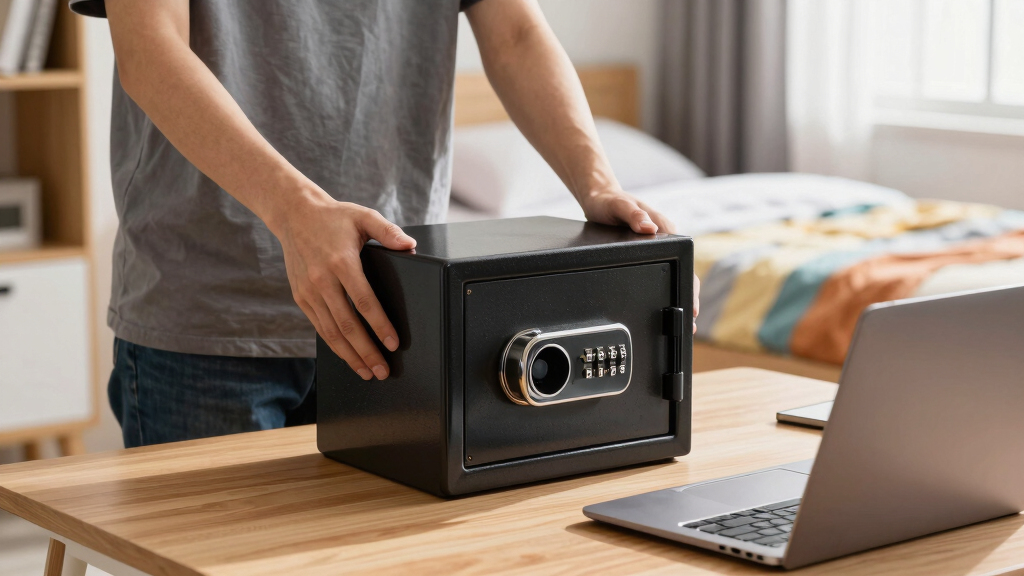
Choosing the right locking system involves understanding the security implications and convenience factors of each type. Digital keypads allow quick access — you just punch in a code — and are often customizable, reducing the risk of lost keys. Biometric fingerprint locks provide high security because they use unique biological data, making unauthorized access extremely difficult. However, they can be more expensive and require power sources. Traditional key locks are simple and inexpensive but come with the risk of losing keys or having duplicates made without your knowledge, which can compromise security. For example, a safe with a backlit keypad and an override key offers a good balance: quick, keyless access with a backup in case of forgotten codes or power failure. When choosing a lock, consider your lifestyle: if you want fast, keyless entry and are comfortable with technology, digital or biometric locks are ideal. But if you prefer simplicity and minimal maintenance, a key lock might suffice. The tradeoff involves balancing convenience, cost, and security—more advanced locks tend to offer higher security but may require batteries or maintenance.
fireproof portable safe for college
As an affiliate, we earn on qualifying purchases.
As an affiliate, we earn on qualifying purchases.
Mount or Not? How to Secure Your Safe in Dorms
Securing your safe by mounting it to the wall or floor significantly enhances its security because it prevents thieves from simply carrying it away. Many safes come with pre-drilled holes or mounting brackets designed for this purpose. Using bolts or brackets to fix your safe behind furniture, under your desk, or inside a closet makes theft much more difficult, especially in shared or open spaces. For example, a small safe with pre-drilled holes can be anchored behind a dresser or under a bed, effectively hiding it from plain sight while also making it physically more resistant to theft. Although portable safes are convenient, they are also more vulnerable if not secured. The main tradeoff is ease of access versus security: mounting offers peace of mind by making theft physically harder, but it requires some effort and permission, especially considering dorm policies. Properly anchoring your safe is one of the most effective ways to deter theft and ensure your valuables stay put.
As an affiliate, we earn on qualifying purchases.
Smart and Fire-Resistant Safes: What’s New?
Recent innovations in safes are transforming dorm security by integrating technology and advanced materials. Smart safes with app connectivity enable remote access, activity logs, and notifications, giving you real-time control and visibility over your valuables. Fire-resistant safes, rated to withstand temperatures up to 1700°F for 30 minutes, provide critical protection for documents and electronics during emergencies. This means that during a fire, your important papers or devices are less likely to be destroyed, saving you stress and potential financial loss. For instance, storing birth certificates, passports, or backup drives in a fireproof safe ensures they remain intact even in worst-case scenarios. While these safes tend to be more expensive, the added security and peace of mind are often worth the investment. They future-proof your dorm security by protecting against both theft and disasters, which is especially valuable during final exams or unexpected emergencies when you can’t afford to lose important items.
Comparison: Which Safe Is Right for You?
| Feature | Budget Safe | Mid-Range Safe | High-End Safe |
|---|---|---|---|
| Material | Thin steel, basic lock | Reinforced steel, digital lock | Thick, pry-resistant steel, biometric or smart lock |
| Size | 0.5 ft³ | 1.0 ft³ | 1.5+ ft³ |
| Security | Basic lock, no anchoring | Electronic lock, mounting options | Biometric + smart features + anchoring |
What Should You Do Before Buying?
First, check your dorm’s policies. Some schools restrict or ban certain security devices. Next, measure your space carefully—know the exact size your safe can be. Decide what valuables you want to protect and pick features accordingly—fire resistance, smart access, or mounting options. Lastly, consider your budget and how often you’ll use or move the safe.
For example, if you have electronics and documents, prioritize fireproof and biometric options. If space is tight, opt for a compact, portable model.
Key Takeaways for Picking Your Dorm Safe
- Security first: Prioritize sturdy construction and tamper-proof locks.
- Size matters: Match safe dimensions to your valuables and dorm space.
- Mount for safety: Secure your safe to prevent theft.
- Stay updated: Consider smart and fire-resistant safes for future-proofing.
- Check policies: Always review dorm rules before installation.
Frequently Asked Questions
What size safe should I get for my dorm room?
A safe around 0.5 to 1.5 cubic feet is ideal for most students. It’s big enough for passports, cash, and electronics but compact enough to fit under beds or in closets.
Are dorm safes theft-proof?
No safe is completely theft-proof, but choosing a sturdy safe with a secure lock and anchoring it significantly reduces the risk. The goal is to make it tough enough that a thief moves on.
Can I carry a safe with me when I move?
Yes, portable safes are designed for easy transport. Just consider whether you want to leave it behind or take it with you to your next place. Look for lightweight options if portability is a priority.
What is the best type of lock for a dorm safe?
Digital keypads are popular for their convenience, while biometric locks offer higher security. Keys are simple but risk losing access if keys are misplaced.
Are fireproof safes worth it?
If you want to protect important documents or electronics from fire, investing in a fire-resistant safe is a smart choice. They provide peace of mind during emergencies.