TL;DR

Prime made for students and young adults
- Fast, free delivery for dorm and study essentials
- Prime Video and Amazon Music included
- Member-only deals
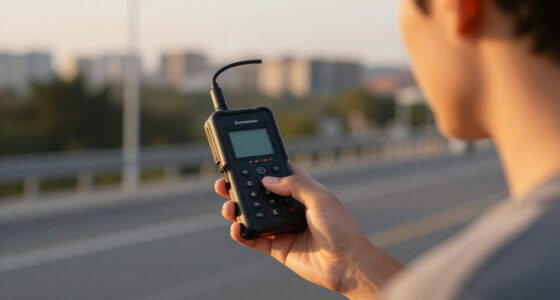
Scientists have announced new advancements in weather radar technology aimed at enhancing storm detection and forecasting accuracy. The development is confirmed, but full deployment details are still emerging. This could significantly improve weather prediction and public safety.
Scientists have announced a breakthrough in weather radar technology that could significantly improve storm detection and weather forecasting accuracy. The new radar system, developed by a consortium of research institutions and meteorological agencies, is confirmed to offer higher resolution and faster data processing, which could enhance early warning systems and public safety efforts.
The new weather radar system, described as a next-generation phased array radar, was officially unveiled during the annual Meteorological Society conference held in October 2023. According to the developers, this system can scan larger areas with greater detail in real time, reducing the latency in weather data collection.
Officials from the National Weather Service (NWS) confirmed that field tests of the radar have demonstrated improved detection of severe weather phenomena, including tornado formation and heavy rainfall. The system’s advanced algorithms enable more precise tracking of storm intensity and movement, potentially allowing for earlier and more accurate warnings.
While full deployment across the United States is still in planning, several pilot installations are underway in key regions prone to severe weather. Experts note that this technology could be integrated into existing forecasting infrastructure over the next few years, pending regulatory approvals and funding.
Impact on Weather Forecasting and Public Safety
This development could transform weather forecasting by providing more timely and accurate data, especially for severe weather events like tornadoes and hurricanes. Improved detection capabilities mean communities could receive earlier warnings, potentially saving lives and reducing property damage. The enhanced radar technology also offers benefits for climate research and disaster preparedness efforts, making it a significant step forward in meteorological science.
Popular right now

Shark Rocket Ultra-Light Corded Stick Vacuum, HV301, Gray/Orange

KitchenAid Classic Series 4.5-Quart Tilt-Head Stand Mixer, Onyx Black

Dyson Ball Animal 3 Upright Vacuum
As an affiliate, we earn on qualifying purchases.
Recent Innovations in Radar and Weather Monitoring
Weather radar technology has evolved significantly over the past decades, from traditional pulse Doppler systems to phased array radars capable of rapid scanning. The latest advancements aim to address limitations in resolution and speed, which have historically hindered precise storm tracking. The announcement in October 2023 builds on ongoing research efforts to modernize meteorological infrastructure, following recent severe weather events that underscored the need for better early warning systems.
Previous tests of phased array radars have shown promising results, but widespread adoption has been slow due to costs and technical challenges. The current development marks a notable milestone as it moves closer to operational deployment, with several agencies expressing optimism about its potential.
Unanswered Questions About Deployment and Limitations
It is not yet clear when the new radar systems will be fully deployed nationwide, or how much they will cost to implement at scale. Details about the integration process with existing weather infrastructure are still being finalized, and operational limitations or potential technical issues have not been fully disclosed.
Additionally, while early tests are promising, long-term performance and reliability under diverse weather conditions remain to be seen, and independent evaluations are ongoing.
Next Steps for Testing, Funding, and Deployment
Researchers and agencies will continue pilot testing in different regions to validate performance across varied climates and weather patterns. Funding allocations and regulatory approvals are expected to be addressed in the coming months, with plans for phased deployment over the next two to three years. Stakeholders will also monitor the system’s integration with existing forecasting tools and emergency response protocols.
Key Questions
How will the new radar improve weather forecasts?
The new radar offers higher resolution and faster data collection, enabling more accurate and timely detection of severe weather phenomena like tornadoes and heavy rainfall, which improves early warning capabilities.
When will the new radar be operational nationwide?
Full deployment is not yet scheduled, but pilot programs are underway, with broader rollout expected within the next two to three years, pending funding and regulatory approval.
What are phased array radars?
Phased array radars use electronically controlled antenna arrays to scan the sky rapidly and with high detail, unlike traditional mechanically rotating radars. This allows for real-time updates and broader coverage.
Are there any limitations or risks associated with the new radar technology?
While early tests are promising, long-term performance under various weather conditions is still being evaluated. Costs and integration challenges may also influence deployment timelines.
Source: google-trends