
TL;DR

Prime made for students and young adults
- Fast, free delivery for dorm and study essentials
- Prime Video and Amazon Music included
- Member-only deals
A study published in the Proceedings of the National Academy of Sciences found little evidence that deep-sea life in the Gulf of Mexico has recovered since the 2010 Deepwater Horizon disaster. Researchers recorded declines of at least 60% in several animal groups in the first few years after the spill, while saying the spill is the most parsimonious explanation rather than proving causation.
A study of the Gulf of Mexico’s deep-sea life found little evidence of recovery 16 years after the 2010 Deepwater Horizon oil spill, which released more than 4 million barrels of oil into the sea. Researchers reported that populations of octopus, squid, krill, shrimp and lanternfish fell by at least 60% in the first few years after the disaster; they said the spill was the most parsimonious explanation for the declines, but did not establish it as their cause.
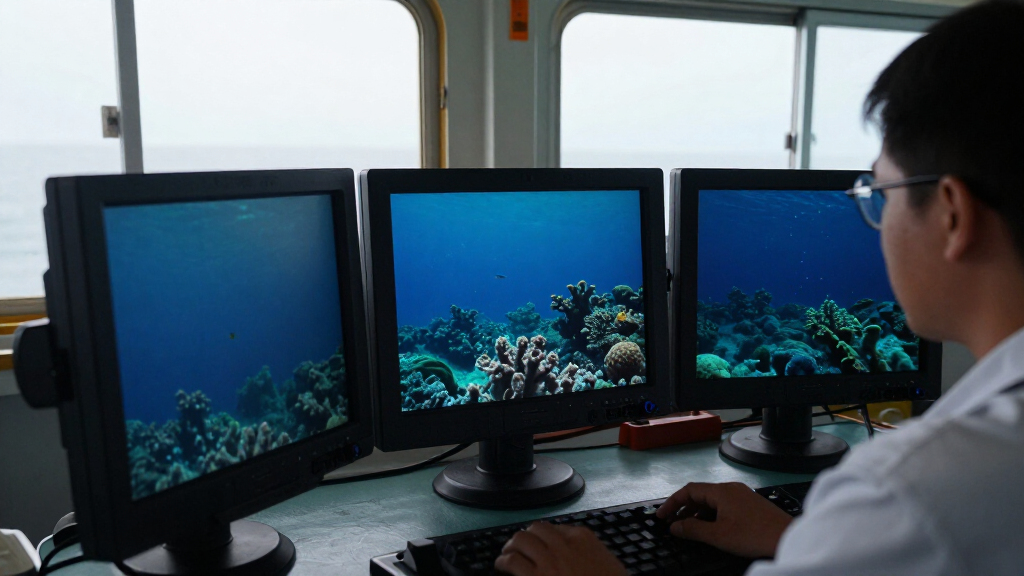
The research, published in the Proceedings of the National Academy of Sciences, drew on acoustic surveys and thousands of samples collected in nets across a broad area of the Gulf. It examined animals in the deep ocean, described in the report as the layer extending from about 600 feet to more than two miles deep. The study characterized the population losses as “the fastest and most severe” decline of animal life in that ocean layer.
The reported declines occurred in the first several years following the spill. The researchers found little evidence that populations have bounced back since then. The source material does not provide a single recovery estimate for all species or specify that every population has followed the same trajectory; the findings concern multiple animal groups surveyed across the region.
The study also reported declines in genetic diversity among some populations. Separately, scientists have detected oil-related compounds in the flesh of deep-water squid and octopus and in fish eggs. Researchers say such contamination can affect reproduction and development or contribute to early death. These findings offer evidence of possible pathways for lasting harm, but they do not by themselves prove that the spill caused every population or genetic change observed.
Why Deep-Sea Recovery Matters
The findings point to a potentially long-lasting ecological impact in an environment that is difficult to survey and far removed from the coastline. If deep-sea animal populations remain depleted, effects could reach beyond the species counted in the study: these animals are part of a connected ocean food web, and some may serve as prey for larger marine life. The research describes population changes, but the supplied report does not quantify wider food-web consequences.
Reduced genetic diversity may also leave some populations with fewer inherited traits that could help them withstand environmental change. Study authors raised that as a risk, not as a demonstrated future outcome. The distinction matters: the results indicate a serious concern for the resilience of deep-sea populations, while the precise consequences for their survival and the wider Gulf ecosystem remain uncertain.
The study also underscores why long-term monitoring matters after a major spill. A short-term assessment could record immediate losses without showing whether populations later recover, remain low or change in other ways. Continued surveys can help scientists distinguish persistent damage from natural fluctuations and assess whether different species are responding differently.
Popular right now

Dyson Ball Animal 3 Upright Vacuum

Dyson V8 Cyclone Cordless Vacuum

KitchenAid Artisan 5-Quart Tilt-Head Stand Mixer, KSM150PS, Almond Cream
As an affiliate, we earn on qualifying purchases.
From the 2010 Blowout to Long-Term Surveys
The Deepwater Horizon rig exploded in 2010, triggering a disaster that sent more than 4 million barrels of oil into the Gulf of Mexico. The new study focuses not on the immediate response at the surface, but on animal populations living in deep water and their status over the years that followed.
Researchers used two kinds of evidence: acoustic surveys, which detect animals through sound, and net samples collected during surveys across a broad swath of the Gulf. The report says the work involved thousands of netted samples. Those methods provide observations across a large area, but the source summary does not list the full survey dates, the exact sampling locations or species-by-species population estimates.
In the years since the spill, scientists have reported oil-related compounds in deep-sea animals and fish eggs. The Yale E360 report says researchers believe contamination can interfere with reproduction and development, and that lingering pollution may make it harder for deep-sea fish that rely on smell to find mates. These observations provide relevant context for the new results, although they do not establish a direct cause for the study’s reported declines.
““The fastest and most severe” decline of animal life in the ocean layer extending from about 600 feet to more than two miles deep.”
— The study authors, as quoted in Yale E360
What the Study Cannot Yet Establish
The researchers did not conclude that the oil spill definitively caused the population declines. Their assessment that the spill is the most parsimonious explanation is not the same as proof, and the source material does not describe how other possible influences were evaluated. The full extent to which oil exposure, other environmental pressures or natural variation contributed remains unclear.
The report also does not give detailed figures for each species, a uniform measure of recovery, or the number of populations that show genetic-diversity declines. “Little evidence” of recovery should not be read as proof that no species has recovered at all. More detailed results would be needed to compare individual species, survey periods and locations.
It is also unclear from the supplied material how much oil-related contamination remains in deep-sea habitats today, whether contamination levels have changed over time, and how directly the detected compounds relate to reproductive harm in the populations surveyed. Those questions affect how confidently researchers can link continuing exposure to current population patterns.
More Monitoring Will Test Recovery
The immediate next step is continued observation of deep-sea animal populations across the Gulf. Repeated acoustic surveys and biological sampling could show whether the low population levels persist, whether particular species begin to recover, and whether genetic diversity continues to change. The supplied report does not announce a new survey schedule or a specific follow-up date.
Researchers will also need to compare population trends with evidence on contamination and other environmental conditions. That work could help test the proposed link to the spill and clarify whether different species face different risks. For now, the study’s central finding is that recovery remains difficult to detect in the deep-sea communities covered by the research, 16 years after the disaster.
Key Questions
What did the new study find?
It found that populations of octopus, squid, krill, shrimp and lanternfish declined by at least 60% in the first few years after the 2010 spill, with little evidence of recovery in the years since.
Did researchers prove the spill caused the declines?
No. The researchers did not conclude that the spill caused the declines. They described it as the most parsimonious explanation, which is a qualified assessment rather than proof of causation.
How was deep-sea life surveyed?
The study used acoustic surveys and thousands of netted samples collected across a broad area of the Gulf of Mexico.
What does the study say about genetic diversity?
It found declines in genetic diversity in some populations. The authors raised concern that reduced diversity could leave populations with fewer traits that may help them survive a rapidly changing environment; the report does not establish that outcome as certain.
What happens next?
Continued monitoring could clarify whether populations remain depleted or begin to recover. The supplied report does not specify a timetable for the next surveys or a particular follow-up study.
Source: hn