The best portable monitor for most college students is the Lenovo L16, whose 16-inch WUXGA screen gives study documents extra vertical room without moving to a bulky dual-screen setup. For a larger workspace, the Acer PM1 Series offers an 18.5-inch display, while the ASUS ZenScreen Duo MB14FCD suits students who need two screens in a foldable format. The main tradeoffs are portability versus screen area, simple USB-C setup versus broader device compatibility, and standard resolution versus sharper or touch-enabled displays. I compare all 15 picks for campus use, including their practical differences and drawbacks. Read on for the full breakdown and guidance on choosing a monitor that fits your laptop, classes, and study routine.

Prime made for students and young adults
- Fast, free delivery for dorm and study essentials
- Prime Video and Amazon Music included
- Member-only deals
Key Takeaways
- The Lenovo L16 is my overall pick because its 16-inch WUXGA format offers more vertical workspace than a standard 15.6-inch FHD screen without the footprint of the 18.5-inch models.
- The Acer PM1 and VisionOwl 18.5-inch monitors prioritize desk space; their larger panels suit dorm-room multitasking better than carrying between classes.
- The ASUS ZenScreen Duo MB14FCD and Sharanix triple-screen extender serve a different need: they add multiple laptop displays, but their extra hardware makes them less convenient for quick, light campus trips.
- Most of this lineup favors practical FHD productivity; the UPERFECT 4K touchscreen is the outlier for buyers who value higher pixel density and touch input over simplicity.
- Ports, stands, and covers can matter as much as screen specs: models with a usable built-in cover or stand may be easier to set up in shared study spaces, while USB-C-only workflows depend on laptop compatibility.
| MNN 15.6-Inch FHD Portable Monitor with IPS Display, USB-C and HDMI |  | Best Overall for Everyday Coursework | Screen size: 15.6 inches | Resolution: 1920 × 1080 (FHD) | Panel and finish: IPS LCD, matte | VIEW LATEST PRICE | See Our Full Breakdown |
| Acer PM1 Series 18.5-Inch FHD Portable Monitor |  | Best for a Larger Study Screen | Model: PM191Q Ebmiuux | Screen size: 18.5 inches | Resolution: 1920 × 1080 (FHD) | VIEW LATEST PRICE | See Our Full Breakdown |
| ASUS ZenScreen MB169CK 15.6-Inch 1080p Portable Monitor | 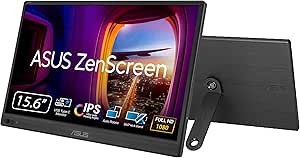 | Best for Flexible Positioning | Screen size: 15.6 inches | Resolution: 1920 × 1080 (Full HD) | Panel and finish: IPS LCD/LED, matte | VIEW LATEST PRICE | See Our Full Breakdown |
| Sharanix 15.6-Inch Triple Laptop Screen Extender, Dual 1080p IPS Displays |  | Best for Multitasking Across Two Extra Screens | Displays: Two 15.6-inch screens | Resolution: 1920 × 1080 per display | Panel and finish: IPS, glossy | VIEW LATEST PRICE | See Our Full Breakdown |
| VisionOwl 18.5-Inch Portable FHD IPS Monitor with 100Hz Refresh Rate |  | Best for Gaming and Desk Versatility | Screen size: 18.5 inches | Resolution: 1920 × 1080 (FHD) | Panel and finish: IPS LCD, matte | VIEW LATEST PRICE | See Our Full Breakdown |
| cocopar 15.6-Inch Portable Monitor, 1080p FHD, 60Hz, IPS, USB-C and HDMI, with Cover Stand |  | Best Overall for Flexible Setups | Screen: 15.6-inch IPS LCD | Resolution: 1920 × 1080 (FHD) | Refresh rate: 60 Hz | VIEW LATEST PRICE | See Our Full Breakdown |
| ViewSonic VA1653 15.6-Inch Full HD Portable Monitor |  | Best for Easy Packing | Screen: 15.6-inch IPS LCD | Resolution: 1920 × 1080 (Full HD) | Refresh rate: 60 Hz | VIEW LATEST PRICE | See Our Full Breakdown |
| Lenovo L16 16-Inch WUXGA IPS Portable Monitor |  | Best for Reading and Split-Screen Work | Screen: 16-inch IPS LED | Resolution: 1920 × 1200 (WUXGA) | Aspect ratio: 16:10 | VIEW LATEST PRICE | See Our Full Breakdown |
| UPERFECT 15.6-Inch 4K Touchscreen Portable Monitor |  | Best for Touch and Fine Detail | Screen: 15.6-inch LCD | Resolution: 3840 × 2160 (4K UHD) | Touch: 10-point touchscreen | VIEW LATEST PRICE | See Our Full Breakdown |
| Dell Pro 14 Plus P1425 14-Inch Portable Monitor |  | Best Compact Pick for Tight Desks | Screen: 14-inch LED LCD | Resolution: 1920 × 1200 (WUXGA) | Aspect ratio: 16:10 | VIEW LATEST PRICE | See Our Full Breakdown |
| ASUS ZenScreen Duo MB14FCD 14-Inch Foldable Dual-Screen Portable Monitor |  | Best for Multitasking Between Classes | Display configuration: Dual 14-inch IPS panels | Resolution: 1920 × 1200 per display | Aspect ratio: 16:10 | VIEW LATEST PRICE | See Our Full Breakdown |
| Lenovo ThinkVision M15 15.6-Inch Full HD Portable Monitor |  | Best for VESA-Mounted Study Spaces | Screen size: 15.6 inches | Resolution: 1920 × 1080 | Aspect ratio: 16:9 | VIEW LATEST PRICE | See Our Full Breakdown |
| ASUS ZenScreen MB16ACE 15.6-Inch Portable Full HD IPS Monitor |  | Best for Mixed USB-C and USB-A Laptops | Screen size: 15.6 inches | Resolution: 1920 × 1080 | Panel: IPS LCD with W-LED | VIEW LATEST PRICE | See Our Full Breakdown |
| ASUS ZenScreen MB16AC 15.6-Inch Full HD Portable Monitor |  | Best Lightweight Pick | Screen size: 15.6 inches | Resolution: 1920 × 1080 | Panel: IPS LCD | VIEW LATEST PRICE | See Our Full Breakdown |
| KYY 15.6-Inch Portable FHD IPS Monitor with Smart Cover | 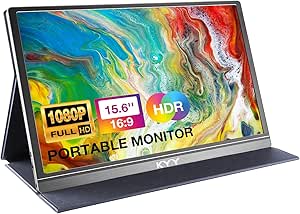 | Best for HDMI Device Compatibility | Screen size: 15.6 inches | Resolution: 1920 × 1080 | Panel: LCD IPS | VIEW LATEST PRICE | See Our Full Breakdown |
| portable monitors for college student | Resolution | Weight | Refresh rate | Brightness |
|---|---|---|---|---|
| MNN 15.6-Inch FHD Portable Mon | 1920 × 1080 (FHD) | 1.5 pounds | Not specified | 300 |
| Acer PM1 Series 18.5-Inch FHD | 1920 × 1080 (FHD) | 2.49 pounds | 100 Hz | — |
| ASUS ZenScreen MB169CK 15.6-In | 1920 × 1080 (Full HD) | Listed as 0.78 kg and 960 g | 60 Hz | 300 nits |
| Sharanix 15.6-Inch Triple Lapt | 1920 × 1080 per display | 3.9 pounds (1.8 kg) | 60 Hz | 300 nits |
| VisionOwl 18.5-Inch Portable F | 1920 × 1080 (FHD) | Listed as 2.6–2.7 pounds | 100 Hz | 320 cd/m² |
| cocopar 15.6-Inch Portable Mon | 1920 × 1080 (FHD) | 2.4 lb with cover; 1.5 lb without cover | 60 Hz | 280 cd/m² |
| ViewSonic VA1653 15.6-Inch Ful | 1920 × 1080 (Full HD) | 1.5 lb | 60 Hz | — |
| Lenovo L16 16-Inch WUXGA IPS P | 1920 × 1200 (WUXGA) | 2.1 lb | 60 Hz | 300 nits |
| UPERFECT 15.6-Inch 4K Touchscr | 3840 × 2160 (4K UHD) | 1.8 lb | 60 Hz | 450 cd |
| Dell Pro 14 Plus P1425 14-Inch | 1920 × 1200 (WUXGA) | 0.65 kg | 60 Hz | 400 cd/m² |
| ASUS ZenScreen Duo MB14FCD 14- | 1920 × 1200 per display | 2.7 lb | 60 Hz | 350 cd/m² |
| Lenovo ThinkVision M15 15.6-In | 1920 × 1080 | — | 60 Hz | 250 cd/m² |
| ASUS ZenScreen MB16ACE 15.6-In | 1920 × 1080 | 3.2 lb | — | — |
| ASUS ZenScreen MB16AC 15.6-Inc | 1920 × 1080 | 1.7 lb | — | 220 cd/m² |
| KYY 15.6-Inch Portable FHD IPS | 1920 × 1080 | 1.7 lb | 60 Hz | 300 cd/m² |
More Details on Our Top Picks
MNN 15.6-Inch FHD Portable Monitor with IPS Display, USB-C and HDMI
The MNN is a practical fit for students who want a second screen for readings, notes, and video calls without carrying an unusually large display. Its 15.6-inch Full HD IPS panel gives enough room for side-by-side work, while the matte finish and wide viewing angles suit shared study spaces. Two full-featured USB-C ports can simplify setup to one cable, but only when the laptop supports DisplayPort Alt Mode or Thunderbolt video; HDMI offers another route when it does not. Compared with the Acer PM1 Series, the MNN is smaller and lighter, making it easier to pack, though it lacks Acer’s 100 Hz refresh rate and larger screen. The folio cover serves as a stand and supports portrait use, but it may offer less positioning flexibility than the ASUS ZenScreen’s kickstand. Check USB-C compatibility before relying on single-cable use.
Pros:- 15.6-inch Full HD IPS display provides useful space for coursework while staying compact.
- Two full-featured USB-C ports and HDMI offer flexible connection options.
- Matte screen and 178° viewing angle suit varied seating and study locations.
- Included folio cover doubles as a stand and supports landscape or portrait use.
Cons:- One-cable USB-C video depends on DisplayPort Alt Mode or Thunderbolt support.
- The cover stand offers less positioning flexibility than a dedicated adjustable stand.
- At 60 Hz, it is less suited to smooth gaming than the 100 Hz Acer PM1 or VisionOwl.
Best for: Students who want a lightweight, mid-size second screen for papers, research, and online classes, and whose laptop supports USB-C video.
Not ideal for: Students who need a larger workspace or who have a laptop without USB-C video and want a straightforward single-cable setup.
- Screen size:15.6 inches
- Resolution:1920 × 1080 (FHD)
- Panel and finish:IPS LCD, matte
- Brightness:300
- Refresh rate:Not specified
- Ports:2 full-featured USB-C, 1 HDMI
- Weight:1.5 pounds
- Stand:PU leather smart cover; landscape and portrait modes
Our verdict“Choose the MNN for a portable, general-purpose coursework screen if your laptop can send video over USB-C.”
Acer PM1 Series 18.5-Inch FHD Portable Monitor
The Acer PM1 makes the most sense for students who want more visible workspace than a typical 15.6-inch portable monitor provides. Its 18.5-inch Full HD IPS display can make split-screen reading and writing feel less cramped, while the 100 Hz refresh rate supports smoother scrolling and motion than the MNN’s listed specifications. USB-C offers a one-cable display, data, and power connection with compatible devices, and HDMI 1.4 gives students another option. That larger panel has a clear carrying cost: at 2.49 pounds, it is heavier than the MNN, so it takes up more room in a crowded backpack. The VisionOwl also offers an 18.5-inch 100 Hz screen, plus built-in speakers and VESA mounting; the Acer’s appeal is its straightforward slim design. It is best for desk-to-class travel, not minimal packing.
Pros:- 18.5-inch FHD IPS screen gives split-screen coursework more room.
- 100 Hz refresh rate and Adaptive-Sync support smoother motion.
- USB-C and HDMI 1.4 accommodate different laptop connection setups.
- Slim profile helps offset the larger screen when packing.
Cons:- Heavier and wider than the 15.6-inch MNN, making it less convenient for minimal backpacks.
- Single-cable USB-C display and power depend on device compatibility.
- Does not list built-in speakers or VESA mounting, unlike the VisionOwl.
Best for: Students who regularly work with two windows side by side and are comfortable carrying a larger, heavier monitor between classes.
Not ideal for: Students prioritizing the lightest possible bag or those whose laptop cannot provide USB-C video and power through one connection.
- Model:PM191Q Ebmiuux
- Screen size:18.5 inches
- Resolution:1920 × 1080 (FHD)
- Panel:IPS LCD
- Refresh rate:100 Hz
- Response time:7 ms
- Connectivity:USB-C, HDMI 1.4
- Weight:2.49 pounds
Our verdict“Pick the Acer PM1 if extra screen area matters more to your study routine than keeping your bag compact.”
ASUS ZenScreen MB169CK 15.6-Inch 1080p Portable Monitor
The ASUS ZenScreen MB169CK is a strong match for students who move between library desks, study rooms, and presentation setups and want more than a basic folio stand. Its 360-degree kickstand and tripod socket allow more placement options than the MNN’s cover stand, while the matte 15.6-inch Full HD IPS screen helps cut distracting reflections. Flicker-free and low blue light features add useful viewing options for long reading sessions, though they do not remove the need for breaks. Dual USB-C and mini-HDMI cover common laptop connections, but USB-C video requires DisplayPort Alt Mode. Compared with the MNN, the ASUS adds positioning flexibility and a stated three-year warranty, but its listed weight varies between 0.78 kg and 960 g, so packing expectations are less clear. Its 60 Hz refresh rate is aimed at coursework, not high-refresh gaming.
Pros:- 360-degree kickstand and tripod socket offer flexible placement beyond a basic cover stand.
- Matte Full HD IPS display has a 178-degree viewing angle.
- Dual USB-C and mini-HDMI provide multiple connection paths.
- Flicker-free and low blue light features support extended study sessions.
Cons:- USB-C video requires DisplayPort Alt Mode on the connected laptop.
- Product data lists two different weights, making its carry weight uncertain.
- 60 Hz refresh rate is less fluid than the Acer PM1 and VisionOwl at 100 Hz.
Best for: Students who present, work at changing desk setups, or want a portable monitor with more stand-positioning options.
Not ideal for: Students who need guaranteed one-cable USB-C video from a laptop without DisplayPort Alt Mode or who prioritize a clearly stated, consistent carry weight.
- Screen size:15.6 inches
- Resolution:1920 × 1080 (Full HD)
- Panel and finish:IPS LCD/LED, matte
- Brightness:300 nits
- Refresh rate:60 Hz
- Connectivity:Dual USB-C, mini-HDMI
- Stand:360-degree kickstand and tripod socket
- Weight:Listed as 0.78 kg and 960 g
Our verdict“Choose the ASUS ZenScreen if adaptable positioning matters more to your study setup than high refresh or the lightest possible carry.”
Sharanix 15.6-Inch Triple Laptop Screen Extender, Dual 1080p IPS Displays
The Sharanix is the outlier in this group: instead of adding one portable screen, it attaches two 15.6-inch displays to a laptop for a three-screen workspace. That can help students keep research, notes, and a document visible at once, a setup none of the single-panel options here can match. Both screens are Full HD IPS, rotate up to 180 degrees, and support extended, mirrored, and presentation modes. The tradeoff is real: at 3.9 pounds, it is far heavier and bulkier than the MNN or ASUS ZenScreen, and its glossy finish can reflect lights in a bright library. Setup also needs more attention; some M1–M3 MacBooks require extra cabling, external power, and driver installation. I would choose it for a stable study station that travels occasionally, not daily commuting.
Pros:- Two additional FHD IPS displays create a broader workspace than any single-screen option here.
- 180-degree rotation and mirror, extend, and presentation modes support varied tasks.
- Includes a carrying case and multiple connection cables.
- Aluminum casing, telescopic stand, and non-slip pads support laptop attachment.
Cons:- At 3.9 pounds, it is substantially heavier and bulkier than single portable monitors.
- Glossy screens can reflect overhead lights and windows.
- Some laptops require extra cables, external power, and driver installation.
Best for: Students who routinely juggle several research, writing, and reference windows and have a compatible 12–17.3-inch laptop.
Not ideal for: Students who commute daily with a light backpack, study in bright reflective spaces, or want a simple plug-and-play setup on every laptop.
- Displays:Two 15.6-inch screens
- Resolution:1920 × 1080 per display
- Panel and finish:IPS, glossy
- Brightness:300 nits
- Refresh rate:60 Hz
- Connectivity:HDMI, USB Type-C
- Compatibility:Windows, macOS, Chrome OS, Android, Linux; fits 12–17.3-inch laptops
- Weight:3.9 pounds (1.8 kg)
Our verdict“Choose the Sharanix if a three-screen study setup is worth carrying more weight and managing a more involved connection process.”
VisionOwl 18.5-Inch Portable FHD IPS Monitor with 100Hz Refresh Rate
The VisionOwl combines a roomy 18.5-inch matte screen with a 100 Hz refresh rate, making it a versatile pick for students who use one portable display for coursework and compatible gaming devices. Its built-in kickstand and 75 × 75 mm VESA holes give it more placement options than the Acer PM1, while built-in speakers can handle basic audio without adding another item to a study bag. The listed 3 ms response time and 100 Hz refresh rate also suit faster motion better than the 60 Hz ASUS ZenScreen MB169CK. This is not the compact choice: its 2.6–2.7-pound listed weight and wide panel are more cumbersome than the MNN. USB-C video still depends on a compatible full-featured port, and the product data gives two different weights. Students should check laptop compatibility and plan around that larger footprint.
Pros:- 18.5-inch FHD matte IPS display offers more workspace than 15.6-inch models.
- 100 Hz refresh rate and listed 3 ms response time suit smoother motion.
- Built-in kickstand, 75 × 75 mm VESA holes, and speakers add setup flexibility.
- USB-C and HDMI support different compatible devices.
Cons:- The larger panel and 2.6–2.7-pound listed weight are less backpack-friendly than the MNN.
- Single-cable USB-C video requires a compatible Thunderbolt or full-featured USB-C port.
- Product information gives two different weights.
Best for: Students who want a larger portable screen for coursework, casual gaming, and flexible desk or VESA-mounted setups.
Not ideal for: Students who need a small, lightweight daily carry or whose laptop lacks USB-C video and who do not want to use HDMI.
- Screen size:18.5 inches
- Resolution:1920 × 1080 (FHD)
- Panel and finish:IPS LCD, matte
- Brightness:320 cd/m²
- Refresh rate:100 Hz
- Response time:3 ms
- Ports:2 USB-C, 1 HDMI
- Weight:Listed as 2.6–2.7 pounds
Our verdict“Pick the VisionOwl if you want a large, higher-refresh screen with built-in audio and mounting options and can accept the extra bulk.”
cocopar 15.6-Inch Portable Monitor, 1080p FHD, 60Hz, IPS, USB-C and HDMI, with Cover Stand
I’d choose the cocopar as the most adaptable everyday option here: its 15.6-inch matte IPS screen gives students a familiar Full HD workspace for notes, readings, and a second laptop window, while USB-C and HDMI accommodate a range of devices. Unlike the ViewSonic VA1653, it includes both a cover stand and VESA mounting holes, so it can move from a dorm desk to a mounted study setup. Its 280 cd/m² brightness is a little higher than the ViewSonic’s listed 250, though neither is aimed at bright outdoor use. The main catch is compatibility: one-cable USB-C operation needs DP Alt Mode or Thunderbolt support. The cover also adds weight, taking it from 1.5 to 2.4 pounds, so students packing light may prefer a sleeve-style setup.
Pros:- Matte Full HD IPS panel suits reading and side-by-side coursework.
- USB-C and HDMI offer flexibility across compatible laptops and other devices.
- Cover stand and VESA mounting holes support desk, travel, and mounted setups.
- Lighter without the cover, at 1.5 pounds.
Cons:- Single-cable USB-C display and power requires DP Alt Mode or Thunderbolt support.
- The cover raises the carried weight to 2.4 pounds.
- At 280 cd/m², it is better suited to indoor study than bright outdoor settings.
Best for: Students who want one portable screen for a compatible USB-C laptop, an HDMI device, and occasional VESA-mounted use.
Not ideal for: Students whose laptops lack USB-C video output and who want a simple one-cable setup, or commuters prioritizing the lightest packed weight.
- Screen:15.6-inch IPS LCD
- Resolution:1920 × 1080 (FHD)
- Refresh rate:60 Hz
- Brightness:280 cd/m²
- Connectivity:2 USB-C ports, HDMI, 3.5 mm audio
- Weight:2.4 lb with cover; 1.5 lb without cover
- Mounting and stand:Cover stand; VESA mountable
- Warranty:2 years
Our verdict“Pick the cocopar for a flexible dorm-and-travel screen if your laptop supports USB-C video and you can accept the cover’s added weight.”
ViewSonic VA1653 15.6-Inch Full HD Portable Monitor
The ViewSonic VA1653 makes sense for students who want a straightforward screen that is easy to carry between classes and study spaces. At 1.5 pounds, it weighs less than the cocopar with its cover and has a protective sleeve for transport. Its foldable stand supports both portrait and landscape positions, a practical advantage when reading long documents or arranging a vertical reference page beside a laptop. The tradeoff is a more basic feature set: it lacks the cocopar’s VESA mounting option and its listed brightness is 250, with no unit provided in the supplied specs. USB-C or mini HDMI gives useful connection choices, but students should check device compatibility and cabling before relying on a one-cable setup. I’d favor it for portability over extra placement flexibility.
Pros:- 1.5-pound body is practical for frequent travel.
- Protective sleeve is included for carrying and storage.
- Foldable stand supports portrait and landscape orientations.
- Matte Full HD IPS display has 178-degree viewing angles.
Cons:- Brightness is listed as 250 without a unit in the supplied specifications.
- Mini HDMI may be less convenient than the cocopar’s full HDMI connection.
- No VESA mounting option is specified.
Best for: Students who regularly carry a monitor between classes, libraries, and shared study spaces and value a sleeve and portrait mode.
Not ideal for: Students who need VESA mounting, want a clearly specified brighter display, or prefer full-size HDMI.
- Screen:15.6-inch IPS LCD
- Resolution:1920 × 1080 (Full HD)
- Refresh rate:60 Hz
- Contrast ratio:1000:1
- Connectivity:USB-C, mini HDMI
- Weight:1.5 lb
- Stand:Foldable; portrait and landscape modes
- Warranty:3-year limited warranty
Our verdict“Choose the VA1653 if a light carry and portrait-capable stand matter more than mounting options or a clearly documented brightness figure.”
Lenovo L16 16-Inch WUXGA IPS Portable Monitor
For coursework built around long readings, spreadsheets, or two windows side by side, I’d put the Lenovo L16 ahead of the cocopar and ViewSonic. Its 16:10 WUXGA panel adds vertical workspace over their 16:9 Full HD screens, so less of a document disappears below the fold. The 300-nit matte display and adjustable stand, including portrait orientation, also suit extended desk sessions. Dual USB-C ports with up to 65W power pass-through can simplify a laptop-and-monitor setup, though students should check their laptop’s charging needs and USB-C video support. At 2.1 pounds, it is not the lightest choice, and its 45% NTSC color gamut makes it a weaker fit for color-sensitive design work than the UPERFECT 4K touchscreen. Its 60 Hz refresh rate is standard, not a gaming upgrade.
Pros:- 16:10 WUXGA resolution provides more vertical room than 16:9 Full HD alternatives.
- 300-nit matte panel is suited to typical indoor study spaces.
- Stand adjusts for portrait or landscape viewing and includes height adjustment.
- Dual USB-C ports support connectivity and up to 65W power pass-through.
Cons:- 45% NTSC color gamut may limit color reproduction for design work.
- At 2.1 pounds, it is heavier than the ViewSonic VA1653.
- 60 Hz refresh rate does not suit students seeking a high-refresh gaming display.
Best for: Students who spend long sessions reading papers, editing documents, or keeping multiple coursework windows visible.
Not ideal for: Students who prioritize color-critical creative work, higher refresh rates, or the lowest possible carry weight.
- Screen:16-inch IPS LED
- Resolution:1920 × 1200 (WUXGA)
- Aspect ratio:16:10
- Brightness:300 nits
- Refresh rate:60 Hz
- Connectivity:2 USB-C ports
- Power pass-through:Up to 65 W
- Weight:2.1 lb
Our verdict“Choose the Lenovo L16 if extra document height and adjustable positioning matter more than a lighter bag or wide color coverage.”
UPERFECT 15.6-Inch 4K Touchscreen Portable Monitor
The UPERFECT is the specialist pick for students who want 4K detail and touch input in a portable format. Its 3840 × 2160 resolution can make dense diagrams, detailed images, and small interface elements appear sharper than on the cocopar’s Full HD screen, while 10-point touch adds direct interaction when the connected device and software support it. The listed 125% sRGB gamut also makes it more appealing for visual coursework than the Lenovo L16, whose gamut is narrower. That extra capability comes with practical limits: touch over Mini HDMI needs a separate power supply and a USB-A-to-USB-C connection, so the setup is less tidy than USB-C alone. Students should also confirm their laptop can drive their preferred 4K setup. For ordinary notes and browsing, the simpler ViewSonic may be easier to live with.
Pros:- 4K UHD resolution offers more detail than the Full HD cocopar and ViewSonic.
- 10-point touchscreen supports direct interaction on compatible devices.
- Listed 125% sRGB gamut suits visual work better than the Lenovo L16’s stated gamut.
- Slim 1.8-pound design is practical for travel.
Cons:- Touch over Mini HDMI requires a separate power supply and USB-A-to-USB-C connection.
- 4K adds capability that may not benefit students doing mostly notes and web research.
- Touch behavior depends on device and software compatibility.
Best for: Design, photography, and media students who want a portable high-resolution screen and can use touch-compatible devices and software.
Not ideal for: Students who mainly need a basic second screen, want the simplest HDMI hookup, or cannot accommodate extra touch cabling.
- Screen:15.6-inch LCD
- Resolution:3840 × 2160 (4K UHD)
- Touch:10-point touchscreen
- Color gamut:125% sRGB
- Brightness:450 cd
- Refresh rate:60 Hz
- Connectivity:USB-C, Mini HDMI
- Weight:1.8 lb
Our verdict“Pick the UPERFECT if 4K detail and touch are useful for your coursework and you are willing to manage the extra connection requirements.”
Dell Pro 14 Plus P1425 14-Inch Portable Monitor
The Dell Pro 14 Plus P1425 is the compact choice for students who need a second screen but have little room in a lecture hall, café, or shared dorm. Its 14-inch 16:10 WUXGA display keeps extra vertical space for documents while taking up less desk area than the 15.6-inch cocopar or ViewSonic. At 400 cd/m², its listed brightness is higher than the Lenovo L16’s 300 nits, which can help in brighter indoor settings. The tradeoff is the glossy finish: reflections may distract near windows or under overhead lights, where the Lenovo’s matte screen is a safer bet. The Dell connects through USB-C and also lists HDMI and two USB ports, but its supplied connectivity details do not explain cable or power requirements. Its 60 Hz refresh rate is suited to everyday work, not high-refresh gaming.
Pros:- 14-inch size takes up less desk space than the 15.6-inch options.
- 16:10 WUXGA resolution provides extra vertical room for documents.
- Listed 400 cd/m² brightness is higher than the Lenovo L16’s 300 nits.
- USB-C connectivity and FreeSync support are listed.
Cons:- Glossy screen can reflect windows and overhead lighting.
- Smaller display area is less comfortable for keeping several windows open than 15.6- and 16-inch alternatives.
- Refresh rate is 60 Hz, with no high-refresh advantage for gaming.
Best for: Students with crowded desks or frequent café study sessions who want a compact screen for documents and general laptop work.
Not ideal for: Students who study under strong lights or near windows and want a matte panel, or need a larger screen for extensive multitasking.
- Screen:14-inch LED LCD
- Resolution:1920 × 1200 (WUXGA)
- Aspect ratio:16:10
- Screen finish:Glossy
- Brightness:400 cd/m²
- Refresh rate:60 Hz
- Connectivity:USB Type-C, 1 HDMI port, 2 USB ports
- Weight:0.65 kg
Our verdict“Choose the Dell P1425 if desk space and a compact 16:10 screen outweigh the risk of reflections from its glossy finish.”
ASUS ZenScreen Duo MB14FCD 14-Inch Foldable Dual-Screen Portable Monitor
For a student who routinely splits time between lecture notes, research, and writing, the ZenScreen Duo MB14FCD offers something a standard portable display cannot: two 14-inch screens in one foldable setup. Each panel has 1920 × 1200 resolution and a 16:10 workspace, giving documents extra vertical room. Compared with the single-panel Lenovo ThinkVision M15, this ASUS is better suited to keeping references visible beside coursework, though it takes more setup space and weighs more. Its USB-C pass-through charging and mini-HDMI connection add flexibility, while the hinge, kickstand, and tripod mount offer more positioning choices than a basic cover stand. The tradeoff is that the panels may feel cramped for desktop-style work, and auto-rotation requires DisplayWidget Center software.
Pros:- Two displays make side-by-side coursework and reference material easier to manage.
- 16:10 panels provide more vertical space for documents than a typical 16:9 portable monitor.
- USB-C pass-through charging can reduce cable clutter when powering a connected laptop.
- Hinge, kickstand, and tripod mount support several placement options.
Cons:- At 2.7 lb, it is heavier than single-screen options such as the ASUS ZenScreen MB16AC.
- The 14-inch panels may feel small for workflows that benefit from a full-size desktop display.
- Auto-rotation depends on DisplayWidget Center software.
Best for: Students who regularly compare readings, notes, or research alongside an active assignment and have room for a wider desk setup.
Not ideal for: Students who prioritize the lightest, simplest monitor for a crowded lecture desk or need large screens for detailed work.
- Display configuration:Dual 14-inch IPS panels
- Resolution:1920 × 1200 per display
- Aspect ratio:16:10
- Refresh rate:60 Hz
- Brightness:350 cd/m²
- Connectivity:2 × USB-C with DP Alt Mode; 1 × mini-HDMI
- Weight:2.7 lb
- Stand and orientation:360-degree hinge, fold-out kickstand, tripod mount, and auto-rotate
Our verdict“Choose the ZenScreen Duo if keeping two coursework windows visible matters more than carrying the lightest or simplest portable monitor.”
Lenovo ThinkVision M15 15.6-Inch Full HD Portable Monitor
The ThinkVision M15 is a straightforward single-screen option for students who want a portable display that can also fit into a more permanent study setup. Its 15.6-inch Full HD panel gives spreadsheets, slides, and split-window work more room than the smaller panels on the ASUS ZenScreen Duo, while its VESA compatibility lets it attach to a suitable desk mount or wall bracket. Two USB-C ports with power pass-through can simplify a laptop connection, but the monitor lacks the broader USB-A or mini-HDMI connectivity found on the KYY 15.6-Inch Portable Monitor. The main concerns are practical: its glossy finish can catch reflections near windows, and the listed weight varies between product information and description. I would choose it for a USB-C-centered desk, not for bright, changeable locations.
Pros:- 15.6-inch Full HD display provides a familiar widescreen workspace for coursework.
- Two USB-C ports support power pass-through.
- VESA compatibility allows placement on a compatible mount.
- Slim design is suited to carrying between study locations.
Cons:- Glossy screen can reflect windows and overhead lighting.
- Brightness is listed at 250 cd/m², which may be limiting in bright spaces.
- Product details give conflicting weight figures.
Best for: Students with USB-C laptops who want a portable monitor that can also mount on a dorm desk or study-area wall.
Not ideal for: Students who work near bright windows, need HDMI connections, or want a dependable published weight for frequent packing.
- Screen size:15.6 inches
- Resolution:1920 × 1080
- Aspect ratio:16:9
- Screen finish:Glossy
- Brightness:250 cd/m²
- Refresh rate:60 Hz
- Connectivity:2 × USB-C with power pass-through
- Mounting:VESA-compatible
- Listed weight:860 g in description; 4.7 lb in product information
Our verdict“Pick the ThinkVision M15 if VESA mounting and a USB-C-focused setup matter more than glare resistance or broad port selection.”
ASUS ZenScreen MB16ACE 15.6-Inch Portable Full HD IPS Monitor
Campus setups often involve whatever laptop or shared computer is available, and the ZenScreen MB16ACE is the most adaptable pick here for that situation. Its hybrid signal supports video and power over USB-C or USB-A, giving it an advantage over the USB-C-only Lenovo ThinkVision M15 when a student’s device lacks a suitable USB-C display connection. The anti-glare IPS screen is also a sensible choice for library lighting, and the included Lite Smart Case supports portrait or landscape viewing. It remains a single 15.6-inch, 1080p display, so it cannot match the two-panel workspace of the ASUS ZenScreen Duo. One detail to check before buying is warranty coverage: the product text and item details disagree, listing different terms.
Pros:- Hybrid signal supports USB-C or USB-A connections.
- Anti-glare IPS display is better suited to varied study lighting than a glossy panel.
- Included Lite Smart Case supports portrait and landscape placement.
- Flicker-free and low blue light features are included.
Cons:- USB-A use may require the appropriate adapter and setup.
- 1920 × 1080 resolution offers less workspace than higher-resolution alternatives.
- Warranty information conflicts across the product listing.
Best for: Students who use more than one laptop or need a portable monitor that can connect through USB-C or USB-A.
Not ideal for: Students seeking a higher-resolution display, dual-screen workspace, or unambiguous warranty terms before purchase.
- Screen size:15.6 inches
- Resolution:1920 × 1080
- Panel:IPS LCD with W-LED
- Aspect ratio:16:9
- Screen finish:Anti-glare
- Connectivity:USB-C; hybrid signal supports USB-A
- Weight:3.2 lb
- Orientation:Auto-rotation; portrait and landscape
- Warranty listing:Product text states 3 years with ARR; item details state 1 year
Our verdict“Choose the MB16ACE if compatibility with both USB-C and USB-A computers is more useful to you than extra resolution or a dual-screen layout.”
ASUS ZenScreen MB16AC 15.6-Inch Full HD Portable Monitor
At 1.7 lb, the ZenScreen MB16AC is an appealing match for students who carry a monitor between lectures, the library, and a dorm room. It keeps to a familiar 15.6-inch Full HD IPS format and includes a Smart Case for portrait or landscape placement, while auto-rotation can make reading long documents more natural. Like the MB16ACE, it offers a hybrid USB-C and USB-A path, but USB-A requires a DisplayLink driver; students who want a simpler USB-C-or-mini-HDMI choice may prefer the KYY 15.6-Inch Portable Monitor. This model’s glossy screen is another tradeoff, particularly in bright study areas, and its 220 cd/m² brightness is lower than the KYY’s listed 300 cd/m². Its low weight is the main reason to pick it, not extra brightness or ports.
Pros:- At 1.7 lb, it is easy to carry alongside a laptop and textbooks.
- IPS panel offers wide 178-degree viewing angles.
- Smart Case and auto-rotation support portrait and landscape use.
- USB-C and USB-A connection options broaden compatibility.
Cons:- USB-A connection requires a DisplayLink driver.
- Glossy finish can reflect overhead lights and windows.
- Listed brightness of 220 cd/m² is lower than the KYY portable monitor’s 300 cd/m².
Best for: Students who want a light 15.6-inch monitor for regular commuting and mainly connect it to a USB-C laptop.
Not ideal for: Students who study in reflective, brightly lit spaces or want USB-A connectivity without installing a driver.
- Screen size:15.6 inches
- Resolution:1920 × 1080
- Panel:IPS LCD
- Brightness:220 cd/m²
- Screen finish:Glossy
- Connectivity:USB-C and USB-A; DisplayLink driver required for USB-A
- Weight:1.7 lb
- Included accessories:Smart Case, USB-C cable, USB-C-to-A adapter, and ZenScreen pen
- Warranty:3 years with Advanced Replacement and Repair service
Our verdict“Choose the MB16AC if low carry weight is your priority and you can work around its glossy screen and USB-A driver requirement.”
KYY 15.6-Inch Portable FHD IPS Monitor with Smart Cover
The KYY 15.6-Inch Portable Monitor suits students who connect more than a laptop: mini-HDMI gives it a useful route for compatible consoles and other devices, alongside two full-function USB-C ports. Its matte Full HD IPS screen and listed 300 cd/m² brightness give it a practical advantage over the glossy, 220 cd/m² ASUS ZenScreen MB16AC for study spaces with changing light. The magnetic cover doubles as a stand, and built-in speakers can handle basic audio without another accessory. That cover has just two viewing-angle grooves, though, so positioning is less adjustable than the MB16AC’s Smart Case setup or the ZenScreen Duo’s hinge and kickstand. Also, a one-cable USB-C connection depends on device compatibility; the monitor is not automatically a one-cable solution for every student laptop.
Pros:- Mini-HDMI and USB-C connections support a range of compatible devices.
- Matte 15.6-inch IPS display is suited to varied study environments.
- Magnetic cover doubles as a protective cover and stand.
- Built-in stereo speakers provide basic audio without separate speakers.
Cons:- One-cable USB-C operation depends on the connected device supporting video output.
- Cover stand offers only two viewing-angle grooves.
- At 12 W, listed power consumption is higher than the ASUS ZenScreen MB16AC’s 8 W.
Best for: Students who want one portable screen for a laptop and HDMI-equipped devices, and prefer a matte display with a cover stand.
Not ideal for: Students who need highly adjustable stand angles or cannot confirm that their laptop supports video over USB-C.
- Screen size:15.6 inches
- Resolution:1920 × 1080
- Panel:LCD IPS
- Screen finish:Matte
- Brightness:300 cd/m²
- Refresh rate:60 Hz
- Ports:2 full-function USB-C, mini-HDMI, and 3.5 mm audio
- Weight:1.7 lb
- Stand and audio:Magnetic PU leather cover stand with two angle grooves; 2 built-in stereo speakers
Our verdict“Choose the KYY if mini-HDMI versatility and a matte screen matter more than fine-tuned stand adjustment or guaranteed one-cable USB-C use.”

How We Picked
I ranked these monitors for the routines that shape student use: carrying a screen between classes, opening it quickly in a library, working on readings and assignments, and connecting it to a laptop without avoidable setup friction. I compared screen size and resolution, stated refresh rate, touch and multi-screen features, USB-C and HDMI options, and whether the product includes a cover or stand. Those details affect both daily convenience and what a student may need to carry separately.
The ranking favors useful workspace paired with manageable portability and straightforward compatibility, rather than treating the largest or most feature-packed screen as the automatic winner. That puts the Lenovo L16 ahead for its balance of size and WUXGA workspace, while larger 18.5-inch options rank better for stationary study and dual-screen designs for students who have a specific multitasking need. Value here means useful features for the intended use, not a price claim. I also account for tradeoffs: added screen area, touch, or extra panels can bring more bulk, setup demands, or device-compatibility questions.
Factors to Consider When Choosing Portable Monitors For College Students
For a college setup, the right portable monitor depends less on the longest feature list than on where and how often you will use it. I would start with your laptop’s ports and your usual study location, then match screen size and features to the work you actually do.
Match Screen Size to Where You Study
A larger screen can make side-by-side notes and lecture slides easier to read, but it also takes up more desk space and is less comfortable to carry across campus. An 18.5-inch monitor can be a strong dorm or home study companion if it will usually stay on a desk. A 14- to 16-inch model is a more practical starting point for a backpack-bound display. Think about the tables you use in libraries and classrooms, not only your dorm desk. A common mistake is choosing the biggest panel available and then leaving it behind because it is awkward to transport. If you move between locations daily, prioritize a screen that fits your bag and study spaces over extra inches.
Check Your Laptop’s Video and Power Connections
USB-C does not guarantee that a laptop can send video through that port; some USB-C ports handle charging or data only. Check your laptop’s specifications for video output support before choosing a one-cable setup. HDMI can broaden compatibility, but it may mean carrying a separate cable and arranging power independently. This matters especially when a student switches between a personal laptop and a campus-issued device. A frequent buying mistake is assuming the included cable will work with every laptop. Choose around the ports on the computer you will actually bring to class, and confirm whether its output can power the monitor too.
Choose Resolution for Your Work, Not Just the Spec Sheet
FHD resolution is a practical fit for common student tasks such as writing, reading, spreadsheets, and video calls on portable screens around 15 to 16 inches. Higher resolution can make fine details and text look sharper, but it may also use more laptop resources and make interface elements appear smaller until display scaling is adjusted. Touch input is useful only if your apps and operating system make it part of your workflow; it is not a substitute for a laptop keyboard or trackpad. Check how you expect to use the screen before paying for features that may rarely leave the settings menu. For design work, detailed image review, or frequent touch interaction, a higher-resolution or touch model may make more sense. For note-taking and everyday multitasking, a well-connected FHD monitor may be the simpler choice.
Decide Whether You Need One Extra Screen or Several
A single monitor is usually easier to position, connect, and pack than a dual-screen attachment. Extra displays can help when you need a reading pane beside a writing window or want several references visible at once, but they add hardware and can be less adaptable in cramped study areas. Ask whether your laptop already handles the windows you use with split-screen layouts; a second physical panel is most useful when constant side-by-side viewing saves real time. Triple-screen extenders also depend on the laptop’s ports, graphics support, and available desk space. Do not buy a multi-display setup just because more screens sound productive. Choose it when a specific course or workflow benefits from multiple views throughout the day.
Account for the Stand, Cover, and Daily Setup
A portable monitor’s cover or stand affects how quickly you can turn a library table into a usable workstation. Check whether the stand supports a stable viewing angle and whether it works on the surfaces where you study. A cover can protect the display in a backpack, but its usefulness depends on how securely it folds into a stand. If a model lacks a convenient support, you may need to pack a separate stand, which reduces the appeal of a portable screen. Also think about cable placement: a connector that is difficult to reach can complicate a tight desk setup. The least frustrating choice is often the one that needs fewer accessories, even if another screen has a longer specification list.
Pay Extra Only for a Clear Student Use Case
More advanced features are worthwhile when they solve a recurring problem, such as needing sharper detail for visual coursework or two displays for research and writing. They are less compelling if most of your work is documents, web research, and video lectures. A larger display can be valuable for a fixed dorm setup, while portability-focused buyers may gain more from a smaller screen and simpler cabling. Before choosing, list your most common tasks and the places you work; that quick check can prevent paying for capabilities that add bulk without changing your routine. Consider the full setup too, including adapters, a protective sleeve, or a stand if the monitor does not include a practical support. My shortlist favors balanced options for general campus use, with specialized models for students whose needs justify the tradeoffs.
Frequently Asked Questions
Will a portable monitor work with a campus-issued laptop?
It can, but the laptop’s ports and settings decide how easily it connects. Check whether its USB-C port supports video output, rather than assuming every USB-C connection can drive a display. If it has HDMI, a monitor with HDMI input may offer another connection route, though you may need separate power or an adapter. Managed campus laptops can also have restrictions on drivers or accessories, so check your school’s device guidance before buying a model that relies on special software. When you cannot confirm compatibility, choose a monitor with connection options that match the laptop’s documented outputs.
Is an 18.5-inch portable monitor too large to carry to class?
It depends on your bag, commute, and how often you move between rooms. An 18.5-inch screen can make a comfortable study display, but it takes more space than the 14- to 16-inch options and may feel awkward on small classroom desks. If you plan to use the monitor mainly in a dorm, library carrel, or home study area, the added screen area may be worth that tradeoff. For daily campus carry, check the monitor’s dimensions against your bag and consider how much room remains for a laptop and textbooks. Students who rarely need the display away from their desk should not choose a larger model just for occasional portability.
Should I choose a dual-screen extender instead of a regular portable monitor?
Choose a dual-screen extender if your regular work benefits from keeping several windows visible at once and your laptop can support the setup. It may help with research, coding, or comparing documents, but the extra panels take more space and require a suitable placement. A single screen is usually easier to pack and can still support side-by-side work through your laptop’s display settings. Consider where you will set it up: a wide library table can handle more hardware than a small classroom desk. If you are unsure whether multiple panels will change your workflow, start with one additional screen rather than adding screens on speculation.
Is a 4K touchscreen worth choosing for college work?
It can be a good match for students who need fine image detail or expect to use touch input regularly, but those features are not necessary for every course. For routine writing, reading, and browsing, an FHD screen may cover the basics with less setup complexity. Touch is most useful when the apps and laptop operating system support the gestures or interaction style you want; otherwise, it may see little use. Check your laptop’s ability to drive the display at the intended resolution and the scaling settings you prefer. Decide based on specific coursework, not the assumption that a higher spec always improves everyday study.
What should I check before buying a portable monitor for a dorm and a backpack?
Start with the monitor’s physical dimensions and weight, then compare them with your backpack and the desks you use most often. Confirm that the connection works with your laptop and find out whether the monitor needs a separate power source. Check whether its cover doubles as a stable stand or if you will need to carry another accessory. A screen that is easy to set up in a dorm may still be inconvenient in a crowded lecture hall, so consider both locations. If daily carrying is the priority, a manageable size and reliable support can matter more than a larger panel.
Conclusion
For most students, I recommend the Lenovo L16 as the best overall: its 16-inch WUXGA screen balances added workspace with a size that remains more practical than an 18.5-inch display. The best value pick for straightforward FHD use is the MNN 15.6-inch, while students new to portable monitors may prefer the cocopar 15.6-inch for its cover stand and familiar single-screen format. For a more specialized premium-style setup, the UPERFECT 4K touchscreen fits students who have a real use for touch and extra detail; the ASUS ZenScreen Duo MB14FCD is the focused choice for those who need two portable screens. If you mostly study at a desk, compare the Acer PM1 and VisionOwl 18.5-inch models; if you carry your setup everywhere, keep to a more compact single display and confirm your laptop’s ports before choosing.