
TL;DR
Under-bed storage can boost your room space by up to 50%. Choose containers that fit your bed’s clearance, are durable, and suit your needs. Proper organization keeps your stuff accessible and neat.
Imagine squeezing all your essentials into a tiny dorm room, then discovering a secret weapon: under-bed storage. This hidden space can double your storage capacity, turning chaos into calm.
In this guide, you’ll learn how to pick the right storage options—ones that fit, last, and keep your belongings easy to find. Whether you’re stacking bins or rolling drawers, these tips will help you make the most of every inch.
Always measure your under-bed clearance before buying storage to ensure a perfect fit.
Opt for durable, lightweight materials like plastic or fabric for easy access and longevity.
Use rolling or pull-out units to make retrieving stored items effortless.
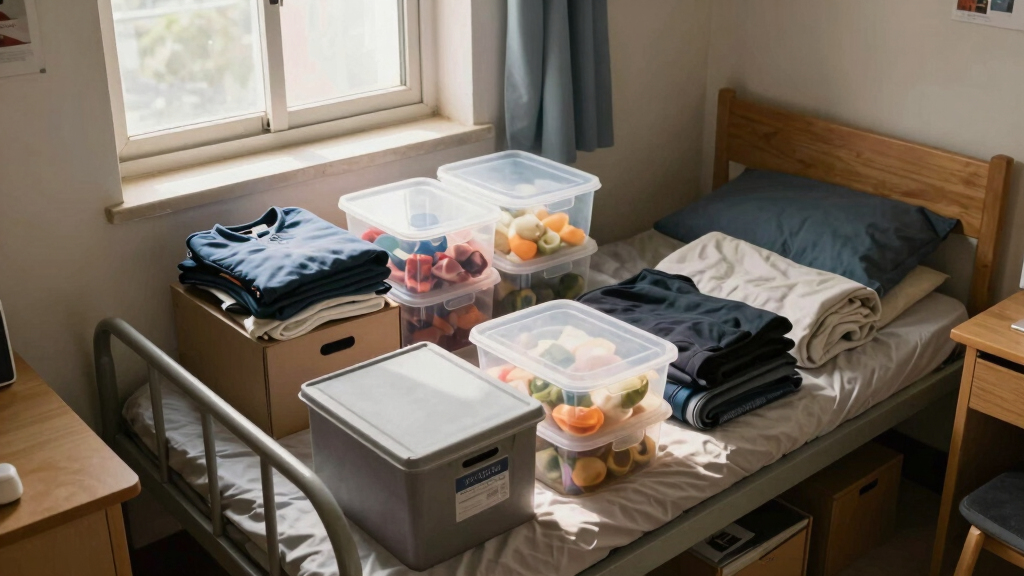
Label and transparent containers help keep your space organized and items easy to find.
Latest storage trends focus on modular, eco-friendly, and foldable designs to maximize small spaces.
Best Under-Bed Storage for Small Dorm Rooms
A dorm bed hides one of the room’s most useful storage zones. The winning setup is not simply the biggest bin: it is the system that fits the clearance, protects what is inside, and slides out without a struggle.
Under-bed storage can increase available space by up to half in a small dorm room.
Most dorm beds offer roughly six to twelve inches beneath the frame.
Measure height, width, and usable length—then leave a little breathing room.
Measure the hidden room
Measure from the floor to the lowest part of the frame—not merely to the mattress. Select containers slightly smaller than the available opening so handles, lids, and wheels do not scrape or jam.
Capture the usable footprint
Check both sides of the bed for obstructions such as supports, outlets, heaters, or a desk that may limit pull-out access.
Six to twelve inches changes the shortlist
Low clearance favors slim fabric cases and shallow bins. More height opens the door to rolling drawers and modular units.
Match the container to the cargo
Durability is contextual. Textbooks need load support; linens need airflow; toiletries benefit from moisture resistance. Choose for what you will store, not just how the container looks.
Plastic
Lightweight, affordable, easy to wipe clean, and resistant to moisture. Reinforced walls are preferable for heavier loads because thin rigid plastic can crack under stress.
Fabric
Allows airflow around clothes and linens, then collapses when not needed. Look for reinforced seams, firm sides, and strong handles if the bin will be pulled frequently.
Metal or wood
Strong enough for bulky or heavy items and often available as wheeled drawers. The tradeoff is added weight, higher cost, and reduced portability during move-out.
| Material | Moisture resistance | Breathability | Heavy-load support | Foldable | Typical value |
|---|---|---|---|---|---|
| Plastic | ✓ | ~ | ~ | ✗ | Budget-friendly |
| Fabric | ~ | ✓ | ✗ | ✓ | Low to mid-range |
| Metal | ✓ | ✓ | ✓ | ✗ | Mid to premium |
| Wood | ✗ | ~ | ✓ | ✗ | Premium |
Make retrieval nearly effortless
Storage only works when it is convenient enough to use every day. Wheels, handles, clear sides, labels, and smooth lids reduce friction and prevent the under-bed zone from becoming a forgotten pile.
Student-friendly feature priority
Turn hidden space into clear zones
Group similar belongings, give every category a home, and reserve the easiest-to-reach positions for frequently used items. This simple chain keeps retrieval quick and clutter under control.
Measure
Record clearance and pull-out space.
Sort
Group clothes, books, shoes, and gear.
Match
Choose material by weight and airflow.
Label
Make every container identifiable.
Position
Keep daily items nearest the opening.
Daily reach
Shoes, study supplies, frequently worn layers
Weekly use
Extra towels, sports gear, backup toiletries
Seasonal reserve
Off-season clothing, spare bedding, luggage
Smarter trends for tighter rooms
Newer designs focus on adaptability: storage can change with the semester, collapse during move-out, or serve more than one purpose without occupying additional floor space.
Modular systems
Stackable and rearrangeable components adapt to changing layouts and storage needs.
Eco materials
Recycled plastics and biodegradable fabrics provide more sustainable alternatives.
Foldable forms
Collapsible bins free space when empty and simplify end-of-term transportation.
Multi-function design
Benches, seating, and modular furniture hide storage inside a second useful function.
What works best for clothing?
Breathable fabric bins or ventilated plastic containers help reduce trapped odors and moisture.
Can textbooks go under the bed?
Yes. Use reinforced plastic, metal, or wood units rated to support the load, ideally with wheels.
How can contents stay easy to find?
Use transparent sides or clear labels and keep frequently used items at the front or on top.
What if storage needs change?
Choose modular, stackable, or collapsible units that can be rearranged or stored flat.
Fit. Airflow. Access.
The best under-bed storage for a small dorm room is the option that fits with clearance to spare, supports the weight of its contents, and remains easy to retrieve. Measure first, ventilate textiles, label every zone, and put everyday essentials within arm’s reach.
How to Pick the Perfect Under-Bed Storage That Fits in Tiny Dorms
The first step is knowing your bed’s clearance. Measure from the floor to the underside of your bed frame—most dorm beds have 6-12 inches of clearance. Once you know that, look for containers that fit comfortably without blocking your access or making the space feel cramped.
Choosing the right size matters because an ill-fitting container can either be too tight, risking damage or difficulty in retrieving items, or too loose, wasting valuable space. For example, if your clearance is only 8 inches, avoid bulky plastic bins that are 10 inches tall. Instead, opt for slim fabric baskets or low-profile plastic drawers. These keep your space open and prevent tripping hazards when you crawl underneath.
Measuring carefully ensures you don’t buy storage that’s either too big or too small, which could lead to frustration or underutilized space. Using stackable or collapsible units can maximize flexibility, allowing you to adapt as your storage needs change or as your dorm setup evolves.
- Measure your bed’s height, width, and length.
- Choose storage with dimensions slightly less than your clearance.
- Opt for stackable or collapsible units if space is tight.
under bed storage bins for dorm rooms
As an affiliate, we earn on qualifying purchases.
As an affiliate, we earn on qualifying purchases.
Material Matters: What Under-Bed Storage Should Be Made Of for Durability
Durability depends on the material because it directly impacts how well the storage resists wear, weight, and environmental factors. Plastic bins are affordable, lightweight, and resistant to moisture, making them suitable for many dorm scenarios. However, their rigidity can sometimes crack under heavy loads, so choosing thicker or reinforced plastic can improve longevity.
Fabric bins offer breathability, which is essential for items like clothes and linens that need air circulation to prevent mold and odors. They are also easy to fold and store when not in use, saving space. But, since fabric is less sturdy, it’s important to select options with reinforced handles or sturdy seams if you plan to store heavier items.
Metal or wood options tend to be more durable and can handle heavier loads such as textbooks or shoes. Metal drawers, for example, often come with wheels, making them easier to slide in and out without strain. However, they are heavier and may be more expensive, so consider your budget and mobility needs.
Understanding the tradeoffs between materials helps you select storage that balances durability, weight, and cost according to what you plan to store. Heavy items like textbooks require sturdier containers, while seasonal clothes or lightweight accessories can go in softer, breathable fabric bins that are easier to move and store.
- Plastic: inexpensive, durable, water-resistant, but may crack under stress.
- Fabric: breathable, lightweight, foldable, but less sturdy for heavy items.
- Metal/wood: highly durable and supportive, suitable for heavy or bulky items, but heavier and often pricier.
As an affiliate, we earn on qualifying purchases.
Making Access Easy: The Best Under-Bed Storage Features for Students
Easy access is crucial because it encourages regular use and prevents frustration. Features like pull-out drawers, rolling bins, or lids that lift smoothly save time and effort, especially when you’re in a hurry to grab something.
Imagine slipping under your bed to grab a sweater or a textbook without wrestling with stubborn lids or tipping over containers. A rolling plastic bin on wheels can glide out effortlessly, minimizing strain and making retrieval quick and simple. Similarly, soft fabric bins with handles can be pulled out easily and carried to your desk or chair without hassle.
Labels or transparent sides are more than just organizational tools—they significantly improve accessibility by allowing you to identify contents at a glance. This reduces the time spent rummaging through storage and helps maintain a tidy space, which is especially important in small dorm rooms where clutter can quickly become overwhelming.
Features like smooth-sliding lids, easy-grip handles, and clear labeling make your under-bed storage more user-friendly, encouraging consistent organization and quick access to your belongings.
- Choose rolling or pull-out units for easy reach.
- Opt for lids that lift or slide smoothly.
- Label or use transparent bins to identify contents quickly.
ventilated under bed storage containers
As an affiliate, we earn on qualifying purchases.
As an affiliate, we earn on qualifying purchases.
Organize Like a Pro: Tips for Maximizing Space and Keeping Things Tidy
Organization turns chaos into order. Use stackable bins, dividers, or labeled containers to keep everything neat. For instance, stacking seasonal clothing in one bin, textbooks in another, and sports gear in a third helps create clear zones for different categories, making retrieval and put-away more efficient.
Placing frequently used items at the front or on top ensures quick access and minimizes the need to crawl underneath or rummage through piles. This habit saves time and energy during busy mornings or study sessions.
Remember, clear bins or labels aren’t just for aesthetics—they help you quickly identify what’s inside, reducing the time spent searching and preventing clutter from building up. Giving each item or group of items a designated space encourages consistent tidiness, which is vital in small rooms where clutter can feel overwhelming.
By creating designated zones and maintaining a routine of organization, you turn your under-bed storage into an efficient, accessible system that supports your daily life.
- Use stackable containers to save space.
- Label everything for easy identification.
- Keep daily essentials at the front or top.
clear plastic under bed storage boxes
As an affiliate, we earn on qualifying purchases.
As an affiliate, we earn on qualifying purchases.
Latest Trends in Under-Bed Storage That Make Your Life Easier
New designs focus on multi-functionality and space-saving features that adapt to the dynamic needs of students. Modular units that can be stacked or rearranged allow for customization based on the room’s layout or changing storage needs. Some innovative options even combine seating with hidden compartments, providing both a place to sit and storage without taking up extra space, which is a game-changer in tiny dorms.
Eco-friendly materials are gaining popularity, with options made from recycled plastics or biodegradable fabrics that reduce environmental impact. These choices appeal to students seeking sustainable living solutions while maintaining functionality.
Foldable and collapsible designs are particularly useful because they can be stored away when not in use, freeing up space for other activities or furniture. The ability to adapt storage solutions to your current needs makes dorm rooms more flexible and livable.
Decorative features, such as colorful fabrics, labels, and personalized tags, turn storage from a purely functional element into a part of your room’s aesthetic. This not only helps keep things organized but also adds a personal touch that makes your space feel more like home.
- Modular, stackable units for flexibility.
- Eco-friendly, sustainable materials.
- Foldable, collapsible solutions for versatility.
Frequently Asked Questions
What is the best type of under-bed storage for clothing?
Breathable fabric bins or plastic containers with ventilation are ideal for clothing. They prevent odors and allow air circulation, keeping your clothes fresh.
How do I measure my space accurately?
Use a tape measure to find the height, width, and length of the under-bed clearance. Subtract a small margin (about half an inch) to ensure a good fit without forcing the container in.
Are under-bed storage solutions safe for heavy items?
Yes, but only if the storage unit is rated for the weight. Look for sturdy plastic or metal bins designed to handle heavier books or shoes to prevent damage or accidents.
Can I store bulky items like textbooks or shoes under my bed?
Absolutely. Larger, sturdy containers or rolling carts are perfect for bulky items. Just ensure they fit under your bed and can support the weight.
What are some space-saving tips for small dorm rooms?
Use vertical storage, stackable bins, and multi-purpose furniture. Keeping things off the floor and creating layers maximizes every inch of your space.
Conclusion
Maximizing tiny dorm spaces doesn’t mean sacrificing order or style. Smart under-bed storage turns overlooked space into a neat, accessible closet. Focus on fit, durability, and easy access—your room and your future self will thank you.
Remember, every inch counts. With the right choices, your small dorm can feel spacious and organized—ready for whatever college throws your way.