
TL;DR
Most dorm rooms are tiny—150 to 230 square feet. Overpacking is the biggest mistake. Focus on essentials, avoid banned items, and coordinate with roommates to keep things simple and safe.
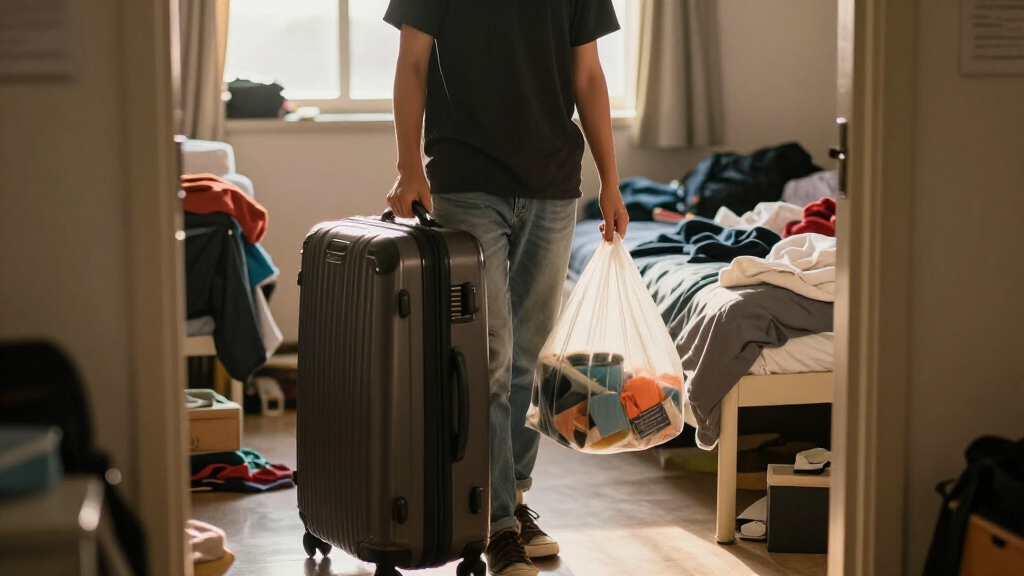
Picture this: your student arrives at college, excited but overwhelmed by the mountain of boxes. But what if many of those boxes contain items they shouldn’t bring? Overpacking isn’t just a clutter issue; it’s a safety risk and can lead to fines or confiscation. Knowing exactly what to leave at home can save headaches and make move-in day smoother.
This guide cuts through the clutter, highlighting what *not* to pack—prohibited appliances, bulky furniture, and high-value items—so your student can focus on essentials. Let’s explore what to avoid, why, and how to prepare for a safe, compliant dorm experience.
Double-check your college’s prohibited items list before shopping to avoid confiscation or fines.
Pack only what fits comfortably in the limited space—overpacking causes clutter and safety issues.
Coordinate with roommates to prevent duplicate appliances and furniture, saving space and money.
Leave high-value items, large cash, and irreplaceable heirlooms at home for safety.
Stay updated on campus safety policies, especially regarding fire hazards and electronics.
What Not to Bring to College Dorms
Move-in day shouldn’t end at the confiscation bin. Most dorm rooms offer just 150–230 square feet — and overpacking is the single biggest mistake families make. This guide maps what’s banned, what’s restricted, and what’s simply not worth the box space, so your student arrives light, safe, and compliant.
More than 2,000 dorm fires occur in the U.S. every year — most traced to banned cooking appliances and open flames. Fire safety, not fussiness, drives the rules.
Six Categories to Cross Off Your List
Every banned item falls into one of six buckets. Skim these before the shopping cart fills up — what stays home saves space, money, and a conduct referral.
Appliances That Spark Violations
The leading cause of dorm fires — and of confiscation bins.
- Candles, incense & wax warmers — banned even unlit
- Hot plates, toaster ovens & deep fryers
- Space heaters & halogen lamps — overheating risk
- Daisy-chained power strips — surge protectors only
- Hoverboards & e-scooters — lithium-battery bans
Too Big for the Floor Plan
Dorms arrive furnished — and removing or adding pieces is usually prohibited.
- Sofas, recliners & extra desks — they won’t fit the door
- Waterbeds — universally banned
- Lofts & bed risers above approved heights
- Oversized rugs — coverage is capped by fire code
One of Everything Is Plenty
Campus infrastructure already covers most “just in case” items.
- Second TV or printer — libraries print for less
- Iron + full ironing board — laundry rooms have them
- Off-season wardrobe — swap at breaks instead
- Duplicate kitchen gadgets beyond a few dishes
Tempting, but Risky
Dorm theft is the most common campus property crime.
- Expensive jewelry — leave it insured at home
- Irreplaceable heirlooms — photos travel better
- Large amounts of cash — use a bank account
- Anything you’d genuinely mourn losing
Keep the Hallway Peace
Quiet-hour complaints escalate fast in shared housing.
- Drum kits, subwoofers & amplifiers — headphones exist
- Fog machines — a fire-alarm trigger
- Incandescent string lights & neon signs
- Dartboards — banned at many schools
Check Before You Buy
The residence hall — or the roommate — may already have it.
- Microwave / microfridge — rental programs are growing
- Communal vacuum cleaners at the front desk
- Shared rug, fridge & TV — split the list, not the cost twice
- Personal Wi-Fi routers — restricted on many networks
Banned, Restricted, or Safe to Pack
Policies vary by campus, but the pattern is remarkably consistent. Treat this as the baseline — then confirm against your school’s housing page.
| Item | Verdict | Why — and the Rule of Thumb |
|---|---|---|
| Candles, incense & wax warmers | ✗ Banned | Open flames violate nearly every campus fire code — even unlit, decorative candles. |
| Hot plates, toaster ovens & fryers | ✗ Banned | Cooking equipment is the leading cause of dorm fires; use shared kitchens instead. |
| Space heaters & halogen lamps | ✗ Banned | Overheating and electrical overload — report a cold room to facilities instead. |
| Hoverboards & e-scooters | ✗ Banned | Lithium-battery fire risk; indoor storage and charging bans keep expanding. |
| Waterbeds & unapproved lofts | ✗ Banned | Waterbeds are universally prohibited; risers must meet posted height rules. |
| Microwave | ~ Restricted | Often the only in-room cooking appliance — typically capped under 1,000 watts. |
| Mini-fridge | ~ Restricted | Size caps of 3.1–4.5 cubic feet apply; many dorms offer microfridge rentals. |
| Area rugs | ~ Restricted | Coverage limited to roughly 30–50% of the floor for fire-code compliance. |
| Auto-shutoff coffee maker | ✓ Allowed | Permitted at most schools as long as the auto-shutoff feature is built in. |
| UL-listed surge protector | ✓ Allowed | Frequently required; daisy-chained strips and bare extension cords are not. |
| LED string lights | ✓ Allowed | The approved swap for incandescent strands and neon signs. |
Size Limits at a Glance
Dorm math is unforgiving. The green band shows what’s permitted; anything past it invites a fine, a confiscation, or a door that won’t close.
Scale: 0–300 sq ft. Your student’s half of a shared double can be under 100 sq ft of usable space.
Scale: 0–6 ft. A full four-season wardrobe will not fit — pack one season, swap at breaks.
Scale: 0–10 ft³. Oversized units get refused at the door — or rent a pre-approved microfridge.
Scale: 0–2,000W. Check the label before purchase — wattage is printed on the back panel.
Scale: 0–100% of floor. Wall-to-wall coverage is a fire-code violation at most schools.
Pack This Instead
Every banned item has a compliant counterpart that does the same job — without the inspection-day drama.
Flameless Ambience
LED flameless candles, battery fairy lights, and framed photos set the mood without tripping a fire code.
Shared-Kitchen Plan
A sub-1,000W microwave in-room plus the hall’s communal kitchen covers real cooking — air fryers live there, if anywhere.
One Season, Rotated
Pack for the current semester only; swap bins at fall and spring breaks. A 2–3 ft closet demands an editor’s eye.
A Small Lockbox — or Home
If a keepsake must come, a portable safe anchors it. Better: photograph it, leave the original insured at home.
Tightening fast: lithium-battery storage bans for e-bikes and scooters, personal Wi-Fi router restrictions, stricter candle and outlet-overload fines — and growing microfridge rental programs that make hauling your own unit pointless. Check the housing portal before you shop.
The Smart Move-In Sequence
Five steps between the shopping list and a violation-free room. Skip step one and the rest don’t matter.
Read the List
Pull the housing page’s prohibited-items PDF before buying a single thing.
Coordinate
Split shared gear with the roommate: one fridge, one microwave, one rug.
Edit Down
One season of clothing, one set of dishes, comfort items that earn their space.
Label & Pack
Tag every box by zone — desk, bed, bath, closet — for a 30-minute unload.
Move In Clean
Pass inspection on day one: nothing confiscated, nothing fined, nothing hauled home.
Questions Parents Actually Ask
Are candles allowed if they’re never lit?
No. Most colleges ban candles entirely — unlit and decorative included — because fire codes don’t grade on intent. When in doubt, assume banned.
Can my student bring an air fryer or Instant Pot?
Typically not in individual rooms due to fire risk. Some campuses allow small appliances in shared kitchens — review the policy before packing one.
What size mini-fridge is acceptable?
Most schools cap units at 3.1–4.5 cubic feet. Check the housing guidelines first, or skip the question entirely with a school-approved microfridge rental.
What happens if a prohibited item is found?
Items are typically confiscated, and students may face fines or conduct violations during inspections. Leaving banned items home is the only reliable strategy.
Stay Safe: Avoid Appliances That Spark Fires or Violations
Most colleges ban open-flame and high-wattage appliances to prevent fires. Candles, incense, and wax warmers are a strict no-go—many schools prohibit even unlit candles due to fire codes. Electric appliances like hot plates, toaster ovens, and deep fryers are often forbidden because they pose significant safety hazards.
Many dorms only permit microwaves (usually under 1,000W) and auto-shutoff coffee makers. Space heaters, halogen lamps, and sun lamps are also banned because they can overheat or cause electrical overloads. Extension cords without surge protection are risky, and many schools require UL-listed surge protectors, banning daisy-chained power strips.
Battery-powered hoverboards or e-scooters with lithium batteries are frequently banned due to fire risks, especially after recent incidents involving fires and explosions. Check your college’s specific list—fire safety is the main driver behind these bans.
compact mini fridge for college dorm
As an affiliate, we earn on qualifying purchases.
As an affiliate, we earn on qualifying purchases.
Skip the Big Furniture: What’s Too Large for a Dorm Room?
Think twice before bringing a full-size sofa, recliner, or an extra desk. Most dorms come fully furnished with beds, desks, and chairs, and removing or adding large furniture is usually prohibited. Waterbeds? Universally banned due to safety and fire concerns.
Lofted beds and bed risers above approved heights are often forbidden, especially if they compromise safety or violate fire codes. Large rugs are tricky too—many schools limit coverage to about 30–50% of the floor to prevent fire hazards and promote fire safety.
Imagine lugging a bulky, 12-foot sofa, only to find out it can’t fit through the door or violates school rules. It’s better to stick with smaller, approved items and use space wisely.
As an affiliate, we earn on qualifying purchases.
Avoid Redundant and Oversized Belongings
Students tend to overpack clothing—think entire wardrobes instead of just what’s needed for a semester. Closets in dorms are tiny, often only 2–3 feet wide, so bringing every season’s clothes is impractical. Swap outfits at breaks or store off-season items elsewhere.
Duplicates are common—an iron, an ironing board, a second TV, a printer—and many are unnecessary since campus libraries and laundry rooms are nearby. Mini-fridges usually have size caps—3.1 to 4.5 cubic feet—so check before buying.
Imagine a student trying to fit a 250-pound wardrobe into a tiny closet or hauling a second TV they never watch. Less is more here.
As an affiliate, we earn on qualifying purchases.
Leave the High-Value and Sentimental Items at Home
Expensive jewelry, irreplaceable heirlooms, and large amounts of cash are tempting but risky. Dorm theft is common—students lose valuables to theft more often than expected. Instead, suggest leaving high-value items at home or storing them in a safe place.
If your student wants to bring jewelry or keepsakes, recommend small, portable safes or lockboxes—just in case. Large cash amounts are best left with parents or in a secure bank account.
Imagine losing a family heirloom because it was left on a cluttered desk or stolen during a quick visit to the laundry room. Better to be safe than sorry.
As an affiliate, we earn on qualifying purchases.
Steer Clear of Noisy or Banned Items
Noise issues can disrupt dorm harmony. Instruments like drum kits, subwoofers, or loud amplifiers are often banned or should be used with headphones. Neon signs, fog machines, and incandescent string lights are also common no-go items at many campuses.
Picture a roommate playing loud music with a subwoofer that shakes the walls—disrupting everyone’s peace. Check the rules and respect quiet hours to keep the peace.
For decor, stick to LED lights and simple wall hangings. Avoid items that could cause complaints or violate fire safety codes.
Know What Your School Usually Covers — And What You Must Bring
Many colleges already provide essentials like microwaves, microfridge combos, or communal vacuum cleaners. Before packing, coordinate with your student’s roommate to avoid duplicates—one microwave, one mini-fridge, and one rug are enough.
Check your college’s housing website for their list of included items and restrictions. Bringing duplicates or oversized furniture is a waste of space and can cause conflicts.
Imagine bringing a bulky, expensive rug only to find out the dorm already provides a similar one. Save room and money by sharing the load.
The Latest Trends and Why They Matter
Recent changes include bans on lithium batteries in e-scooters after fire incidents, and more schools encourage energy-efficient appliances. Microfridge rental programs are growing, reducing the need for families to buy bulky units. Smart-device restrictions—like bans on personal Wi-Fi routers—aim to keep campus networks stable.
Many schools now promote minimalism and mental health by encouraging students to bring only what comforts them—photos, small plants, or a weighted blanket—while leaving clutter behind. Fire safety measures have tightened, with stricter inspections and fines for candles or overloading outlets.
Imagine your student moving in with a few meaningful decor items and a focus on safety—less clutter, fewer worries.
Frequently Asked Questions
Are candles allowed in dorm rooms, even unlit?
Most colleges ban candles entirely, even unlit or decorative ones, due to fire safety concerns. Check your school’s specific rules—better safe than sorry.
Can I bring an air fryer or Instant Pot?
Typically, these are not allowed in individual rooms because of fire risks. Some campuses have shared kitchens where small appliances are permitted—review your school’s policies beforehand.
What size mini-fridge is acceptable?
Most schools cap mini-fridge sizes around 3.1 to 4.5 cubic feet. Always check your college’s housing guidelines to avoid surprises at move-in.
Should I bring my own furniture or mattress topper?
Mattress toppers are usually fine and can make a small bed much more comfortable. Extra furniture is generally not allowed, as dorms come furnished and space is limited.
What happens if a prohibited item is found?
Items are typically confiscated, and students may face fines or conduct violations. It’s best to leave banned items at home to avoid complications during inspections.
Conclusion
Remember, a dorm room isn’t a storage unit—keep it simple, safe, and compliant. Focus on essentials, coordinate with roommates, and respect campus rules. Your student will thank you when move-in day goes smoothly and they settle into a clutter-free space.
Think of dorm life as a fresh start—less stuff means more freedom. Less stress, more fun, and a safer environment. It’s all about making that tiny room feel like a home, not a hazard zone.