The Sony WH-CH720N is my best overall pick for students seeking a practical balance of noise cancellation, comfort, and everyday versatility. The Soundcore Life Q30 stands out for students who want more control over listening modes, while the Bose QuietComfort (2nd Gen) is the premium choice for stronger noise reduction and a more polished listening experience. The main tradeoffs are how much isolation you need, how long you wear headphones, and whether portability or extra features matter more than keeping things simple. No single pair suits every lecture hall, commute, and study space. Read on for how the nine options compare and which one fits your routine.

Prime made for students and young adults
- Fast, free delivery for dorm and study essentials
- Prime Video and Amazon Music included
- Member-only deals
Complete the kit


Key Takeaways
- Sony WH-CH720N earns the overall lead by balancing study-friendly noise cancellation and everyday usability rather than focusing on one narrow strength.
- Soundcore Life Q30 and Q20i offer different value angles: the Q30 is the more feature-rich choice, while the Q20i suits students who want a simpler, practical option.
- Bose QuietComfort (2nd Gen) is the premium pick for students who place a high priority on noise reduction and listening comfort, but its added refinement may exceed a basic study setup.
- Soundcore Space One and the pink Q20i show how fit and style can shape a student choice alongside sound and noise cancellation.
- Belkin, Raycon, Amazon Basics, and BERIBES round out the field with simpler or alternative approaches; compare their controls, comfort, and feature needs against the stronger all-around picks before choosing.
| Belkin SoundForm Isolate Over-Ear Noise-Cancelling Headphones |  | Best for Switching Between Study Devices | Driver size: 40 mm | Bluetooth: 5.4 | Multipoint: Connects to 2 devices | VIEW LATEST PRICE | See Our Full Breakdown |
| Sony WH-CH720N Wireless Noise-Canceling Over-Ear Headphones, Pink |  | Best for Lightweight All-Day Wear | Weight: 192 g | Noise cancellation: Dual Noise Sensor technology with Integrated Processor V1 | Battery life: Up to 35 hours | VIEW LATEST PRICE | See Our Full Breakdown |
| Raycon Everyday Noise-Cancelling Wireless Over-Ear Headphones, Carbon Black |  | Best for Foldable, Sweat-Resistant Flexibility | Design: Over-ear, foldable | Drivers: 40 mm | Noise cancellation: Active noise cancellation with 3 modes | VIEW LATEST PRICE | See Our Full Breakdown |
| Soundcore by Anker Life Q30 Wireless Over-Ear Headphones with Active Noise Cancellation | 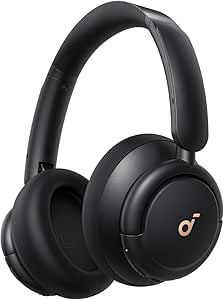 | Best for Customizing Study Environments | Bluetooth: Bluetooth 5 | Driver size: 40 mm | Noise cancellation: Hybrid ANC with Transport, Outdoor, and Indoor modes | VIEW LATEST PRICE | See Our Full Breakdown |
| Amazon Basics Hybrid Active Noise Cancelling Over-Ear Headphones, Bluetooth 5.3, Black |  | Best for Straightforward Everyday Listening | Bluetooth: 5.3 | Driver size: 40 mm | Noise cancellation: Hybrid active noise cancellation | VIEW LATEST PRICE | See Our Full Breakdown |
| BERIBES WH305B Wireless Active Noise-Cancelling Over-Ear Headphones |  | Best for Long Study Days | Model: WH305B | Design: Foldable over-ear | Connectivity: Bluetooth 6.0; 3.5 mm wired connection | VIEW LATEST PRICE | See Our Full Breakdown |
| Soundcore by Anker Q20i Hybrid Active Noise Cancelling Over-Ear Headphones, Pink |  | Best for Switching Between Devices | Model: A3004 | Design: Over-ear Bluetooth headphones | Noise control: Hybrid ANC; ANC, Normal, and Transparency modes | VIEW LATEST PRICE | See Our Full Breakdown |
| Soundcore Space One Over-Ear Bluetooth Headphones |  | Best for Adjustable Noise Control | Model: Space One (A3035) | Design: Over-ear Bluetooth headphones | Noise cancellation: Adaptive ANC with five adjustable levels | VIEW LATEST PRICE | See Our Full Breakdown |
| Bose QuietComfort Headphones (2nd Gen), Wireless Noise-Cancelling Over-Ear Headphones, Eucalyptus Green |  | Best for Immersive Listening Modes | Model: QuietComfort Headphones (2nd Gen), 895491-0300 | Design: Wireless over-ear | Noise cancelling: Active noise cancelling with updated ActiveSense Technology | VIEW LATEST PRICE | See Our Full Breakdown |
| noise cancelling headphones for student | Battery life | Noise cancellation | Connectivity | Driver size |
|---|---|---|---|---|
| Belkin SoundForm Isolate Over- | Up to 60 hours with ANC off; 40 hours with ANC on | Hybrid ANC; reduces external noise by up to 25 dB | — | 40 mm |
| Sony WH-CH720N Wireless Noise- | Up to 35 hours | Dual Noise Sensor technology with Integrated Processor V1 | Multipoint connection for two devices | — |
| Raycon Everyday Noise-Cancelli | Listed as up to 60 hours; description also states up to 38 hours | Active noise cancellation with 3 modes | Bluetooth | — |
| Soundcore by Anker Life Q30 Wi | — | Hybrid ANC with Transport, Outdoor, and Indoor modes | Bluetooth and 3.5 mm AUX | 40 mm |
| Amazon Basics Hybrid Active No | Up to 35 hours with ANC on; up to 45 hours with ANC off | Hybrid active noise cancellation | Bluetooth and 3.5 mm audio cable | 40 mm |
| BERIBES WH305B Wireless Active | Up to 45 hours with ANC; up to 70 hours in standard mode | — | Bluetooth 6.0; 3.5 mm wired connection | 40 mm |
| Soundcore by Anker Q20i Hybrid | Up to 40 hours with ANC on | — | Bluetooth and AUX; multipoint connection to two devices | — |
| Soundcore Space One Over-Ear B | Up to 40 hours with ANC on; 55 hours with ANC off | Adaptive ANC with five adjustable levels | — | 40 mm |
| Bose QuietComfort Headphones | Up to 24 hours with noise cancelling; up to 18 hours with TrueSpatial audio | — | — | — |
More Details on Our Top Picks
Belkin SoundForm Isolate Over-Ear Noise-Cancelling Headphones
The Belkin SoundForm Isolate suits students who move between a laptop and phone throughout the day: Bluetooth multipoint connects two devices, so switching for a call or lecture is easier than reconnecting each time. Its hybrid ANC, Hear Thru mode, and foldable design make it a flexible campus pick, while the up to 60-hour battery life with ANC off can reduce charging interruptions. Compared with the Sony WH-CH720N, Belkin offers longer listed battery life and a wired audio option, but Sony is lighter at 192 g and provides adaptive sound control. Belkin’s battery estimate falls to 40 hours with ANC on, and its listed Bluetooth range is 33 ft. I’d choose it for device-hopping convenience, not for the lightest all-day fit.
Pros:- Bluetooth multipoint connects two devices
- Up to 60 hours of battery life with ANC off
- Foldable design with CloudCushion ear cups
- USB-C charging and 3.5 mm wired audio support
Cons:- Battery life is listed as up to 40 hours with ANC on
- Bluetooth range is listed at 33 ft
- No product weight is provided for buyers comparing long-wear comfort
Best for: Students who regularly switch between a laptop for coursework and a phone for calls, and want both wireless and wired listening options.
Not ideal for: Students who prioritize a very lightweight headset for long study sessions or expect the longest battery life while ANC stays on.
- Driver size:40 mm
- Bluetooth:5.4
- Multipoint:Connects to 2 devices
- Battery life:Up to 60 hours with ANC off; 40 hours with ANC on
- Noise cancellation:Hybrid ANC; reduces external noise by up to 25 dB
- Listening modes:ANC, Hear Thru, Belkin Signature Sound, Isolate ocean wave sounds
- Charging:USB-C; 10 minutes provides up to 6 hours of playback
- Wired audio:3.5 mm AUX
Our verdict“Choose the Belkin if multipoint switching and flexible wired or wireless listening matter more than a very light fit.”
Sony WH-CH720N Wireless Noise-Canceling Over-Ear Headphones, Pink
At 192 g, the Sony WH-CH720N is the clearest choice here for students who keep headphones on through lectures, library work, and commutes. Dual Noise Sensor technology and an Integrated Processor V1 handle noise cancellation, while Adaptive Sound Control and adjustable Ambient Sound give more listening control than the simpler mode sets on the Amazon Basics Hybrid ANC headphones. Sony also supports multipoint and hands-free calls, useful when coursework and phone notifications share the day. The tradeoff is endurance: its up to 35 hours is shorter than the Belkin SoundForm Isolate’s listed 60 hours with ANC off. A quick three-minute charge adds up to an hour, though a full charge takes 3.5 hours and the included USB-C cable is only about 20 cm long. I’d pick Sony for low weight and adaptive listening, not maximum runtime.
Pros:- Lightweight 192 g over-ear design
- Adaptive Sound Control and adjustable Ambient Sound mode
- Three-minute quick charge provides up to an hour of playback
- Multipoint connection and beamforming microphones for calls
Cons:- Up to 35 hours of battery life is shorter than the Belkin SoundForm Isolate’s listed ANC-off runtime
- A full charge takes 3.5 hours
- Included USB-C cable is approximately 20 cm long
Best for: Students who wear headphones for several hours at a stretch and want a lightweight fit, adjustable ambient sound, and multipoint pairing.
Not ideal for: Students who want the longest battery life between charges or need a longer included charging cable for their desk setup.
- Weight:192 g
- Noise cancellation:Dual Noise Sensor technology with Integrated Processor V1
- Battery life:Up to 35 hours
- Quick charging:3-minute charge provides up to 1 hour of playback
- Full charge time:3.5 hours
- Connectivity:Multipoint connection for two devices
- Audio features:DSEE, adjustable Ambient Sound mode, Adaptive Sound Control
- Call features:Beamforming microphones with Precise Voice Pickup Technology
Our verdict“Choose the Sony if lightweight comfort and adaptable listening matter more than class-leading battery life.”
Raycon Everyday Noise-Cancelling Wireless Over-Ear Headphones, Carbon Black
The Raycon Everyday Headphones combine a foldable frame, rotating earcups, and three ANC modes, making them a practical option for students who pack their headphones away between classes or want mode choices for different settings. Their listed IPX3 sweat resistance offers some protection for light sweat, a feature not specified for the Belkin SoundForm Isolate or Sony WH-CH720N. That rating is limited, though: it is not a reason to wear them in heavy rain or treat them as water-resistant for every campus commute. Raycon also claims up to 60 hours of battery life, but the listing gives a conflicting 38-hour figure, so I would not choose them on runtime alone. Compared with Sony, Raycon gives up the stated lightweight 192 g figure and adaptive sound features. It makes more sense for packability and basic flexibility than a clearly documented all-day study setup.
Pros:- Foldable design with rotating earcups
- Three active noise-cancellation modes
- IPX3 sweat resistance
- Built-in microphone for calls
Cons:- Battery-life information conflicts between the listing’s up-to-60-hour claim and a 38-hour description
- IPX3 protection is limited and does not make the headphones suitable for heavy rain
- Does not list multipoint connectivity or adaptive sound controls like the Sony WH-CH720N
Best for: Students who want foldable over-ear headphones with multiple ANC modes and limited sweat protection for walking between classes.
Not ideal for: Students who need dependable published battery-life information, stronger water protection, or documented lightweight comfort.
- Design:Over-ear, foldable
- Drivers:40 mm
- Noise cancellation:Active noise cancellation with 3 modes
- Battery life:Listed as up to 60 hours; description also states up to 38 hours
- Water resistance:IPX3 sweat resistance
- Weight:7.52 ounces
- Connectivity:Bluetooth
- Microphone:Built-in
Our verdict“Choose Raycon for a foldable design and limited sweat resistance, but skip it if battery-life certainty is a priority.”
Soundcore by Anker Life Q30 Wireless Over-Ear Headphones with Active Noise Cancellation
The Soundcore Life Q30 is the most adjustable study companion in this group: its Transport, Outdoor, and Indoor ANC modes let students choose a setting for different surroundings, while app-based EQ and HearID allow further sound tuning. That gives it a stronger customization case than the three-mode ANC setup on the Raycon Everyday Headphones. Its listed runtime is also substantial: up to 50 hours with ANC and 80 hours in standard mode, with a five-minute charge adding up to four hours of listening. Memory foam earcups are intended for longer sessions, though the listing provides no weight for direct comfort comparison with the 192 g Sony WH-CH720N. One important limitation for students who keep a backup cable in their bag: ANC does not work over AUX. I’d choose Q30 for adjustable study modes, not for wired ANC use.
Pros:- Three ANC modes for transport, outdoor, and indoor settings
- App offers HearID and EQ customization
- Up to 50 hours of playback with ANC and up to 80 hours in standard mode
- Five-minute fast charge provides up to four hours of listening
Cons:- ANC is unavailable when connected through the AUX cable
- Product data does not list weight for comparing comfort with the lightweight Sony WH-CH720N
- Bluetooth range is listed as 10 meters
Best for: Students who study in changing environments and want multiple ANC modes, app-based EQ, and long wireless playback.
Not ideal for: Students who need noise cancellation while listening through a 3.5 mm AUX cable or prefer a listed weight for comparing long-session comfort.
- Bluetooth:Bluetooth 5
- Driver size:40 mm
- Noise cancellation:Hybrid ANC with Transport, Outdoor, and Indoor modes
- Playback time:Up to 50 hours with ANC; up to 80 hours in standard mode
- Fast charging:5 minutes provides up to 4 hours of listening
- Connectivity:Bluetooth and 3.5 mm AUX
- Bluetooth range:10 meters
- Ear cushion material:Protein leather with memory foam
Our verdict“Choose the Life Q30 if you want ANC modes and sound settings you can tailor to different study spaces.”
Amazon Basics Hybrid Active Noise Cancelling Over-Ear Headphones, Bluetooth 5.3, Black
The Amazon Basics Hybrid ANC headphones keep the controls uncomplicated: students get ANC on, Transparency, and ANC off, plus five microphones with ENC for hands-free calls. Their up to 35 hours with ANC on is a useful listed runtime for a school week, though the Soundcore Life Q30 lasts up to 50 hours with ANC and offers app-based EQ and three environment-specific ANC modes. Amazon Basics instead gives a simpler set of listening choices and a retractable headband for fit adjustment. The main catch affects both backup listening and charging: headphone functions are disabled while charging, and connecting the 3.5 mm cable disables Bluetooth, ANC, microphone, buttons, and power functions. That makes the cable a basic audio fallback rather than a full-featured wired mode. I’d choose this pair for simple wireless study use, not feature-rich customization.
Pros:- Three listening modes: ANC on, Transparency, and ANC off
- Up to 35 hours of battery life with ANC on
- Five microphones with ENC for hands-free calls
- Soft ear cushions and an adjustable, retractable headband
Cons:- Headphone functions are disabled while charging
- Using the 3.5 mm cable disables buttons, microphone, Bluetooth, ANC, and power functions
- Offers less listed ANC customization than the Soundcore Life Q30
Best for: Students who want basic ANC, a Transparency mode, and hands-free calling without app-based sound customization.
Not ideal for: Students who need to use headphones while charging or expect ANC, controls, and microphone functions to remain available over a 3.5 mm cable.
- Bluetooth:5.3
- Driver size:40 mm
- Noise cancellation:Hybrid active noise cancellation
- Listening modes:ANC on, Transparency, ANC off
- Battery life:Up to 35 hours with ANC on; up to 45 hours with ANC off
- Microphones:Five omnidirectional microphones with ENC
- Connectivity:Bluetooth and 3.5 mm audio cable
- Fit:Over-ear with soft ear cushions and adjustable, retractable headband
Our verdict“Choose Amazon Basics for simple wireless ANC and Transparency, but skip it if you need usable controls while charging or wired ANC.”
BERIBES WH305B Wireless Active Noise-Cancelling Over-Ear Headphones
The BERIBES WH305B suits students who want long stretches of listening without making frequent charging part of their routine. Its battery is rated for up to 45 hours with ANC on, rising to 70 hours in standard mode, and a five-minute charge can add up to four hours of playback. That gives it an endurance advantage over the Bose QuietComfort Headphones (2nd Gen), whose stated ANC battery life is 24 hours. A transparent mode also helps when you need to hear people around you, while folding earcups and a wired option make it flexible for commuting or backup listening.
The tradeoff is that the longer 70-hour figure applies with ANC off, and the supplied guidance says to switch ANC off when Bluetooth is not in use to conserve power. I would choose the BERIBES for battery and portability over Bose’s richer mode selection, but skip it if you want the Bose feature set or need ANC during wired listening.
Pros:- Up to 45 hours of playback with ANC enabled and up to 70 hours in standard mode.
- Five-minute fast charge provides up to four hours of listening.
- Foldable, 11.68-ounce design is convenient to pack for campus or travel.
- Includes both transparent mode and a 3.5 mm wired connection.
Cons:- ANC-on playback is shorter than the 70-hour maximum listed for standard mode.
- ANC should be switched off when Bluetooth is not in use to conserve battery.
- The supplied details do not specify app controls or adjustable ANC levels.
Best for: Students who carry headphones between classes and want extended battery life, foldable storage, and a wired backup.
Not ideal for: Students who need noise cancellation while listening through a cable or want a wider range of specialized listening modes.
- Model:WH305B
- Design:Foldable over-ear
- Connectivity:Bluetooth 6.0; 3.5 mm wired connection
- Noise control:Active noise cancellation and transparent mode
- Driver size:40 mm
- Battery life:Up to 45 hours with ANC; up to 70 hours in standard mode
- Fast charging:Five minutes provides up to four hours of listening
- Weight:11.68 ounces
Our verdict“Choose the BERIBES WH305B if long battery life and a foldable design matter more than advanced noise-control customization.”
Soundcore by Anker Q20i Hybrid Active Noise Cancelling Over-Ear Headphones, Pink
For students who move between a laptop and phone throughout the day, the Soundcore Q20i makes device switching a stronger reason to buy than battery records or premium audio formats. Its multipoint connection can connect to two devices and switch audio automatically, while the app adds adjustable ANC, EQ settings, and white noise for study sessions. Four microphones support its hybrid noise cancellation, and ANC, Normal, and Transparency modes cover common campus situations. Against the BERIBES WH305B, the Q20i offers more documented app customization and device flexibility; BERIBES counters with a longer stated ANC-off runtime.
The Q20i provides up to 40 hours with ANC on, plus a five-minute charge for four hours of playback. Its main limitation is that noise cancellation is unavailable over AUX, and Hi-Res audio is available through that cable rather than Bluetooth. I would pick it for a student juggling devices, not someone who needs wired ANC or wireless LDAC support.
Pros:- Multipoint connection links two devices and supports automatic audio switching.
- Four microphones support hybrid active noise cancellation.
- App offers EQ customization, adjustable ANC, white noise, and listening modes.
- Up to 40 hours with ANC and a five-minute charge for four hours of playback.
Cons:- Noise cancellation is unavailable in AUX mode.
- Hi-Res audio is supported through the included AUX cable, not listed as a wireless feature.
- The supplied specs do not state the headphone weight or a folding design.
Best for: Students who alternate between a computer and phone and want app-based sound controls and automatic two-device switching.
Not ideal for: Students who rely on wired listening but still want ANC, or who specifically want Hi-Res audio over Bluetooth.
- Model:A3004
- Design:Over-ear Bluetooth headphones
- Noise control:Hybrid ANC; ANC, Normal, and Transparency modes
- Microphones:Four
- Battery life:Up to 40 hours with ANC on
- Fast charging:Five minutes provides four hours of playback
- Connectivity:Bluetooth and AUX; multipoint connection to two devices
- App features:EQ presets and custom EQ, HearID, Spatial Audio, adjustable ANC, and white noise
Our verdict“Choose the Q20i if your study routine involves frequent switching between a laptop and phone and you value app controls.”
Soundcore Space One Over-Ear Bluetooth Headphones
The Soundcore Space One is a strong fit for students whose surroundings change between a quiet library, a shared room, and a busy commute. Its adaptive ANC with five adjustable levels offers more documented control than the simpler mode descriptions for the BERIBES WH305B. At 9.12 ounces, it is also the lightest option among these four by the supplied weights, and its rotating earcups and soft integrated headband are designed with longer wear in mind. For compatible wireless listening, LDAC support gives it an audio-format advantage over the Q20i, which lists Hi-Res audio through AUX.
Battery life is rated at up to 40 hours with ANC on and 55 hours with ANC off, so it falls short of BERIBES’s ANC-off maximum. Some ANC adjustments and other features require the Soundcore app, which can be a nuisance if you prefer to manage everything from the headphones. I would choose this model for adjustable noise control and low weight, rather than the Bose’s extra listening modes.
Pros:- Adaptive ANC offers five adjustable levels for changing surroundings.
- LDAC support provides Hi-Res Wireless audio with compatible sources.
- Listed weight of 9.12 ounces is lower than the other headphones in this batch with stated weights.
- Rotating earcups, an integrated soft headband, and a travel pouch support carrying and longer wear.
Cons:- Some ANC adjustments and app features require the Soundcore app.
- The 55-hour maximum applies with ANC off; ANC-on playback is up to 40 hours.
- The supplied description does not list wired listening as an option.
Best for: Students moving between different noise levels who want adjustable ANC, a lighter listed weight, and LDAC wireless support.
Not ideal for: Students who do not want to use a companion app for some noise-control adjustments or who prioritize the longest ANC-off runtime.
- Model:Space One (A3035)
- Design:Over-ear Bluetooth headphones
- Noise cancellation:Adaptive ANC with five adjustable levels
- Driver size:40 mm
- Audio codec:LDAC
- Battery life:Up to 40 hours with ANC on; 55 hours with ANC off
- Microphones:Three with AI
- Weight:9.12 ounces
- Included accessory:Travel pouch
Our verdict“Choose the Space One if adjustable ANC and a lighter design matter more than wired flexibility or the longest battery maximum.”
Bose QuietComfort Headphones (2nd Gen), Wireless Noise-Cancelling Over-Ear Headphones, Eucalyptus Green
The Bose QuietComfort Headphones (2nd Gen) make the most sense for students who want more than a simple ANC toggle. Their modes include Quiet, Aware, Immersion, and Cinema, with updated ActiveSense Technology and background-noise reduction for calls. The hard-shell case also gives them a more protective carry setup than the Soundcore Space One, which comes with a travel pouch. For lossless wired listening, Bose supports USB-C audio; the Q20i, by contrast, lists Hi-Res audio through AUX.
That broader set of listening options comes with a battery compromise: Bose specifies up to 24 hours with noise cancelling, dropping to 18 hours with TrueSpatial audio. That is well below the BERIBES WH305B’s ANC-on figure and the Soundcore models’ stated runtimes, so charging may be more frequent during long study weeks. A full charge takes three hours, though a 15-minute quick charge adds up to 2.5 hours. I would choose Bose for its mode selection and included case, not for endurance.
Pros:- Listening modes include Quiet, Aware, Immersion, and Cinema.
- ActiveSense Technology and Aware Mode provide adaptive noise reduction.
- USB-C wired connection supports lossless audio.
- Includes a hard-shell carry case and supports background-noise reduction on calls.
Cons:- Battery life is up to 24 hours with noise cancelling and 18 hours with TrueSpatial audio, below the Soundcore and BERIBES figures.
- Full charging takes three hours.
- The supplied specs do not list a Bluetooth version or a wired 3.5 mm connection.
Best for: Students who want multiple listening modes, call noise reduction, and a protective case for commuting between campus and home.
Not ideal for: Students who need multi-day battery endurance or regularly use immersive audio for long stretches away from a charger.
- Model:QuietComfort Headphones (2nd Gen), 895491-0300
- Design:Wireless over-ear
- Noise cancelling:Active noise cancelling with updated ActiveSense Technology
- Listening modes:Quiet, Aware, Immersion, Cinema, and ANR off
- Audio features:TrueSpatial immersive audio; lossless audio via USB-C
- Battery life:Up to 24 hours with noise cancelling; up to 18 hours with TrueSpatial audio
- Charging:USB-C; full charge in three hours
- Quick charging:15 minutes provides up to 2.5 hours of playback
- Included accessories:3.5 mm-to-USB-C audio cable, USB-C-to-USB-C cable, and hard-shell carry case
Our verdict“Choose Bose if its extra listening modes, call features, and hard-shell case are worth more to you than longer battery life.”

How We Picked
I ranked these headphones around the demands of student life: studying in shared rooms, commuting, taking online classes, and carrying a pair between home and campus. The main criteria were active noise cancellation, comfort over longer sessions, practical controls, wireless usability, build and portability, and versatility for both focused listening and calls. I also considered whether a model’s feature set serves a clear student need or adds complexity without a meaningful benefit.
The order favors balanced options that can handle several parts of a student’s day, followed by picks that make more sense for a narrower priority such as premium isolation, a simpler setup, or a particular style. A lower-ranked product is not automatically a poor choice; it may suit a buyer who values its specific strengths. I did not treat brand recognition or an impressive feature list as a substitute for comfort, usability, and a clear reason to choose that model over another in this group.
| noise cancelling headphones for student | Noise cancellation | Connectivity | Design |
|---|---|---|---|
| Belkin SoundForm Isolate Over- | Hybrid ANC; reduces external noise by up to 25 dB | — | — |
| Sony WH-CH720N Wireless Noise- | Dual Noise Sensor technology with Integrated Processor V1 | Multipoint connection for two devices | — |
| Raycon Everyday Noise-Cancelli | Active noise cancellation with 3 modes | Bluetooth | Over-ear, foldable |
| Soundcore by Anker Life Q30 Wi | Hybrid ANC with Transport, Outdoor, and Indoor modes | Bluetooth and 3.5 mm AUX | — |
| Amazon Basics Hybrid Active No | Hybrid active noise cancellation | Bluetooth and 3.5 mm audio cable | — |
| BERIBES WH305B Wireless Active | — | Bluetooth 6.0; 3.5 mm wired connection | Foldable over-ear |
| Soundcore by Anker Q20i Hybrid | — | Bluetooth and AUX; multipoint connection to two devices | Over-ear Bluetooth headphones |
| Soundcore Space One Over-Ear B | Adaptive ANC with five adjustable levels | — | Over-ear Bluetooth headphones |
| Bose QuietComfort Headphones | — | — | Wireless over-ear |
Factors to Consider When Choosing Noise Cancelling Headphones For Students
For student use, the right pair depends less on a long spec sheet than on where and how you study. I’d start with your daily environment, then weigh comfort, awareness, calls, portability, and the chance you’ll need the headphones to work when they are not connected to a phone.
Match Noise Cancellation to Your Study Space
Active noise cancellation is most useful against steady background sounds such as ventilation, road hum, and the low rumble of public transport. It is less reliable against nearby conversation, sudden shouts, or a classmate tapping a desk, so do not expect headphones to turn a busy library into a silent room. For a quiet dorm, passive isolation and a comfortable fit may matter as much as stronger cancellation. Students who move between campus and commuting may benefit more from adjustable listening modes than from a single maximum setting. A common mistake is choosing solely by the claim of active cancellation without thinking about the kinds of noise they actually face. If you need to hear announcements or talk to a study partner often, quick access to an awareness mode can be more useful than maximum isolation.
Prioritize Comfort for Long Study Blocks
A comfortable fit matters most when you plan to wear headphones for several classes or a long study session. Clamping force, ear-cup depth, headband pressure, and heat can all become distracting after an hour, even if the headphones feel fine at first. If possible, check the return policy and try them with glasses, since arms can press against the ear cushions. Lighter headphones can be easier to wear for extended periods, while larger cups may feel more enclosing but take up more room in a backpack. Avoid treating a stated battery life or list of features as proof of comfort. A pair that needs frequent breaks may be a poor study companion no matter how capable its cancellation is.
Choose Controls That Work During Class and Study
Physical buttons and simple controls can be easier to use while taking notes than a system that requires frequent phone adjustments. Before choosing, check whether you can pause audio, change volume, and switch listening modes directly from the headphones. Students in online classes should also think about microphone behavior and how easy it is to mute, since an inconvenient control can interrupt a discussion. App-based sound settings can be useful for tailoring audio, but they should not be necessary for basic playback. A common buying mistake is focusing on companion-app extras while overlooking everyday tasks such as answering a call or pausing a lecture. Pick the control layout that fits your routine, not the one with the longest feature list.
Balance Portability With Durability
Headphones that travel between lectures need to fit into the way you carry your books and laptop. A folding design or compact case can help, but it is worth checking how much space the headphones occupy when packed and whether the hinges feel suited to frequent handling. If your bag is already crowded, a bulky over-ear pair may be less convenient than it seems at a desk. Students who mostly study in one room can give more weight to comfort and isolation than to compact storage. Do not assume that wireless convenience means you can ignore backup listening options; a wired connection can be useful if the battery runs down, provided the model supports it. Think about where the headphones will live between classes, since careless storage can shorten the life of cushions and moving parts.
Think Through Battery Habits and Charging
Battery life affects more than how often you charge: it shapes whether the headphones are ready for a full day of classes, a commute, and evening study. Compare the manufacturer’s stated endurance with your own listening pattern, and remember that noise cancellation and high volume can affect real-world runtime. USB-C charging can simplify packing if you already use that cable for other devices. Students who routinely forget to charge may want a model with a useful wired fallback, if available, or a habit of topping up between sessions. Do not pay extra for a very long claimed runtime if you study near an outlet and charge overnight. The more useful question is whether the pair fits your charging routine without leaving you without audio at the wrong time.
Spend More Only for a Clear Student Benefit
A premium pair can make sense when you spend long stretches in noisy settings and value improved isolation, comfort, or refined controls every day. It is harder to justify extra spending for features you will rarely use, especially if your main listening happens in a quiet room. Students should also leave room in their decision for a protective case, replacement cushions, or other study essentials rather than stretching their budget for a brand name alone. Lower-cost models can be strong fits when their controls and comfort meet your needs, even if they offer fewer refinements. Compare the difference you will notice during an ordinary week, not just the most impressive specification. Paying more is most defensible when it solves a recurring problem such as distracting commutes or discomfort during long sessions.
Frequently Asked Questions
Are noise-cancelling headphones useful for studying in a library?
They can reduce steady background noise and help make a study space feel less distracting, but they will not remove every conversation or sudden sound. If nearby speech is your main problem, try combining noise cancellation with low-volume instrumental audio or earplugs when appropriate. Comfort is especially important in a library because you may wear the headphones for long sessions. Also check whether the headphones let you hear announcements without taking them off. Choose based on the noise you encounter most often, not on the assumption that cancellation creates complete silence.
Should I choose stronger noise cancellation or a more comfortable fit?
For students who wear headphones for hours, comfort is often the better first priority. Strong cancellation cannot help much if tight clamping, heat, or pressure makes you take the headphones off repeatedly. If your commute or study area has persistent low-frequency noise, then stronger cancellation may be worth giving more weight. A practical approach is to identify where you spend the most listening time and judge comfort in that setting. When possible, try the headphones with glasses and check the return terms before committing.
Can I use these headphones for online classes and calls?
Most wireless over-ear headphones can connect to a phone or computer for calls, but microphone quality and call controls vary. Before choosing, check how easy it is to mute, answer, and adjust volume without searching through an app. A quiet room often helps call quality more than extra noise cancellation, which is mainly intended to reduce sound reaching your ears. If classes involve frequent discussion, prioritize reliable controls and a microphone suited to your needs. For high-stakes presentations or noisy shared rooms, a dedicated headset may be a better fit than general-purpose headphones.
Do I need premium headphones if I mostly study at home?
Usually not, especially if your room is already quiet and you mainly need wireless listening for lectures or music. A more expensive model makes more sense when you regularly deal with distracting noise, wear headphones for long stretches, or value more refined controls and comfort. The Sony WH-CH720N and Soundcore options in this roundup cover different all-around and value priorities without requiring every student to choose the premium Bose pick. Consider how often a premium feature would solve a real problem in your week. If the answer is rarely, a simpler pair may be the more sensible choice.
Is it better to buy headphones with a wired fallback for campus?
A wired fallback can be useful if the battery runs low, you want to connect to equipment that lacks Bluetooth, or you prefer not to rely on wireless audio in every setting. It does not replace good battery habits, and not every headphone supports wired playback in the same way. Check whether a cable is included and whether the headphones can still play audio when switched off, since those details affect how useful the fallback is. Students who mostly listen from a charged phone or laptop may rarely need it. For long campus days or shared equipment, the extra connection option can provide welcome flexibility.
Conclusion
For the strongest all-around student fit, I’d start with the Sony WH-CH720N; it balances study and everyday use without leaning too heavily on a niche strength. For best value, compare the Soundcore Life Q30 and Soundcore Q20i: choose the Q30 for a richer feature set, or the Q20i for a more straightforward approach. The Bose QuietComfort (2nd Gen) is my best premium recommendation for students who spend a lot of time in noisy places and care about a more refined experience. For beginners, the Amazon Basics or Belkin SoundForm Isolate options may suit someone who wants to keep the choice simple, while checking that their controls and comfort meet daily needs. If personal style or a particular feature set matters most, consider the pink Sony or Q20i, or the Soundcore Space One; students seeking an alternative design can also compare Raycon and BERIBES. The best choice is the one that fits your study environment and stays comfortable through the length of your typical day.