The best college study guides depend on whether you need help with a specific subject or a stronger system for studying. I name How to Become a Straight-A Student my best overall pick for its focus on practical study strategies, while Everything You Need to Ace Biology in One Big Fat Notebook stands out for approachable biology review and QuickStudy laminated guides for fast reference. The main tradeoff is between concise, course-specific reminders and fuller explanations or habits that can serve you across classes. Some options are subject tools; others address time management, college routines, or visual learning. Read on for the full breakdown and a guide to choosing the right kind of support.

Prime made for students and young adults
- Fast, free delivery for dorm and study essentials
- Prime Video and Amazon Music included
- Member-only deals
Key Takeaways
- Study habits travel across courses: How to Become a Straight-A Student and The Ultimate Guide to College Success focus on methods you can apply beyond one subject, while laminated QuickStudy references are tied to specific course material.
- Quick references favor speed over depth: The College Algebra, Chemistry, and Biology QuickStudy guides offer compact reference formats, but they are less suited to learning a topic from scratch than a fuller study book.
- Biology has the widest range of formats: The lineup includes a laminated reference, a Big Fat Notebook, and an anatomy coloring book, each supporting a different way to review.
- College Algebra has two distinct reference angles: College Algebra: QuickStudy Laminated Reference Guide serves as a broad subject reference, while College Algebra Equations & Answers focuses more specifically on equations and answers.
- Multi-part resources trade portability for breadth: TribeRN‘s set of 10 anatomy and physiology guides offers a different scope from a single book, so buyers should match its format to their course and study routine.
| College Algebra: QuickStudy Laminated Reference Guide |  | Best for a Portable Algebra Reference | Subject: College algebra | Format: Laminated reference guide | Product title: College Algebra: QuickStudy Laminated Reference Guide | VIEW LATEST PRICE | See Our Full Breakdown |
| Chemistry QuickStudy Laminated Reference Guide |  | Best for a Chemistry Desk Reference | Subject: Chemistry | Format: Laminated reference guide | Series: QuickStudy Academic | VIEW LATEST PRICE | See Our Full Breakdown |
| Biology: QuickStudy Laminated Reference Guide |  | Best for Quick Biology Lookups | Subject: Biology | Format: Laminated reference guide | Series: QuickStudy | VIEW LATEST PRICE | See Our Full Breakdown |
| How to Get A’s in College: Tips on Studying |  | Best for Study-Habit Guidance | Format: Book | Subject area: College studying | Product title: How to Get A’s in College: Tips on Studying | VIEW LATEST PRICE | See Our Full Breakdown |
| Everything You Need to Ace Biology in One Big Fat Notebook |  | Best for a Broad Biology Study Book | Subject: Biology | Format: Study notebook | Stated purpose: Brings key subject material together in one place | VIEW LATEST PRICE | See Our Full Breakdown |
| The Ultimate Guide to College Success: Strategies for Time Management, Study Skills, Goal Setting, and Productivity |  | Best for Building Study Habits | Subject: College success | Topics: Time management, study skills, goal setting, and productivity | Purpose: Academic confidence and college success | VIEW LATEST PRICE | See Our Full Breakdown |
| College Algebra Equations & Answers: QuickStudy Laminated Reference Guide |  | Best for Quick Algebra Reference | Subject: College algebra | Format: Laminated reference guide | Content: Equations and answers | VIEW LATEST PRICE | See Our Full Breakdown |
| The Human Body Coloring Book: The Ultimate Anatomy Study Guide, Second Edition |  | Best for Visual Anatomy Review | Subject: Human anatomy | Format: Coloring book | Edition: Second Edition | VIEW LATEST PRICE | See Our Full Breakdown |
| College Rules!, 4th Edition: How to Study, Survive, and Succeed in College | 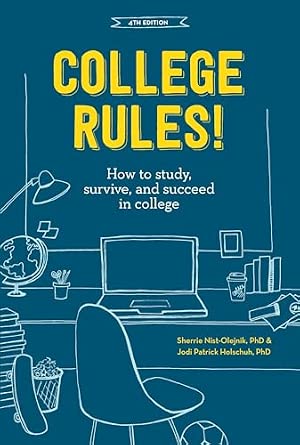 | Best for Whole-College Guidance | Subject: College study and success | Topics: Studying, college life, and succeeding in college | Edition: 4th Edition | VIEW LATEST PRICE | See Our Full Breakdown |
| TribeRN Anatomy & Physiology Study Guides, Set of 10 |  | Best for Anatomy and Physiology Reference | Quantity: 10 guides | Topics: 12 body-system topics | Format: Laminated tri-fold guides | VIEW LATEST PRICE | See Our Full Breakdown |
| How to Become a Straight-A Student: Unconventional Strategies Real College Students Use to Score High While Studying Less |  | Best for Study Habits | Format: Not specified in the supplied product details | Subject: College study strategies | Intended audience: College students | VIEW LATEST PRICE | See Our Full Breakdown |
| college study guide | Format | Subject | Dimensions |
|---|---|---|---|
| College Algebra: QuickStudy La | Laminated reference guide | College algebra | Not specified in the provided product data |
| Chemistry QuickStudy Laminated | Laminated reference guide | Chemistry | Not specified in the provided product data |
| Biology: QuickStudy Laminated | Laminated reference guide | Biology | Not specified in the provided product data |
| How to Get A’s in College: Tip | Book | — | — |
| Everything You Need to Ace Bio | Study notebook | Biology | Not specified in the provided product data |
| The Ultimate Guide to College | Not specified | College success | — |
| College Algebra Equations & An | Laminated reference guide | College algebra | Not specified |
| The Human Body Coloring Book: | Coloring book | Human anatomy | Not specified |
| College Rules! | Book | College study and success | Not specified |
| TribeRN Anatomy & Physiology S | Laminated tri-fold guides | — | 25.59 x 11.42 x 0.2 inches |
| How to Become a Straight-A Stu | Not specified in the supplied product details | College study strategies | — |
More Details on Our Top Picks
College Algebra: QuickStudy Laminated Reference Guide
This laminated college algebra guide suits students who want a subject-specific reference alongside their course materials, rather than a broad book about college study habits. Its format may be handy for quick checks while working through problems, while How to Get A’s in College: Tips on Studying focuses on general approaches to coursework instead of algebra content. The tradeoff is that the available product details do not list covered topics, examples, or dimensions, so I can’t judge how well it matches a particular syllabus or whether it fits easily in a backpack. I’d choose it as a supplement, not as a stand-alone course text: students who need worked explanations or practice problems should verify those are available elsewhere. Compared with the biology-focused QuickStudy guides, this pick is relevant only to algebra coursework.
Pros:- Focuses specifically on college algebra rather than general study advice
- Laminated reference format may suit repeated consultation during coursework
- Can complement a textbook or class notes without adding another broad study-skills book
Cons:- The supplied details do not identify the algebra topics or formulas included
- No dimensions are provided to judge portability or workspace fit
- The available description does not establish whether it includes examples or practice problems
Best for: College students taking algebra who want a laminated subject reference to keep with their problem sets and textbook.
Not ideal for: Students seeking a full algebra course, practice questions, or confirmation that specific syllabus topics are covered; those details are not provided.
- Subject:College algebra
- Format:Laminated reference guide
- Product title:College Algebra: QuickStudy Laminated Reference Guide
- ASIN:1423220315
- Series:QuickStudy
- Specific topics:Not specified in the provided product data
- Dimensions:Not specified in the provided product data
Our verdict“Choose this as a compact algebra-course companion if its topic coverage matches your syllabus, not as a replacement for a textbook.”
Chemistry QuickStudy Laminated Reference Guide
For chemistry students who want a subject-specific reference, this laminated QuickStudy guide is more targeted than How to Get A’s in College: Tips on Studying, which addresses studying rather than chemistry content. Its laminated format suggests a guide intended for repeated consultation, but the supplied description does not say which chemistry areas it covers or whether it includes equations, diagrams, or examples. That gap matters for college courses, where a general chemistry class and an upper-level course can call for very different references. Compared with College Algebra: QuickStudy Laminated Reference Guide, this serves a different course need, not a broader study purpose. I’d treat it as a possible quick-reference supplement and check the contents against the syllabus before relying on it for exam preparation.
Pros:- Dedicated to chemistry rather than general college study techniques
- Laminated format may be suited to frequent reference during coursework
- Part of the QuickStudy Academic series
Cons:- The provided information does not identify the chemistry topics covered
- No details confirm whether it contains equations, examples, or diagrams
- The available data gives no dimensions for judging portability
Best for: Students in a chemistry course who want a laminated subject reference to supplement lectures, notes, and a textbook.
Not ideal for: Students who need a clearly documented topic list, detailed explanations, or a reference confirmed for a specialized chemistry course.
- Subject:Chemistry
- Format:Laminated reference guide
- Series:QuickStudy Academic
- Product title:Chemistry QuickStudy Laminated Reference Guide
- ASIN:1423218590
- Specific topics:Not specified in the provided product data
- Dimensions:Not specified in the provided product data
Our verdict“Consider it as a reusable chemistry companion only after confirming that its coverage fits your course.”
Biology: QuickStudy Laminated Reference Guide
This biology QuickStudy guide is the most direct fit among the laminated references here for students who want a biology-focused aid, rather than the chemistry content of Chemistry QuickStudy Laminated Reference Guide or the math focus of College Algebra: QuickStudy Laminated Reference Guide. Its laminated format makes it a plausible choice for repeated lookups beside lecture notes, but the product information provided does not say which branches of biology it covers. That makes syllabus matching especially important: the listing alone does not establish whether it suits an introductory survey, a lab course, or a more specialized class. Compared with Everything You Need to Ace Biology in One Big Fat Notebook, this is described as a reference guide, while the notebook is positioned as a broader collection of biology material. I’d favor this for quick reference, not as a complete learning plan.
Pros:- Focused on biology rather than unrelated study skills or subjects
- Laminated format is intended for reference use
- A more subject-specific option than general college success books
Cons:- The supplied product data does not list topics or course level
- No details establish whether it includes explanations, examples, or diagrams
- Dimensions are not provided, so portability cannot be judged from the listing
Best for: Biology students who already have a textbook or notes and want a laminated subject reference for quick checks.
Not ideal for: Students who need confirmed coverage of a specific biology course, detailed teaching, or a standalone study resource.
- Subject:Biology
- Format:Laminated reference guide
- Series:QuickStudy
- Product title:Biology: QuickStudy Laminated Reference Guide
- ASIN:1423219538
- Specific topics:Not specified in the provided product data
- Dimensions:Not specified in the provided product data
Our verdict“Pick this for biology lookups alongside established course materials, provided its contents match your class.”
How to Get A’s in College: Tips on Studying
This book takes a different approach from the subject references in this roundup: it offers tips on studying for college coursework, rather than chemistry, biology, or algebra facts. That makes it a better match for students who want guidance on how to approach their classes than for someone trying to look up a formula before an exam. The Ultimate Guide to College Success also addresses broader college strategies, so buyers comparing those two should look for a contents list or sample pages to see which treatment suits them; the supplied details here do not describe the book’s specific methods. The main tradeoff is limited information about its scope and format beyond “Book.” I’d consider it a study-skills read, but not a substitute for the course-specific help offered by the QuickStudy guides.
Pros:- Addresses studying in college rather than a single academic subject
- Book format may suit readers who prefer guidance in longer-form text
- Offers a different purpose from the laminated subject references in this roundup
Cons:- The provided description does not identify the specific study methods covered
- No details are given about length, organization, or included exercises
- It does not provide the subject-specific reference function of the QuickStudy guides
Best for: College students who want a book focused on study tips and general approaches to succeeding in coursework.
Not ideal for: Students seeking subject explanations, practice problems, or a clearly described step-by-step study system.
- Format:Book
- Subject area:College studying
- Product title:How to Get A’s in College: Tips on Studying
- ASIN:1537072404
- Specific methods:Not specified in the provided product data
- Length:Not specified in the provided product data
Our verdict“Choose it for general college study guidance, but pick a subject guide when you need help with course content.”
Everything You Need to Ace Biology in One Big Fat Notebook
Everything You Need to Ace Biology in One Big Fat Notebook is positioned as a biology study notebook that gathers key material in one place, making it a broader learning resource than Biology: QuickStudy Laminated Reference Guide, which is described as a laminated reference. That distinction matters: a consolidated notebook may suit students who want to work through biology material, while a reference guide is better framed for quick checks. The available details do not specify topics, layout, exercises, or level, so I can’t confirm how well it aligns with a particular college syllabus—or whether the notebook’s title reflects coverage suitable for college coursework. Unlike How to Get A’s in College, it focuses on biology rather than general study habits. I’d shortlist it for biology learners, then verify its contents before treating it as a course companion.
Pros:- Biology-focused rather than a general college study-skills book
- Notebook format is positioned as bringing key subject material together
- Offers a broader study-resource role than a quick-reference guide
Cons:- The supplied data does not list covered biology topics or course level
- No information is provided about exercises, diagrams, or organization
- Format and physical specifications are not included in the product data
Best for: Biology students who prefer a single notebook-style resource for bringing subject material together alongside course materials.
Not ideal for: Students who need verified coverage of a college biology syllabus, a quick laminated lookup sheet, or detailed content information before choosing.
- Subject:Biology
- Format:Study notebook
- Stated purpose:Brings key subject material together in one place
- Product title:Everything You Need to Ace Biology in One Big Fat Notebook
- ASIN:1523504366
- Specific topics:Not specified in the provided product data
- Dimensions:Not specified in the provided product data
Our verdict“Choose it if you want a consolidated biology study notebook, but check the contents for college-level course fit first.”
The Ultimate Guide to College Success: Strategies for Time Management, Study Skills, Goal Setting, and Productivity
Study routines, time management, and goal setting make this a broad skills guide rather than a subject-specific reference. It is aimed at students who need help organizing their work and turning academic goals into productive habits, so it complements titles like College Algebra Equations & Answers instead of competing with them: that guide supports a particular course, while this one addresses how to approach college study more generally. Its focus on practical study skills and productivity gives it a distinct role among the roundup’s more specialized options. The tradeoff is that the available description does not identify specific exercises, planning tools, or subject coverage, so students looking for worked problems or a detailed syllabus-aligned reference may need another resource. I’d choose it for broad study strategy, not as a replacement for course materials.
Pros:- Addresses time management alongside practical study skills
- Includes goal-setting and productivity strategies
- Applies broadly across college courses rather than focusing on one subject
Cons:- The product information does not specify particular exercises or planning tools
- Does not appear to provide subject-specific lessons or reference content
- The available description gives little detail for judging its depth
Best for: College students who want general support with planning, study habits, goal setting, and productivity across multiple courses
Not ideal for: Students seeking explanations, worked examples, or reference material for a particular subject such as algebra or anatomy
- Subject:College success
- Topics:Time management, study skills, goal setting, and productivity
- Purpose:Academic confidence and college success
- Format:Not specified
- Edition:Not specified
- Publisher:Not specified
Our verdict“Choose this guide for broad college study and productivity strategies, but pair it with a subject-specific reference when coursework needs focused explanations.”
College Algebra Equations & Answers: QuickStudy Laminated Reference Guide
For students who need a compact aid for a college algebra course, this QuickStudy title stands apart from broader books such as College Rules!, which focuses on studying and college life rather than algebra content. Its defining feature is the laminated reference format: it is positioned as a quick place to consult equations and answers, rather than as a full course text or a guide to building study habits. That narrow focus can be useful when a student wants subject-specific reference material at hand. The tradeoff is that the provided details do not say which equations are included, how answers are presented, or how much explanation accompanies them. I would treat it as a supplement for quick checks, not assume it can teach unfamiliar material or replace the course textbook.
Pros:- Focused specifically on college algebra
- Laminated format is suited to repeated reference
- Covers equations and answers according to the product title
Cons:- The available details do not identify the equations or topics included
- No information is provided about worked explanations or teaching depth
- A narrow reference guide cannot replace broader study support such as College Rules!
Best for: College algebra students who want a laminated, subject-specific reference to keep nearby while reviewing equations
Not ideal for: Students who need step-by-step teaching, a full algebra textbook, or confirmation that particular course topics are covered
- Subject:College algebra
- Format:Laminated reference guide
- Content:Equations and answers
- Series:QuickStudy
- Edition:Not specified
- Dimensions:Not specified
Our verdict“Pick this for quick algebra reference alongside course materials, not as a standalone resource for learning the subject.”
The Human Body Coloring Book: The Ultimate Anatomy Study Guide, Second Edition
Coloring paired with anatomy study gives this book a different approach from the TribeRN Anatomy & Physiology Study Guides, Set of 10. The TribeRN set is described as laminated tri-fold references with charts, terminology, and quizzes; this title instead centers on a coloring-book format for studying the human body. That makes it a possible fit for learners who want an active visual task alongside anatomy review, rather than another portable reference sheet. The second edition is identified, but the available product information does not describe the included systems, labeling exercises, or level of detail, so I would not assume it matches a particular course’s coverage. Coloring can complement class notes, but this option is less clearly suited to rapid fact-checking or self-testing than the TribeRN set.
Pros:- Combines coloring with human anatomy study
- Focuses on the human body as a study subject
- Offers a different learning format from laminated reference sets such as TribeRN
Cons:- The available details do not list covered body systems or topics
- No information is provided about labeling activities or answer support
- A coloring-book format may be less useful for quick reference than the TribeRN tri-fold guides
Best for: Anatomy students who prefer visual, hands-on review and want a coloring-book format to supplement class notes
Not ideal for: Students who need a clearly specified anatomy syllabus, portable quick-reference charts, or built-in quizzes
- Subject:Human anatomy
- Format:Coloring book
- Edition:Second Edition
- Study approach:Coloring combined with anatomy study
- Coverage:The human body
- Dimensions:Not specified
Our verdict“Choose this for visual anatomy review through coloring, but select a chart-based guide if you need clearly described topics and quick self-testing.”
College Rules!, 4th Edition: How to Study, Survive, and Succeed in College
Studying, college life, and academic success are all part of this book’s stated scope, giving it a wider student-life angle than The Ultimate Guide to College Success. The latter names time management, study skills, goal setting, and productivity; College Rules! frames its subject around how to study, survive, and succeed in college. That broader framing may appeal to students who want guidance beyond organizing assignments, though the available description does not detail its advice or methods. Unlike College Algebra Equations & Answers, it is not a course-specific reference, so it cannot fill the same role when a student needs algebra equations at hand. The fourth edition is specified, but there is no information here about format beyond book or about included tools. I’d consider it for general college guidance, with a narrower study-skills book as an alternative for targeted routines.
Pros:- Addresses studying and college success in one guide
- Its stated scope includes college life as well as academic work
- Fourth edition is identified
Cons:- The available description does not explain the advice or strategies included
- Does not provide a specified subject reference like College Algebra Equations & Answers
- No details are given about exercises, planning tools, or book dimensions
Best for: Students seeking general guidance on studying and adapting to the academic and day-to-day demands of college
Not ideal for: Students who need subject-specific reference pages, detailed course lessons, or clearly described productivity exercises
- Subject:College study and success
- Topics:Studying, college life, and succeeding in college
- Edition:4th Edition
- Format:Book
- Publisher:Not specified
- Dimensions:Not specified
Our verdict“Choose this for broad guidance on studying and college life, rather than for course-specific instruction or a defined set of study exercises.”
TribeRN Anatomy & Physiology Study Guides, Set of 10
This is the most structured anatomy reference in this group: the 10 laminated tri-fold guides cover 12 body-system topics and combine diagrams, terminology, reference material, and built-in quizzes. Compared with The Human Body Coloring Book, TribeRN is better suited to quick consultation and self-testing, while the coloring book offers a more hands-on visual study format. The color-coded charts and water-resistant construction also fit repeated review sessions or clinical refreshers, rather than a single course-reading pass. There are limits: 12 topics may not provide the depth a particular anatomy and physiology course requires, and the full set weighs 2.5 pounds, so carrying every guide adds bulk. I’d choose it when portable, reusable references and quiz prompts matter more than a textbook-style explanation of each system.
Pros:- Ten laminated tri-fold guides cover 12 body-system topics
- Combines color-coded charts, diagrams, terminology, and anatomy references
- Built-in quizzes support active recall
- Water-resistant format suits repeated study and clinical refreshers
Cons:- The complete set weighs 2.5 pounds
- Coverage of 12 topics may not provide depth for every anatomy course
- Reference-guide format may not offer the extended explanations found in a textbook
Best for: Anatomy and physiology students or nursing learners who want reusable body-system charts and quick self-testing during study or clinical refreshers
Not ideal for: Students who need in-depth textbook explanations for every course topic or want a particularly light set to carry all at once
- Quantity:10 guides
- Topics:12 body-system topics
- Format:Laminated tri-fold guides
- Features:Color-coded charts, diagrams, terminology, anatomy references, and built-in quizzes
- Dimensions:25.59 x 11.42 x 0.2 inches
- Weight:2.5 pounds
- Manufacturer:Tribe RN
- Material feature:Water-resistant design
Our verdict“Choose TribeRN for portable, reusable anatomy and physiology charts with quiz prompts, provided its topic coverage matches your course.”
How to Become a Straight-A Student: Unconventional Strategies Real College Students Use to Score High While Studying Less
This guide earns its place by focusing on how to study, rather than summarizing a particular subject. Its promise is practical: share strategies college students use to aim for stronger grades while spending less time studying. That makes it a different kind of resource from College Algebra: QuickStudy Laminated Reference Guide, which is designed for quick subject-specific reference, or The Ultimate Guide to College Success, which covers broader areas such as time management and goal setting. The tradeoff is that this book offers no course-specific facts or reference sheets, and the available product details do not identify its methods or format. Choose it for study-process guidance; skip it if you need help with a particular exam topic or want a detailed course companion.
Pros:- Centers on study strategies rather than a single academic subject.
- Targets students who want to spend study time more efficiently.
- Draws on strategies attributed to real college students.
- Can complement course textbooks and subject-specific guides.
Cons:- Does not provide subject-specific reference material or explanations.
- The supplied product information does not detail the strategies, structure, or format.
- May not address broader college-success topics as widely as The Ultimate Guide to College Success.
Best for: College students seeking general study strategies to improve their grades while reducing study time, especially those who already have course materials but want to use them more effectively.
Not ideal for: Students who need subject-specific explanations, formulas, or a visual study aid; a QuickStudy reference or a subject-focused title such as Everything You Need to Ace Biology in One Big Fat Notebook is a closer fit.
- Format:Not specified in the supplied product details
- Subject:College study strategies
- Intended audience:College students
- Primary focus:Study methods aimed at earning high grades while studying less
- Basis of strategies:Strategies used by real college students, according to the product description
- Subject-specific reference content:Not specified
Our verdict“Choose this for general college study-method guidance, but pick a subject reference or broader success guide if you need course content or wider campus skills.”

How We Picked
I ranked these college study guides by how clearly each serves a college student’s real study need: learning or reviewing a subject, checking a reference quickly, building study habits, or adding a visual practice method. I also weighed format and scope, since a compact laminated sheet can be handy for reminders but does not fill the same role as a book designed to explain material or a guide aimed at managing college work.
The order favors breadth of usefulness first, then clear strengths for particular subjects and learning preferences. That puts a cross-course strategy book at the top, with biology and reference options close behind for readers who have a defined course need. I distinguish products that may sound similar by their titles and formats, while noting that students should check the contents against their course syllabus; no study guide should be treated as a substitute for assigned texts, lectures, or instructor materials.
Factors to Consider When Choosing College Study Guides
Before choosing, I would match the guide to the job you need it to do. A reference sheet, a subject-learning book, and a study-skills guide can all help, but they solve different problems. These factors can keep you from buying a format that looks useful but does not fit how your courses are taught.
Start With the Problem, Not the Subject Label
Ask whether you are trying to understand new material, refresh facts before an exam, or change how you plan and study. Those needs call for different formats, even when the course name is the same. A quick reference is useful when you already recognize the concepts and need a prompt; it is a weaker choice when you need worked explanations or guided practice. A study-skills book can help across classes, but it will not teach the equations or vocabulary on a course exam. A common mistake is buying a guide because it names your subject without checking what kind of help it actually provides. Match the format to the point where your studying currently breaks down.
Check Scope Against Your Syllabus
Course names can hide major differences in topics, terminology, and instructor emphasis. Compare a guide’s contents or sample pages with your syllabus before relying on it for an exam. Broad subject coverage may leave less room for detail on the units your instructor stresses, while a narrow reference may omit material taught in your section. For biology and anatomy especially, distinguish general biology review from anatomy-specific visual study and anatomy-and-physiology material. A guide is most helpful as a companion to class notes and assigned texts, not as proof that every tested topic is covered. If the publisher does not make the scope clear, treat that uncertainty as a reason to avoid using it as your only resource.
Choose the Format You Will Actually Use
Portability matters only if the format suits your study routine. A laminated reference can be easy to keep nearby for quick checks, while a larger book may give more room for explanations and structured review. A multi-guide set can split material into smaller pieces, but it may take more space and organization than one compact resource. Coloring and other visual methods work best for students who actively learn by labeling, drawing, or revisiting diagrams. Before choosing, think about where you study and whether you prefer brief prompts, continuous reading, or hands-on review. Buying for a format you like in theory rather than one you use regularly is a common source of wasted effort.
Decide Whether You Need Course Help or Study-System Help
Some difficulties come from the material; others come from deadlines, inconsistent routines, or ineffective review. Subject references address course content, while college-success and study-strategy books focus on planning and learning habits. If you struggle across several classes, a general strategy guide may give more lasting value than another single-subject reference. If your study process is already working but one course is difficult, prioritize a resource tied to that course. It is also reasonable to use both types, but give each a clear role so advice about routines does not crowd out subject practice. The key mistake is expecting a study-skills book to replace the actual work of learning course concepts.
Pay More for a Specific Need, Not a Bigger Promise
A broader title or larger set is not automatically a better fit. Extra pages, multiple booklets, or a wider subject range matter only if they cover material you need and suit the way you review. A focused resource can be the smarter choice when you need a portable reminder or support for one defined class. A fuller book may be more useful when you want explanations, organized learning, or repeated study over a term. Compare the contents and intended use before choosing between a single guide and a set. The best reason to select a broader format is a real need for its scope, not the assumption that more material always means better preparation.
Frequently Asked Questions
Can a laminated QuickStudy guide replace my textbook or class notes?
No; I would treat a laminated reference as a supplement for reminders and quick checks, not as a complete course resource. A compact format can be useful once you have learned the concepts, but it may not provide the depth, examples, or assignments your class uses. Check its topic coverage against your syllabus and lecture notes. If you are learning the subject for the first time, pair it with fuller instruction and practice. Relying on a short reference alone can leave gaps that only become clear during exam preparation.
Which type of guide makes more sense if I struggle in several classes?
If the same problems recur across courses—such as procrastination, weak planning, or inefficient review—I would start with a college-success or study-strategy guide. Those resources address habits that can carry from one subject to another. They will not supply the course facts or practice problems you need, so keep class-specific materials in your study plan too. If the difficulty is limited to one course, a subject guide may be a more direct fit. Choosing based on the source of the problem is more useful than buying a guide for every class by default.
How should I choose between the two College Algebra QuickStudy guides?
Compare their stated focus with the kind of support you need: the College Algebra: QuickStudy Laminated Reference Guide has a broader reference framing, while College Algebra Equations & Answers emphasizes equations and answers. Neither title alone tells you whether the examples or coverage align with your course. Review available contents or sample pages and compare them with your syllabus before deciding. If you need conceptual teaching, check whether the guide provides enough explanation rather than assuming a reference will teach the material. You can also use a reference alongside assigned problem sets, which remain the better test of whether you can apply the ideas.
Is a biology study guide useful if my course is specifically anatomy and physiology?
Not automatically; biology and anatomy-and-physiology courses can overlap without covering the same material at the same depth. Check whether the guide includes the systems, terminology, and level of detail your class requires. A general biology review may be a helpful foundation but may not match an anatomy-focused syllabus. Visual resources can support learning structures, while a multi-guide anatomy-and-physiology set may better match a course organized around that subject area. Use the syllabus as the deciding reference rather than choosing based on the word “biology” alone.
Should I buy a multi-guide set or one study book?
Choose a set when its separate guides map clearly to the topics you need and you are comfortable keeping track of several pieces. A single book can be easier to carry and follow as one continuous resource, especially if you prefer reading an organized explanation. A set may offer a more segmented way to review, but extra parts do not help if they duplicate your class materials or cover topics outside your course. Check the scope and format before choosing, then think about where you will study and how you prefer to review. The better option is the one you can use consistently, not simply the one with more components.
Conclusion
For the broadest help across courses, I recommend How to Become a Straight-A Student as the best overall choice; its focus on study strategy gives it wider use than a single-subject reference. For best value in quick course review, choose the QuickStudy guide that matches the material you already study, rather than buying references for subjects you do not need. My best premium-style pick for breadth is TribeRN Anatomy & Physiology Study Guides, Set of 10, for students whose anatomy-and-physiology course benefits from a segmented set. For beginners, Everything You Need to Ace Biology in One Big Fat Notebook offers a more approachable subject-review route than a compact reference sheet. For specific needs, choose the College Algebra guide that matches your reference task, The Human Body Coloring Book for visual anatomy practice, or a college-success title if planning and study routines—not course content—are the main challenge. Before deciding, check that the guide’s coverage fits your syllabus and use it alongside your course materials.