
TL;DR
Choosing the best storage bins for seasonal dorm clothing means considering size, durability, transparency, and ventilation. Space-saving, stackable options keep your closet tidy and accessible year-round.
Choose storage bins around 30-50 quarts for a balance of capacity and manageability.
Plastic bins with ventilation slots better protect clothes from mustiness, especially in humid dorm environments.
Label everything clearly and stack bins efficiently to maximize small spaces.
Invest in durable, multi-functional bins—though pricier, they last longer and save hassle.
Measure your space before buying to ensure the bins fit comfortably in closets or under beds.
How to Pick the Perfect Storage Bin Size for Your Clothes
Choosing the right size is the first step. For seasonal clothing, look for bins around 30-50 quarts—big enough for winter coats and bulky sweaters, but not so large they become unwieldy. Measure your closet and under-bed space before shopping.
For example, a 30-quart bin (roughly 20″ x 16″ x 12″) slides comfortably under most beds and into closet shelves. It’s perfect for stacking and easy to grab when changing seasons. Larger bins (up to 70 quarts) work for bulky jackets but can be heavy when full.
Pro tip: Avoid bins that are too small—they’ll fill up fast. Too large, and you risk wasting space or creating unwieldy boxes that are hard to move.
Why this matters: Picking the right size impacts your ability to efficiently use limited space and manage weight. Oversized bins might seem convenient but can be difficult to handle and may encourage overpacking, leading to clutter. Conversely, too small bins can force you to use multiple containers, complicating organization and access. Finding that balance ensures your storage is both practical and sustainable. The right size also influences how often you’ll need to reorganize or repack, affecting your overall dorm storage experience.
30 quart plastic storage bins with ventilation slots
As an affiliate, we earn on qualifying purchases.
As an affiliate, we earn on qualifying purchases.
Plastic or Fabric? Which Material Keeps Your Clothes Safe and Easy to Manage
Plastic storage bins, especially polypropylene, are sturdy, moisture-resistant, and easy to clean. They’re ideal for dorms because they won’t sag or tear. For example, a typical 30-quart plastic bin costs $15–$20 and lasts for years.
Fabric bins are lightweight, often collapsible, and come in fun colors or patterns. They’re best if you want a soft-touch option, but they may not hold up well against moisture or heavy use. Plus, fabric bins often lack lids, which can lead to dust settling on your clothes.
Why this matters: Material choice isn’t just about durability; it affects how well your clothes are protected over time. Plastic bins provide a reliable barrier against moisture, which is crucial in dorm environments where humidity can vary. Fabric bins, while convenient and stylish, may require extra precautions like lining or frequent cleaning to prevent mold or dust accumulation. The tradeoff is that fabric bins are more flexible and easier to store when not in use, but they might not offer the same level of protection for long-term seasonal storage. Your choice should balance convenience, protection, and storage needs, considering how often you’ll access or move the bins.
As an affiliate, we earn on qualifying purchases.
Clear vs. Opaque Storage Bins — Which Makes Life Easier?
| Feature | Clear Bins |
|---|---|
| Visibility | See contents at a glance, saving time when swapping seasons. This reduces the frustration of digging through multiple boxes, especially when you’re in a hurry or trying to find specific items quickly. Clear bins support quick decision-making, which is essential during busy mornings or when organizing a small closet space. |
| Protection | Less dust and dirt exposure, but may show stains or wear over time. While clear bins make access easy, they can also reveal dirt or damage, prompting more frequent cleaning or replacement. This means you might need to clean the bins regularly to keep them looking tidy, especially if you store clothing that can stain or attract dust. |
| Privacy | Less private; contents are visible. If you store personal or sensitive items, this can be a drawback. Using labels or decorative covers can mitigate privacy concerns while retaining the benefits of visibility. |
Opaque bins hide clutter and keep dust out, but you’ll need to label or open each to find what you want. For example, a labeled opaque bin can store all your winter coats, but you’ll need to remember what’s inside without seeing it.
Why this matters: The choice between clear and opaque bins affects how easily you can access and manage your seasonal wardrobe. Clear bins streamline the process, saving time and effort, especially when switching clothes. Opaque bins can offer a cleaner look but require more organization upfront, such as detailed labeling. Consider your habits: if you prefer quick access and frequent seasonal swaps, clear bins might be more practical. If aesthetics and dust protection are priorities, opaque bins with clear labels can provide a tidy appearance while still being functional.
under bed storage bins for seasonal clothing
As an affiliate, we earn on qualifying purchases.
As an affiliate, we earn on qualifying purchases.
Why Ventilation Matters for Seasonal Clothes Storage
Ventilation is key to preventing musty smells and mold. Look for bins with small holes or mesh panels—these allow air to circulate. For example, a plastic bin with built-in ventilation slots keeps your sweaters fresh during long storage periods.
If you’re storing clothes for several months, add moisture absorbers like silica gel packs or activated charcoal to keep humidity at bay. This simple step can prevent your favorite hoodie from smelling damp or developing mold spots.
Why this matters: Proper ventilation isn’t just about comfort; it’s about protecting your clothes’ longevity. Without adequate airflow, moisture can accumulate inside the bins, creating an ideal environment for mold, mildew, and unpleasant odors that are difficult to remove. This is especially important in dorm rooms with poor airflow or high humidity levels. Incorporating ventilation features into your storage choices ensures your seasonal wardrobe stays fresh, odor-free, and in good condition for multiple seasons. Neglecting ventilation can lead to hidden damage that might require costly cleaning or replacement later, so it’s a crucial factor in your storage decision.
collapsible fabric storage bins for dorms
As an affiliate, we earn on qualifying purchases.
As an affiliate, we earn on qualifying purchases.
Maximize Space with Stackable and Multi-Functional Bins
Space is king in dorms. Stackable bins turn vertical space into extra storage. For example, stacking two 30-quart bins under your bed creates a mini closet. Look for bins with interlocking lids or grooves for stability.
Some bins double as seating or side tables—perfect for small rooms. Imagine pulling out a sturdy, stackable bin to sit on during study breaks, then flipping the lid to store your winter gear.
Why this matters: In small dorm rooms, efficient use of space is crucial. Stackable and multi-functional bins allow you to maximize every inch, reducing clutter and creating more room for other essentials. Choosing bins with interlocking features not only enhances stability but also promotes organized stacking, making it easier to access your belongings. Multi-purpose bins that can serve as seating or tables offer additional utility, helping you save space and make your room more functional and comfortable. Be mindful that stacking can sometimes make access to lower bins more difficult, so consider your daily routines and whether you prefer easy reach or maximum storage capacity.
The Price of Quality: What to Expect from Good Storage Bins
Budget-friendly bins cost around $10–$20 each, like basic 30-quart plastic options. They’re tough enough for dorm use but may lack ventilation or lids. Keep in mind that cheaper bins might need replacing sooner if they crack or break, which could lead to higher costs over time.
Mid-range bins ($25–$40) often include features like clear sides, built-in handles, or reinforced lids. These added features can make organizing easier and increase durability, which means less hassle and fewer replacements in the long run. Investing a bit more upfront can save you money and effort later.
High-end or specialty bins, such as those with antimicrobial coatings or eco-friendly materials, can go beyond $50 but offer extra peace of mind for long-term storage. These options are especially valuable if you want to ensure your clothes stay protected from mold, pests, or odors over multiple seasons.
Understanding the price range helps you balance quality and budget. Investing in higher-quality bins often results in longer-lasting storage solutions, reducing the frequency and cost of replacements. Remember, the cheapest option isn’t always the best—durability and functionality often justify a higher initial cost, especially when storing valuable or long-term items. Carefully weighing your needs against your budget ensures you get the best value for your money.
How to Organize and Label Your Seasonal Clothing Bins
Labeling is your best friend. Use waterproof markers or pre-made labels to mark each bin with contents: ‘Winter Coats,’ ‘Sweaters,’ or ‘Scarves.’ For example, quick labels save time when switching between seasons.
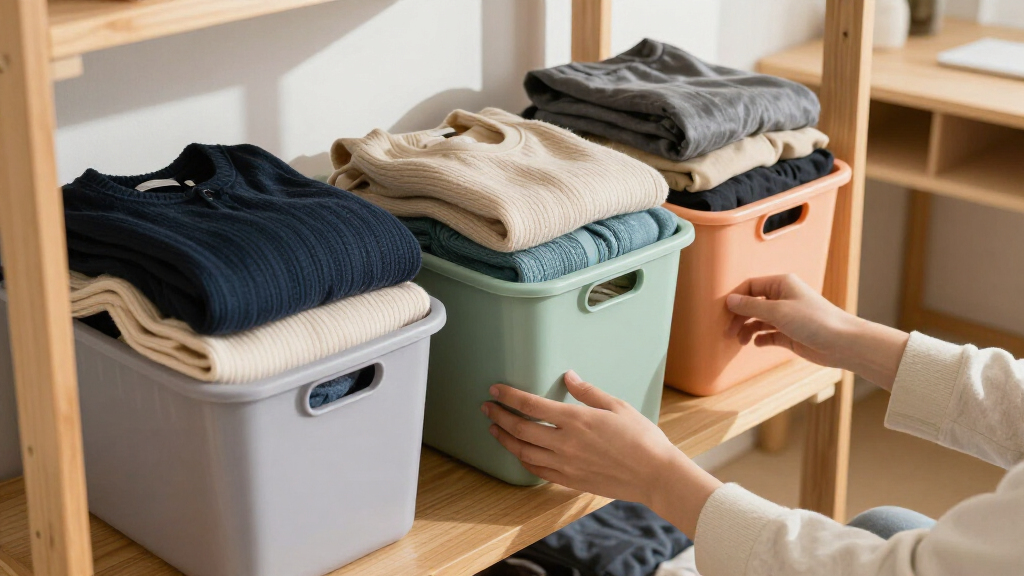
Stack bins by priority—keep current season at eye level, store off-season higher up or under the bed. Use color-coded bins for quick visual cues. This approach minimizes the time spent searching for specific items and helps you stay organized, especially when switching seasons frequently.
Why this matters: Proper labeling and organized stacking reduce the mental clutter of searching through multiple bins, saving time and frustration. Clear labels also prevent the mistake of pulling out the wrong clothes, which can be stressful during busy mornings. Prioritizing accessibility by placing current-season items in easy-to-reach spots simplifies the seasonal transition process, making your storage system more efficient and less stressful.