
TL;DR

Prime made for students and young adults
- Fast, free delivery for dorm and study essentials
- Prime Video and Amazon Music included
- Member-only deals
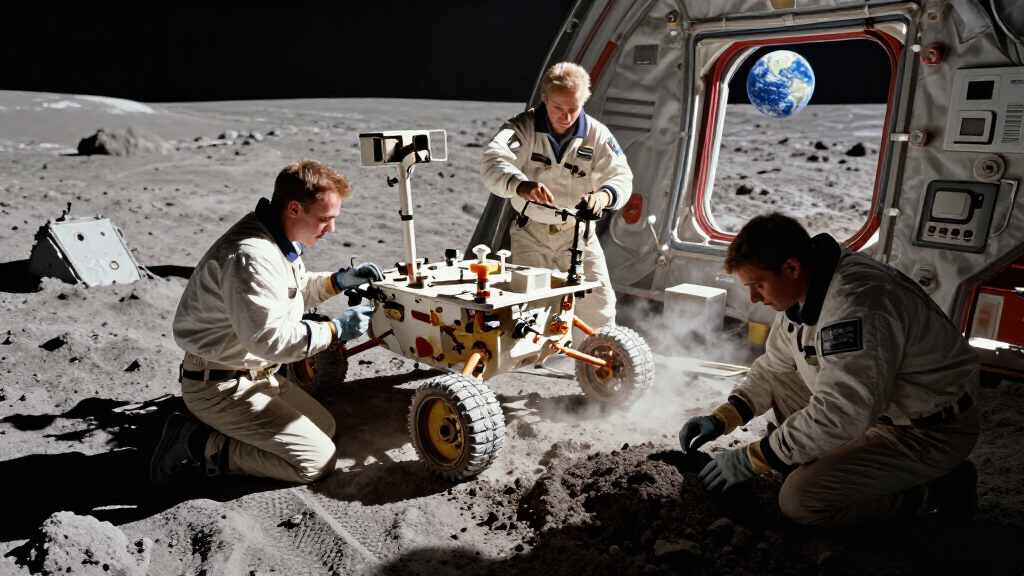
NASA selected three science payload suites for future delivery to the Moon through its PRISM program and CLPS initiative. They are designed to monitor lunar hazards, investigate a possible underground lava tube and measure ice and surface conditions relevant to future operations.
NASA has selected three new lunar science payload suites to study environmental hazards, possible underground shelter and ice, gathering information the agency says can support planning for a future Moon Base. The investigations were chosen through NASA’s PRISM program and are intended to reach the lunar surface through the Commercial Lunar Payload Services initiative, or CLPS; NASA’s announcement did not give launch or landing dates.
The Lunar Environment Monitoring Station–South Pole (LEMS-SP) is designed as an autonomous, long-term monitoring station. NASA says its instruments will track micrometeoroid impacts and volatile materials in the Moon’s thin outer gas layer, and use a short-period seismometer to detect seismic events. Those observations could help researchers assess environmental risks to surface equipment. The principal investigator is Mehdi Benna of the University of Maryland, Baltimore County.
The Geophysical Investigation for Mapping Lunar Interior (GIMLI) is slated for deployment at the Marius Hills Pit. It will scan below the surface to investigate whether the pit connects to a large lava tube, and to study lunar volcanic processes. NASA says underground voids, if present and suitable, could offer protection from temperature extremes, radiation and micrometeoroid impacts. The mission’s stated aim is to investigate that possibility; the release does not say that a usable shelter has already been found. Nathaniel Putzig of the Planetary Science Institute is the principal investigator.
The third selection, Depth Imager with Spectral and Color Optics (DISCO), will make direct surface measurements of ice in micro-cold traps, according to NASA. It is also intended to examine how the ground responds to rocket exhaust and how stable it is for movement across the surface. The resulting data could inform resource planning and the design of surface operations. DISCO’s principal investigator is Ariel Deutsch of NASA’s Ames Research Center.
Data for Safer Lunar Operations
The investigations address practical questions that future lunar crews and mission planners would need to answer: where environmental hazards occur, whether natural underground spaces exist, and where ice may be accessible. Those findings could shape site selection, equipment design and surface procedures, while helping researchers evaluate whether lunar materials might support a sustained presence.
The scientific goals are relevant beyond a single outpost. NASA says the selected work is part of its broader effort to prepare for human exploration under Artemis and Moon Base plans, and to develop knowledge useful for future missions, including crewed journeys to Mars. That is the agency’s stated rationale; the release does not provide cost estimates, mission schedules or a quantified assessment of how much risk the payloads could reduce.
As an affiliate, we earn on qualifying purchases.
PRISM Payloads and CLPS Deliveries
NASA selected the investigations through Payloads and Research Investigations on the Surface of the Moon (PRISM), a program that chooses science payloads for lunar missions. The agency plans to fly the three suites using CLPS, which works with American companies to deliver scientific, exploration and technology payloads to the Moon’s surface and orbit.
NASA describes the selections as part of an effort to increase the pace of lunar missions and build knowledge for a sustained presence. The release links the work to both Artemis and the agency’s Moon Base Program. It does not identify the commercial delivery providers for these particular payloads or say which landing missions will carry them.
“These PRISM selections will directly help NASA minimize risks to our astronauts while maximizing our agency goals as we set up humanity’s first lunar outpost in preparation for sending the first astronauts to Mars.”
— Nicky Fox
As an affiliate, we earn on qualifying purchases.
Landing Dates and Results Pending
The NASA announcement does not provide launch dates, landing schedules or assigned CLPS providers for the three payloads. It also does not report results: the investigations have been selected, but their measurements have not yet established how many hazards are present, whether the Marius Hills Pit opens into a lava tube, or where and how much usable ice is available.
Potential benefits described in the release depend on future observations and analysis. In particular, a detected underground void would not by itself establish that it is accessible or suitable for a habitat. The specific methods, operating timelines and criteria for judging resource or shelter suitability were not detailed.
As an affiliate, we earn on qualifying purchases.
Awaiting Mission Assignments
The next public milestones are expected to include decisions about which CLPS deliveries will carry the payload suites and when those missions will fly. NASA has not stated when it expects to announce those details. After deployment, the investigations are intended to gather measurements that researchers can use to evaluate lunar conditions and potential resources.
Until schedules and mission assignments are published, the selections mark a planning and science step rather than a new operational Moon Base capability. NASA’s release says the investigations will contribute to preparations for future surface operations, but it does not set a date for establishing the outpost or for sending crews in connection with these payloads.
As an affiliate, we earn on qualifying purchases.
Key Questions
What did NASA announce?
NASA selected three lunar science payload suites through its PRISM program to study environmental hazards, a possible lava tube, and ice and surface conditions relevant to future operations.
How will the investigations reach the Moon?
NASA says the payloads will fly to the lunar surface through its Commercial Lunar Payload Services initiative. The announcement did not name the providers or missions assigned to these selections.
Has NASA confirmed a lava-tube shelter or usable lunar ice?
No. GIMLI is intended to investigate whether the Marius Hills Pit connects to a lava tube, while DISCO is planned to measure ice in micro-cold traps. The release reports no results; those questions remain for the investigations to address.
When will the payloads land?
NASA did not provide launch or landing dates in its announcement. It also did not identify which CLPS deliveries will carry the instruments.
Source: primary
Halloween Picks
halloween
As an affiliate, we earn on qualifying purchases.