
TL;DR

Prime made for students and young adults
- Fast, free delivery for dorm and study essentials
- Prime Video and Amazon Music included
- Member-only deals
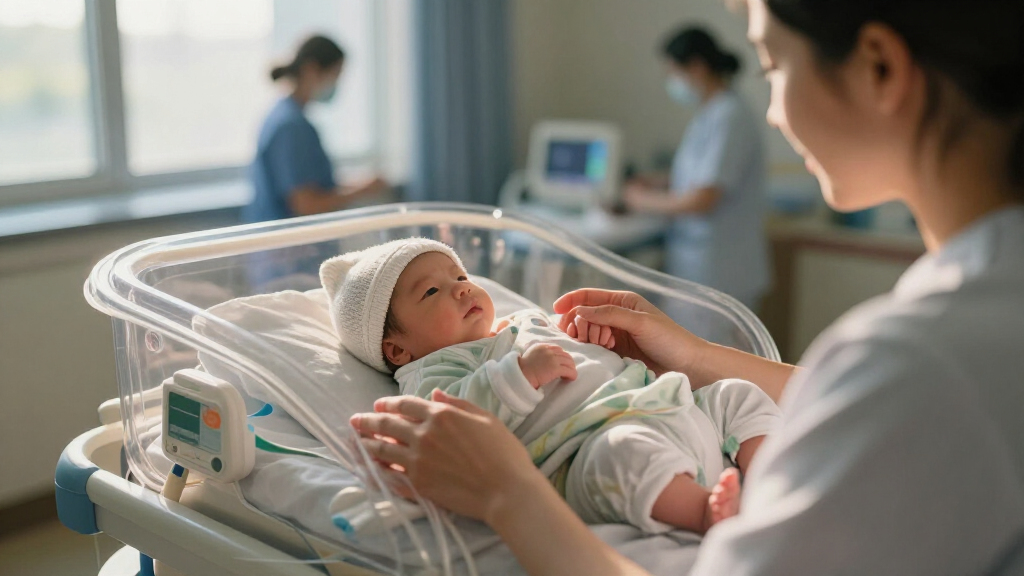
Stephanie Roberson’s son Myles was born at 25 weeks and spent 87 days in a neonatal intensive care unit. Her story, published in Motherly’s “Mothering America” column with the Chamber of Mothers, highlights the strain NICU families can face and the support gaps Roberson says she saw.
Stephanie Roberson’s son spent 87 days in a neonatal intensive care unit after he was born nearly 14 weeks early, an experience that led her to speak out about support for mothers and families facing a medical crisis. In a story for Motherly’s “Mothering America” column, produced with the Chamber of Mothers, Roberson describes the pressures she witnessed around leave, medical bills and mental health care.
Roberson said her pregnancy had appeared normal until her water broke when she was 24 weeks pregnant. Her doctor told her to go to a hospital with a higher level of NICU care. After 13 days on hospital bed rest, she went into labor at 25 weeks and six days. Her son, Myles, was born shortly afterward.
Myles stopped breathing multiple times a day for 77 days, a complication the report describes as common among premature infants and treated with caffeine. Roberson said he did not need surgery or intubation. He left the NICU after 87 days, and by 12 months had caught up on all milestones and was ahead on some. The report describes him as a thriving four-year-old.
Roberson said she had a supportive partner, a job and paid family and medical leave. She took nine and a half months of combined medical, maternity and state-funded family leave. During the hospital stay, she also saw other parents contend with insurance denials and the demands of caring for children and keeping up with work.
The Support NICU Families Need
Roberson’s account shows how a premature birth can create demands that continue well beyond a child’s hospital stay. Parents may need time away from work, travel and childcare arrangements, and help managing fear and uncertainty while their infant receives care. The report describes how those pressures can fall unevenly on families, depending on the leave, insurance and personal support available to them.
The figures cited in the story point to gaps in that support. It says about 27% of workers have access to paid family leave, and that 14 states and Washington, D.C., have enacted state paid family and medical leave policies. The report also says eligible workers can receive up to 12 weeks of unpaid leave under the federal Family and Medical Leave Act. For a parent whose baby remains hospitalized, some or all of that time may pass before the child comes home.
Those differences matter because an NICU admission can bring costs and care needs alongside a parent’s recovery from birth. Roberson’s experience illustrates how paid leave and insurance helped her manage those demands; the report presents her story as a reason to examine what happens to families without similar resources.
From Premature Birth to Advocacy
Roberson said she tried to prepare by reading about prematurity, medical terminology and possible outcomes. At the hospital, a neonatologist discussed survival statistics with her. The report gives an estimate of about 80% survival for infants born around 25 weeks; that figure is presented as general context, not as a prediction of Myles’s individual outcome.
During Myles’s stay, Roberson heard monitors sounding and saw other families grieve. She recalled one family bringing relatives to say goodbye to a baby they believed would not survive. Her account describes the uncertainty of the NICU as part of the strain, even as Myles avoided some serious complications.
The report also gives examples of the financial burden: Myles’s care generated a bill of nearly $1.5 million, of which Roberson said her insurance left her with $1,300 to pay toward her deductible. It cites average out-of-pocket spending of more than $3,000 in the first two years for infants admitted to the highest-level NICUs with private insurance. That figure excludes expenses such as parking, childcare, hotels and meals.
““You don’t know what the outcome is going to be for your child.””
— Stephanie Roberson
Gaps the Account Cannot Resolve
The source is a personal account and does not identify a specific bill, policy proposal, legislative campaign or upcoming vote tied to Roberson’s advocacy. It also does not provide a publication date, making the timing of the account difficult to pin down beyond its appearance in Motherly’s recurring “Mothering America” column.
The report cites figures on paid leave, NICU costs and untreated perinatal mental health conditions, but the supplied material does not give the underlying studies’ dates or methods. Its cited estimate that about 75% of mothers with perinatal mental health conditions go untreated should be read as a figure reported by the article, not a new measurement. The account does not say what care Roberson or the Chamber of Mothers is seeking from policymakers or when any proposed changes might be considered.
The Advocacy’s Next Steps
Roberson’s story is part of a recurring column shared by Motherly and the Chamber of Mothers, which the source describes as an effort to bring mothers’ stories to a wider audience and promote support for families. The published account draws attention to paid leave, NICU-related expenses and access to mental health care, but the source does not announce a specific next event or policy milestone.
Readers looking for a concrete legislative development will need more information from the organizations or Roberson about any proposals, campaign plans or actions that follow the story. For now, the immediate development is the publication of her account and its description of the support she had—and the gaps she saw other families facing.
Key Questions
How long did Myles spend in the NICU?
Myles spent 87 days in the NICU after being born at 25 weeks and six days, according to Roberson’s account.
What complications did Myles experience?
Roberson said he stopped breathing multiple times a day for 77 days, a complication of prematurity. He did not need surgery or intubation, the report says.
What support gaps does the story describe?
The account discusses limited access to paid family leave, insurance and other costs around a NICU stay, and barriers to perinatal mental health care. It also describes the practical strain on parents who must care for other children or return to work.
Did the article announce a new policy or campaign?
The supplied report does not name a specific policy proposal, vote or campaign milestone. It presents Roberson’s story as part of Motherly and the Chamber of Mothers’ recurring “Mothering America” column.
Source: rss
Fall Picks
fall essentials
As an affiliate, we earn on qualifying purchases.