
TL;DR
Using color-coded labels for laundry baskets and hampers speeds up sorting by up to 30%, cuts errors, and creates a neater space. It’s inexpensive, customizable, and easy to implement, especially in tight dorms or shared homes.
Choose 3-4 distinct, vibrant colors for categories like whites, darks, and delicates to make sorting instant.
Use waterproof, laminated labels or printable waterproof paper for lasting, easy-to-clean tags.
Create a simple, step-by-step plan to assign colors, label baskets, and communicate the system to everyone.
Mix and match baskets and labels for flexibility—ensure visual harmony for quick sorting.
Regularly review and update your labels and categories to keep the system fresh and functional.
A faster household workflow
Creating an Organized Laundry System with Color-Coded Labels
Turn piles into a visual routine anyone can follow. Three or four distinct colors, durable labels, and one shared rule can make sorting faster, reduce mix-ups, and keep even a small laundry area visibly under control.
Make the right choice visible at a glance.
Color works as a fast recognition layer; words preserve clarity. Pair both so children, roommates, guests, and family members can sort correctly without memorizing a complicated rulebook.
Whites
Choose the lightest label in the set and add a bold written title. Use high contrast if the basket itself is pale.
Darks & colors
Assign a strongly contrasting cue that remains easy to recognize from across the room or in low light.
Delicates
Use a distinctive label plus a care symbol or short washing note to reduce heat and cycle mistakes.
Color accelerates recognition; text removes ambiguity. Keep both in the same position on every basket so the eye always knows where to look.
Build the habit in one short session.
Start with broad categories and let real household behavior guide later refinements. A simple system used consistently is more valuable than a detailed system no one remembers.
Pick distinct colors
Select three or four high-contrast cues. Avoid neighboring shades that look alike at night or from a distance.
Make durable labels
Use waterproof stickers, laminated tags, or label-maker tape that can handle humidity and frequent contact.
Name every category
Write the load type clearly. Keep categories mutually understandable and avoid changing meanings between rooms.
Post the cheat sheet
Explain the code once, place a small guide nearby, and invite everyone to use the system from day one.
Choose labels for humidity, handling, and change.
Laundry areas are damp, labels are touched often, and household needs evolve. Favor legibility and moisture resistance, then consider how easily a label can be moved or replaced.
| Label type | Moisture | Durability | Easy update | Best use |
|---|---|---|---|---|
| Laminated sticker | ✓ | ✓ | ~ | Permanent basket system |
| Waterproof paper | ✓ | ✓ | ✓ | Printed, polished labels |
| Plastic tag + seal | ✓ | ✓ | ~ | DIY and reusable bins |
| Plain paper label | ✗ | ✗ | ✓ | Short trial only |
✓ strong ~ conditional ✗ weak
Mix baskets, labels, and technology without losing the code.
Your containers do not need to match. Keep the color meaning, label placement, and typography consistent while adapting materials to space, budget, or décor.
Mix and match
Fabric bins, plastic hampers, and wall-mounted bags can coexist when every category uses the same visual code.
Choose reusable
Removable tags, biodegradable materials, and durable baskets reduce waste when categories change over time.
Add smart layers
RFID tags, QR references, or reminder apps can track special loads while the visible label remains the everyday interface.
A tidy laundry system is a visible agreement.
Why Color-Coding Your Laundry Makes Life Easier
Color-coding laundry is all about quick recognition. Bright, distinct colors on baskets or labels help you instantly identify categories—like whites, darks, or delicates. Think of it as traffic signals for laundry: green for go, red for stop, yellow for caution. This visual clarity is crucial because laundry tasks often involve multiple steps and categories that can get confusing, especially in busy households. When you assign specific colors, it reduces cognitive load—your brain doesn’t have to process text or remember rules; it just recognizes the color. This can lead to fewer mistakes, such as accidentally washing delicate fabrics in hot water or mixing whites with colors, which can damage clothes or cause color bleeding. The psychological benefit is also notable: vibrant colors make the chore feel more engaging and less monotonous, encouraging consistent use. Over time, this simple visual cue becomes a habit, streamlining your laundry routine and reducing the frustration often associated with sorting and washing.
For example, a college student might assign blue for whites, red for colors, and purple for delicates. When laundry day hits, grabbing the right basket takes seconds, preventing accidental mishaps. Plus, it’s easy for roommates or family members to follow—no complicated instructions needed. Colors also add a cheerful touch to a dull chore, making laundry feel less like a burden and more like a quick routine, which can positively influence how often and how well laundry is maintained.
waterproof laminated laundry labels
As an affiliate, we earn on qualifying purchases.
As an affiliate, we earn on qualifying purchases.
How to Set Up Your Color-Coded Laundry System in 4 Simple Steps
- Choose your colors. Pick 3-4 distinct, easily recognizable colors. Consider contrast and visibility—colors like white, navy, pink, and gray are common, but ensure they stand out against your baskets and walls. The choice of colors impacts how quickly and accurately you can recognize categories, especially in low-light conditions or from a distance. Avoid overly similar shades that might cause confusion, and think about future additions—will you need more categories later? Select colors that have a psychological association or personal meaning to reinforce their use.
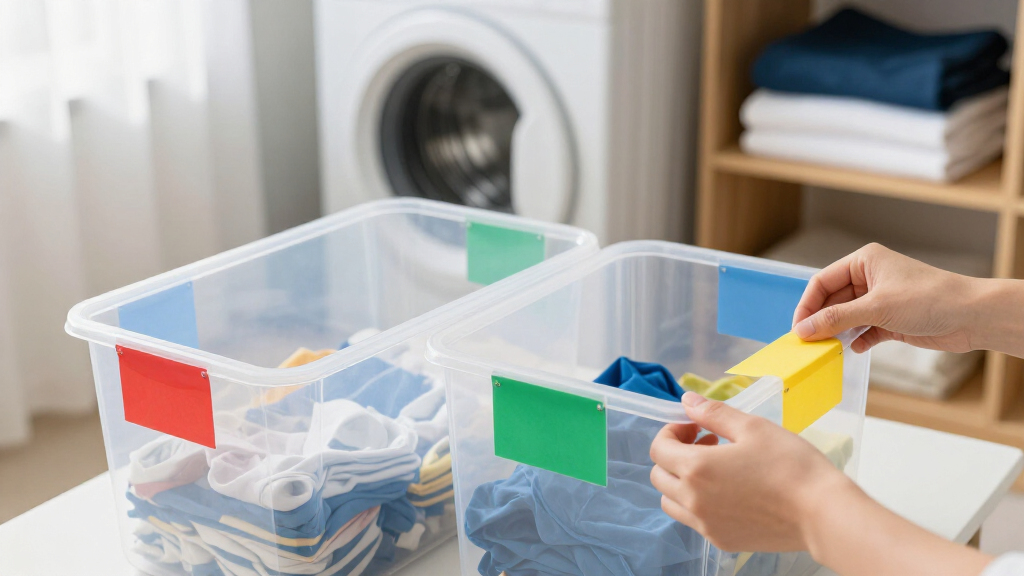
- Create labels or baskets. Use waterproof labels, adhesive stickers, or printable tags. Attach them to your hampers, baskets, or designated compartments. The material choice influences longevity—cheap paper labels may peel or fade quickly, leading to confusion or extra work. Durable labels ensure the system stays intact through multiple washes and handling, maintaining clarity over time. Consider how easy they are to remove or reposition if your categories change or if you want to update the system for different seasons or needs.
- Assign each color to a category. Clearly mark which laundry type each color represents. Write it on the label if needed, like “White Clothes” in bold. Consistency is key—stick to your chosen categories to build habit and reduce errors. Think about the implications of your choices: if you assign green for towels, ensure that everyone understands that towels are always in the green basket, preventing mix-ups that could lead to washing towels with delicates or whites.
- Communicate and enforce the system. Make sure everyone knows the color meanings. Place a small cheat sheet nearby if needed. Encourage sticking to the categories. Reinforcing the system helps develop automatic habits, reducing the need for reminders or constant supervision. Consider involving household members in initial setup and explanations—this shared understanding reduces the chances of accidental misclassification, which can cause laundry mishaps or delays.
As an affiliate, we earn on qualifying purchases.
Choosing the Right Materials for Long-Lasting Labels
Durability is key. You want labels that withstand washing, moisture, and handling. Waterproof, laminated stickers are a popular choice—they resist peeling and smudging, which is crucial because laundry environments are humid and labels are frequently handled. Sharpie markers on plastic tags work but need sealing with clear tape or laminate; without proper sealing, ink can smudge or fade over time, reducing clarity. For a more polished look, printable labels on waterproof paper are ideal, especially if you want a professional appearance or need to change labels frequently. The material choice directly impacts the longevity of your system—poor-quality labels can lead to confusion, re-labeling, and extra costs. Investing in high-quality, waterproof labels minimizes these issues, ensuring your system remains clear and functional for many laundry cycles.
For example, a student might buy a pack of laminated adhesive labels in vibrant colors and write the category on each. These last through a semester of laundry cycles without fading or peeling, saving time and effort. If you want a DIY approach, use a label maker with waterproof tape for crisp, professional-looking tags that resist moisture and handling. Remember, the goal is to have labels that stay legible and intact, preserving the clarity of your categorization system over time.
Pro tip: keep extra labels handy for updates or changes as your laundry needs evolve, preventing the need to recreate the entire system when categories shift or expand.
As an affiliate, we earn on qualifying purchases.
Can You Mix and Match Labels and Baskets? Yes, Here’s How
Absolutely. Combining different label styles and baskets allows you to customize your laundry space while maintaining clarity. The key is to ensure visual harmony—using consistent color associations and styles helps everyone recognize categories easily, even if the materials differ. For example, colorful fabric bins with printed laminated labels can complement plain plastic hampers with color stickers, as long as the colors and labeling are aligned. This flexibility is beneficial because it allows you to adapt your setup to available space, aesthetic preferences, or budget constraints without sacrificing functionality. When mixing materials, consider the durability and visibility—labels should be easily readable and resistant to handling and moisture. Harmonizing the visual style, such as matching color schemes or label fonts, reinforces recognition and reduces confusion, especially in shared or multi-purpose laundry areas.
Imagine a dorm room with three baskets: a bright yellow one for whites, a navy blue for darks, and a pastel pink for delicates. Each basket has a matching label or sticker. This visual harmony makes sorting intuitive, even for a roommate who’s new to the system. Plus, it allows flexibility—swap out baskets or labels without disrupting your entire system. The tradeoff is that mismatched styles can sometimes create visual clutter or confusion if not carefully coordinated, so aim for consistent color schemes and clear labeling.
Tip: choose baskets that are roughly the same size and shape for a clean look and consistent sorting, which helps reinforce the system’s clarity and efficiency.
customizable laundry sorting system
As an affiliate, we earn on qualifying purchases.
As an affiliate, we earn on qualifying purchases.
How to Keep Your System Easy to Maintain and Update
Keeping your color-coded laundry system simple and adaptable ensures long-term usability. Regular reviews of labels and categories help you stay organized as your laundry needs change—adding a new category like gym clothes or seasonal items can be seamless if your system is flexible. Using removable or erasable labels allows quick updates without redoing the entire setup, saving time and effort. For example, a parent might add a bright green label for sportswear during soccer season. When the season ends, they replace it with a neutral or different color, preventing clutter and confusion. Involving everyone in household maintenance fosters shared responsibility and reinforces good habits. When all users understand and follow the system, it becomes second nature, reducing the chances of misclassification or overlooked loads.
Pro tip: stick a small laminated chart nearby showing the color codes. That way, new users or guests always know the system’s rules, minimizing accidental errors and ensuring consistency over time. Regularly updating the system also helps prevent it from becoming outdated or forgotten, keeping laundry day efficient and stress-free.
Smart Tech and Eco-Friendly Options for Laundry Labels
Looking to upgrade? Smart labels with RFID tags or QR codes can automatically identify laundry categories via apps, adding a layer of convenience and automation. These tech options can track loads, send reminders when laundry is done, or suggest optimal washing cycles based on fabric type or dirt level. For example, scanning a tag with your phone could instantly tell you whether a load is ready for drying or needs re-washing, saving time and reducing errors. Eco-conscious choices include reusable fabric labels, biodegradable stickers, or labels made from recycled materials. These options reduce waste and promote sustainability, aligning your laundry routine with environmentally friendly values. Combining these eco-friendly materials with eco-friendly hampers or baskets creates a greener, more sustainable laundry setup. Imagine an entire system that’s not only organized but also minimizes your ecological footprint. While high-tech options are still emerging and may involve higher upfront costs, they can add a modern, efficient twist to your laundry routine, especially for tech-savvy households or those prioritizing sustainability.
In summary, integrating smart and eco-friendly options enhances your laundry system’s functionality and environmental impact, making chores more efficient and eco-conscious.