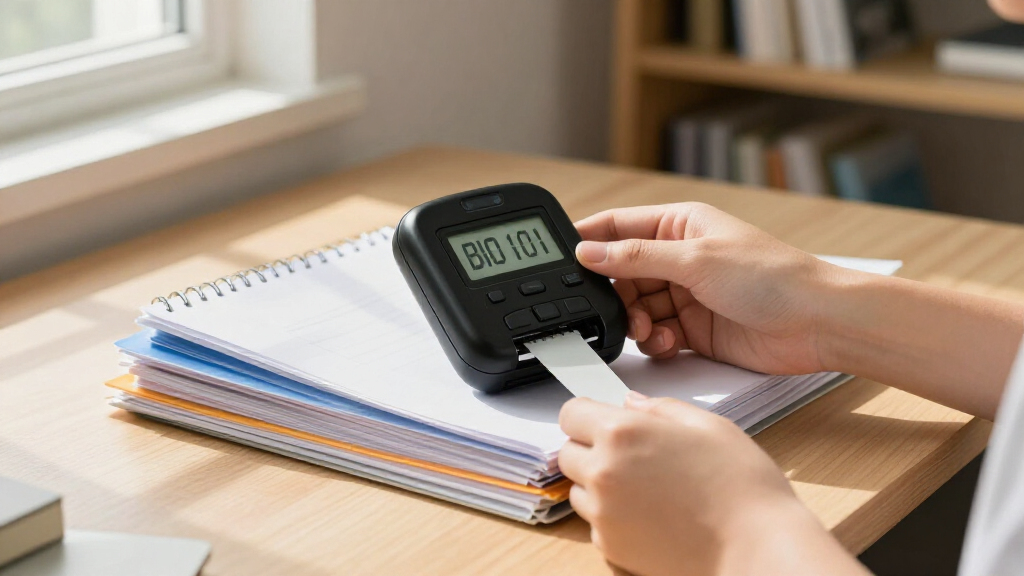
For most students, I’d start with the Phomemo D30, a compact Bluetooth option suited to quick labels for notebooks, folders, and supplies. The Brother P-Touch PT-N10 is a standout for students who prefer a built-in keyboard, while the SUPVAN E11 is worth a look if having tapes included matters more than keeping the setup minimal. The main tradeoffs are phone-based versus on-device typing, thermal printing versus tape-based labeling, and a smaller footprint versus more included supplies. I compare all 15 models by how well those differences fit student routines. Continue reading for the full breakdown and help matching a label maker to your classes and belongings.

Prime made for students and young adults
- Fast, free delivery for dorm and study essentials
- Prime Video and Amazon Music included
- Member-only deals
Key Takeaways
- The lineup splits between phone-connected Bluetooth models and the keyboard-equipped Brother PT-N10 and SUPVAN E11, so students should choose their preferred typing method before comparing extras.
- Thermal models such as the Phomemo D30 and NIIMBOT D110 avoid ink cartridges, but buyers should check tape compatibility and replacement options before settling on a device.
- The SUPVAN E11 and T50M Pro stand out for students who value included tapes or a fuller setup, while a basic mini printer may suit occasional labeling better.
- Ribbon-style and gift-focused options, including the Phomemo P12 Ribbon Printer, serve decorative projects better than a student who mainly needs plain, readable labels.
- Compact size alone does not settle the choice: a tiny printer can depend heavily on a phone app, while a handheld keyboard model may be easier to use when a phone is inconvenient.
| NADAIIN D20 Mini Portable Bluetooth Thermal Sticker Printer |  | Best for Pocket Portability | Printer type: Thermal | Output: Monochrome (black only) | Weight: 0.16 kg | VIEW LATEST PRICE | See Our Full Breakdown |
| Phomemo P12 Bluetooth Portable Label Maker |  | Best for Flexible Label Types | Printer type: Thermal and thermal transfer | Output: Monochrome | Weight: 180 g | VIEW LATEST PRICE | See Our Full Breakdown |
| LOPEVI D1 Portable Bluetooth Thermal Label Printer, Blue |  | Best for App Customization | Printer type: Thermal | Output: Monochrome | Resolution: 300 × 300 dpi | VIEW LATEST PRICE | See Our Full Breakdown |
| ORGBRO X1 Bluetooth Mini Label Maker with Tape |  | Best for Narrow Pre-Cut Labels | Printer type: Thermal | Output: Monochrome | Resolution: 203 × 203 DPI | VIEW LATEST PRICE | See Our Full Breakdown |
| Phomemo Label Maker Machine with Tape, P12 Ribbon Printer for Gift Wrapping | 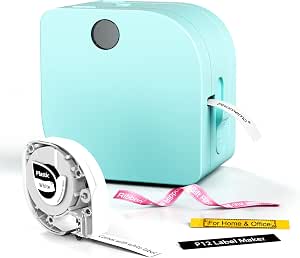 | Best for Decorative Color Accents | Printer type: Thermal | Resolution: 203 × 203 DPI | Connectivity: Bluetooth | VIEW LATEST PRICE | See Our Full Breakdown |
| ORGSTA Label Maker S001 Portable Bluetooth Label Maker Machine with Tape |  | Best for Pocketable Portability | Printer type: Direct thermal | Output: Monochrome | Resolution: 203 × 203 DPI | VIEW LATEST PRICE | See Our Full Breakdown |
| Phomemo D30 Bluetooth Mini Portable Thermal Label Printer | 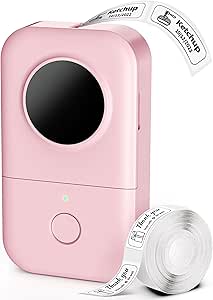 | Best for App-Based Organization | Printer type: Thermal | Output: Monochrome | Resolution: 203 × 203 DPI | VIEW LATEST PRICE | See Our Full Breakdown |
| NIIMBOT D110 Upgrade Mini Label Maker – Bluetooth Thermal Printer |  | Best for Quick Recharging | Printer type: Thermal | Output: Monochrome | Resolution: 203 DPI | VIEW LATEST PRICE | See Our Full Breakdown |
| Brother P-Touch PT-N10 Personal Handheld Label Maker |  | Best for Phone-Free Labeling | Printer type: Thermal | Power: 6 AAA batteries, sold separately | Compatible tape: Brother P-touch Btag, 12 mm wide × 4 m long | VIEW LATEST PRICE | See Our Full Breakdown |
| SUPVAN E11 Keyboard and Bluetooth Label Maker with 4 Tapes |  | Best Hybrid Pick for Shared Study Spaces | Printer type: Thermal | Output and resolution: Monochrome; 203 DPI | Connectivity and controls: Bluetooth, LCD, keyboard, and app | VIEW LATEST PRICE | See Our Full Breakdown |
| Rongta Mini Label Maker Machine R5 Bluetooth Portable Sticker Printer (Pink) |  | Best Pocket-Sized Pick | Printer type: Thermal | Connectivity: Bluetooth, USB | Resolution: 203 × 203 dpi | VIEW LATEST PRICE | See Our Full Breakdown |
| Nelko Label Maker Machine with Tape, PM220 Bluetooth Label Printer, Cyan |  | Best for App Design and Device Flexibility | Printer type: Direct thermal | Connectivity: Bluetooth | Compatible devices: PC and smartphones | VIEW LATEST PRICE | See Our Full Breakdown |
| Rongta R22 Bluetooth Thermal Label Maker |  | Best for Larger Labels | Printer type: Thermal | Connectivity: Bluetooth | Compatible devices: iOS and Android phones and tablets | VIEW LATEST PRICE | See Our Full Breakdown |
| SUPVAN T50M Pro Bluetooth Label Maker with 3 Tapes |  | Best for Shared School Supplies | Printer type: Thermal | Connectivity and control: Bluetooth; app and push button | Compatible devices: Laptops, PCs, smartphones, and tablets | VIEW LATEST PRICE | See Our Full Breakdown |
| Nelko P21 Bluetooth Label Maker, Portable Thermal Label Printer, Pink |  | Best for Simple Personal Labels | Printer type: Direct thermal | Connectivity: Bluetooth | Compatible devices: iOS and Android smartphones | VIEW LATEST PRICE | See Our Full Breakdown |
| compact label makers for student | Printer type | Resolution | Weight | Dimensions |
|---|---|---|---|---|
| NADAIIN D20 Mini Portable Blue | Thermal | 203 DPI | 0.16 kg | 1.65 × 3.38 × 3.34 in |
| Phomemo P12 Bluetooth Portable | Thermal and thermal transfer | 300 × 300 | 180 g | 4.07 × 1.83 × 6.45 in |
| LOPEVI D1 Portable Bluetooth T | Thermal | 300 × 300 dpi | 140 g | — |
| ORGBRO X1 Bluetooth Mini Label | Thermal | 203 × 203 DPI | 7 oz | 1.2 × 3 × 4.2 in |
| Phomemo Label Maker Machine wi | Thermal | 203 × 203 DPI | 180 g | 4.09 × 3.52 × 2.7 in |
| ORGSTA Label Maker S001 Portab | Direct thermal | 203 × 203 DPI | 9.07 g (as listed) | 1.1 × 2.9 × 5.3 in |
| Phomemo D30 Bluetooth Mini Por | Thermal | 203 × 203 DPI | — | — |
| NIIMBOT D110 Upgrade Mini Labe | Thermal | 203 DPI | 149 g | 3.86 × 2.99 × 1.18 in |
| Brother P-Touch PT-N10 Persona | Thermal | 180 × 180 DPI | — | — |
| SUPVAN E11 Keyboard and Blueto | Thermal | — | 0.5 lb (8 oz) | 5.8 × 3.1 × 1.5 in |
| Rongta Mini Label Maker Machin | Thermal | 203 × 203 dpi | 8 ounces | 6.65 × 4.5 × 1.9 inches |
| Nelko Label Maker Machine with | Direct thermal | 300 × 300 dpi | 0.38 kg | 5.27 × 3.15 × 4.05 inches |
| Rongta R22 Bluetooth Thermal L | Thermal | 203 × 203 dpi | 250 g | 4 × 2 × 3 inches |
| SUPVAN T50M Pro Bluetooth Labe | Thermal | 203 dpi | 303 g | 5.9 × 2.6 × 4.3 inches |
| Nelko P21 Bluetooth Label Make | Direct thermal | 203 × 203 dpi | 230 g | 6.65 × 1.9 × 4.5 inches |
More Details on Our Top Picks
NADAIIN D20 Mini Portable Bluetooth Thermal Sticker Printer
The NADAIIN D20 is the easiest fit for students who want a label printer small enough to carry between classes or keep in a crowded desk drawer. At 165 g, it weighs less than the Phomemo P12, and its 2-inch media width allows broader stickers than that model’s 0.55-inch maximum. The tradeoff is a more basic printing setup: the D20 prints only in black, and its NADA Print app is the control point rather than a built-in keyboard. Thermal printing avoids ink and toner, while the listed battery life of up to a month can reduce charging interruptions for occasional labeling. I’d choose it for labeling notebooks, storage, and small project materials, but not for students who need wide-format labels or intricate color designs.
Pros:- Light 165 g body is easy to carry in a backpack.
- Thermal printing needs no ink or toner.
- 2-inch media width allows larger stickers than the Phomemo P12 supports.
- Listed battery life of up to one month suits occasional campus use.
Cons:- Black-only output limits color coding and decorative designs.
- Bluetooth printing depends on the NADA Print app and a compatible device.
- Maximum 2-inch media width rules out wider labels.
Best for: Students who want a very light Bluetooth printer for occasional notebook, supply, and storage labels.
Not ideal for: Students who need color designs, labels wider than 2 inches, or a printer with onboard controls instead of app-based operation.
- Printer type:Thermal
- Output:Monochrome (black only)
- Weight:0.16 kg
- Dimensions:1.65 × 3.38 × 3.34 in
- Resolution:203 DPI
- Maximum media width:2 in
- Connectivity and control:Bluetooth; NADA Print app
- Battery life:Up to one month per charge
Our verdict“Choose the D20 if low carry weight and wider stickers matter more than color printing or built-in controls.”
Phomemo P12 Bluetooth Portable Label Maker
The Phomemo P12 suits students who need practical text labels in different formats, rather than wider decorative stickers. Its support for multiple label types and continuous-length printing makes it more adaptable for organizing binders, cables, and supply boxes than the NADAIIN D20, while the built-in manual cutter helps separate labels without scissors. The Print Master app adds templates, fonts, borders, and symbols, giving students room to format labels from a phone. The main constraint is its 0.55-inch maximum media width, which is much narrower than the D20’s 2-inch limit. It also needs six AAA batteries if used away from USB-C power, and those batteries are not included. I’d pick it for narrow, functional labels, not for large project stickers.
Pros:- Supports multiple label types and continuous-length printing.
- App offers templates, fonts, borders, and symbols for customized labels.
- Built-in manual cutter makes separating labels more convenient.
- Can run from USB-C or six AAA batteries.
Cons:- Maximum media width of 0.55 inches limits label size.
- Six AAA batteries are not included.
- Monochrome output cannot provide color-coded labels.
Best for: Students who label cables, folders, and small supplies and want several label formats from a phone app.
Not ideal for: Students who want broad stickers for projects or need a self-contained battery setup without buying separate AAA batteries.
- Printer type:Thermal and thermal transfer
- Output:Monochrome
- Weight:180 g
- Dimensions:4.07 × 1.83 × 6.45 in
- Resolution:300 × 300
- Maximum media width:0.55 in
- Connectivity and compatible devices:Bluetooth; Android and iOS
- Power:USB-C or six AAA batteries (not included)
- Cutter:Built-in manual cutter
Our verdict“Choose the P12 for varied narrow labels and app-based formatting, but pick the D20 if you need wider stickers.”
LOPEVI D1 Portable Bluetooth Thermal Label Printer, Blue
The LOPEVI D1 is the strongest choice here for students who want to personalize labels with more than a basic line of text. Its app lists 19 languages, over 50 fonts, and more than 500 icons, giving it a broader set of design options than the Phomemo P12’s described app features. A 300 dpi print head can help small text and simple graphics appear clearer than on the NADAIIN D20, which is rated at 203 DPI. The D1 is also light at 140 g, though its stated 2-inch tape limit means it still cannot make oversized project labels. It prints in monochrome and is print-only, so students wanting color output or a multifunction device should skip it. I’d favor this model for personalized, compact labels made from a phone.
Pros:- App includes more than 50 fonts and 500 icons for design flexibility.
- Supports 19 app languages.
- 300 dpi resolution is suited to text and simple graphics.
- 140 g weight and Bluetooth 5.4 support portable use.
Cons:- Monochrome output cannot create color-coded designs.
- Labels are limited to a maximum tape width of 2 inches.
- Print-only functionality offers no additional device functions.
Best for: Students who want to create personalized monochrome labels using a wide selection of fonts, icons, and app languages.
Not ideal for: Students who need color printing, functions beyond printing, or labels wider than 2 inches.
- Printer type:Thermal
- Output:Monochrome
- Resolution:300 × 300 dpi
- Connectivity:Bluetooth 5.4
- Weight:140 g
- Maximum label tape width:2 in
- App features:19 languages, 50+ fonts, 500+ icons
- Device dimensions:3.15 × 3.15 in
Our verdict“Choose the D1 for detailed app customization and light carry weight, rather than the D20’s simpler setup or broader sticker-focused use.”
ORGBRO X1 Bluetooth Mini Label Maker with Tape
The ORGBRO X1 makes the most sense for students who label small items and prefer compact, consistently sized tags over broad stickers. It supports 12 × 40 mm pre-cut labels and continuous media up to 15 mm wide, making it a more focused choice than the NADAIIN D20, whose media reaches 2 inches. The X1’s XeasyLabel app adds templates, QR codes, barcodes, languages, and fonts, so it can handle more than simple name labels. Its rechargeable 2000 mAh battery and USB-C connection also avoid the P12’s need for separately purchased AAA batteries when using battery power. The tradeoffs are a narrow print width, monochrome output, and a stated preference for proprietary ORGBRO paper. I’d skip it for large notebook-cover stickers or students who want flexible media sourcing.
Pros:- Supports both 12 × 40 mm pre-cut labels and continuous labels.
- Rechargeable 2000 mAh battery and USB-C connectivity.
- App includes templates, QR codes, barcodes, fonts, and multiple languages.
- Compact 7-ounce design is suited to carrying between classes.
Cons:- Maximum continuous label width is 15 mm, far narrower than the D20’s 2-inch media.
- Best performance calls for proprietary ORGBRO thermal label paper.
- Monochrome printing excludes color-coded labels.
Best for: Students organizing small supplies, cables, and personal items with narrow pre-cut or continuous labels.
Not ideal for: Students who need wide project stickers or want freedom to use a broad range of label media.
- Printer type:Thermal
- Output:Monochrome
- Resolution:203 × 203 DPI
- Weight:7 oz
- Dimensions:1.2 × 3 × 4.2 in
- Media sizes:12 × 40 mm pre-cut; continuous labels up to 15 mm wide
- Connectivity:Bluetooth and USB-C
- Battery:2000 mAh rechargeable
Our verdict“Choose the X1 for small, standardized labels and app tools, but choose a wider-media printer for notebooks and project displays.”
Phomemo Label Maker Machine with Tape, P12 Ribbon Printer for Gift Wrapping
The Phomemo P12 Ribbon Printer is the more expressive pick for students making project labels, gift tags, or color-coded study materials. Its listed black, red, grey, blue, gold, and white ink colors set it apart from the black-only NADAIIN D20 and LOPEVI D1, though the source describes thermal and thermal-transfer printing without explaining how those colors are supplied. The app’s 15-plus languages, 90 fonts, and thousands of symbols offer plenty of ways to customize compact labels. Its 12 mm by 4 m media format is useful for repeated small tags, but it is not a wide-sticker machine. USB-C or six AAA batteries provide power options; the batteries are not included. Compared with the Phomemo P12 Bluetooth Portable Label Maker, this version is better framed around decorative ribbon-style labels than broader label-type flexibility.
Pros:- Listed ink colors include black, red, grey, blue, gold, and white.
- App supports 15-plus languages, 90 fonts, and thousands of symbols.
- Bluetooth printing works with iOS and Android smartphones.
- USB-C and optional AAA battery power provide flexible use.
Cons:- Maximum media size of 12 mm × 4 m limits label width and roll length.
- Six AAA batteries are not included.
- The supplied details do not clarify how the listed colors are produced or which media enables them.
Best for: Students who make decorative project tags, gift labels, or color-coded small labels from a phone.
Not ideal for: Students who need wide labels, want a clearly specified color-media system, or prefer not to source six AAA batteries.
- Printer type:Thermal
- Resolution:203 × 203 DPI
- Connectivity:Bluetooth
- Compatible devices:iOS and Android smartphones
- Weight:180 g
- Dimensions:4.09 × 3.52 × 2.7 in
- Maximum media size:12 mm × 4 m
- Power:USB-C or six AAA batteries (not included)
- Listed ink colors:Black, red, grey, blue, gold, white
Our verdict“Choose this Phomemo for decorative, narrow labels with color options, but pick the D20 or LOPEVI D1 for straightforward monochrome sticker printing.”
ORGSTA Label Maker S001 Portable Bluetooth Label Maker Machine with Tape
The ORGSTA S001 is the smallest-feeling pick here for students who want a label printer they can tuck into a bag or hang from a metal ring. Bluetooth printing through the Snap & Tag app supports text, QR codes, barcodes, and images, giving it more design flexibility than the keyboard-led Brother PT-N10. Its rechargeable 2000 mAh battery and built-in cutter also suit quick labeling between classes, while direct thermal printing avoids ink cartridges.
The tradeoff is its narrow 12 mm maximum media width and monochrome output, which limit label size and color choices. The listed print speed is 15 mm/s, so I would not choose it for large batches based on the separate 35-inches-per-minute claim. It makes the most sense for small labels, not broad notebook or project labels.
Pros:- Pocket-sized body with a metal ring for carrying or hanging
- Rechargeable 2000 mAh battery and ink-free thermal printing
- App templates include QR codes, barcodes, text, and images
- Built-in cutter simplifies separating finished labels
Cons:- Monochrome printing rules out colored text and graphics
- 12 mm maximum media width restricts label size
- Bluetooth app is required to create and print labels
Best for: Students who want a tiny Bluetooth label printer for labeling chargers, folders, and small storage items on the go.
Not ideal for: Students who need wide, colorful labels or prefer typing directly on a built-in keyboard rather than using a phone app.
- Printer type:Direct thermal
- Output:Monochrome
- Resolution:203 × 203 DPI
- Connectivity:Bluetooth via Snap & Tag app
- Battery:Rechargeable 2000 mAh
- Maximum media width:0.47 in (12 mm)
- Dimensions:1.1 × 2.9 × 5.3 in
- Weight:9.07 g (as listed)
Our verdict“Choose the ORGSTA S001 if carrying a very compact, app-driven label printer matters more than wide or colorful output.”
Phomemo D30 Bluetooth Mini Portable Thermal Label Printer
The Phomemo D30 is a strong fit for students who expect to make more than basic name labels. Its app supports custom layouts, barcodes, QR codes, Excel imports, OCR, and voice input, so it can handle file labels and repeated lists as well as everyday school supplies. Unlike the Brother PT-N10, it relies on a phone or tablet instead of a physical keyboard, but that app-based workflow offers more ways to build and reuse designs.
At 160 g, it remains easy to carry, and its support for continuous and gap tapes gives students more label-format flexibility than the ORGSTA S001’s listed 12 mm media limit. The main compromises are monochrome-only printing and the need for a compatible mobile device. Its 1200 mAh battery is smaller than ORGSTA’s, so heavy, frequent printing may favor that alternative.
Pros:- App offers Excel import, OCR, voice input, barcode, and QR-code tools
- Works with both continuous and gap label tapes
- Compact 160 g design is practical for a backpack
- Compatible tapes are described as BPA-free
Cons:- A compatible Android or iOS phone or tablet is required
- Monochrome output cannot reproduce colored label designs
- 1200 mAh battery capacity is lower than the ORGSTA S001’s listed capacity
Best for: Students who organize coursework digitally and want app tools such as Excel import, OCR, or voice input for making labels.
Not ideal for: Students who want a standalone label maker with built-in typing controls or who need color printing.
- Printer type:Thermal
- Output:Monochrome
- Resolution:203 × 203 DPI
- Connectivity:Bluetooth
- Compatible devices:Android and iOS smartphones and tablets
- Media:Continuous and gap label tapes
- Battery:1200 mAh
- Dimensions and weight:1.14 × 2.95 × 5.17 in; 160 g
Our verdict“Pick the Phomemo D30 if flexible app tools and multiple tape formats matter more than built-in controls or color output.”
NIIMBOT D110 Upgrade Mini Label Maker – Bluetooth Thermal Printer
The NIIMBOT D110 suits students who want a small app-controlled printer but would rather not wait long between charging sessions. Its rechargeable battery is listed as reaching a full charge in two hours through USB-C, and the dedicated app supports wireless label creation from iOS or Android devices. Compared with the Phomemo D30, the D110 highlights automatic label rewind and a quicker stated recharge time; the D30, by contrast, spells out broader app tools such as OCR and voice input.
Both models print monochrome at 203 DPI, so neither is a choice for colorful subject coding. The D110’s compatible tapes include clear, colorful, waterproof, and oil-proof options, which can add variety through the label material even though printing itself remains monochrome. Its listed 40 pages per minute is not directly comparable to the other models’ speed units, so I would focus on its portability and media options instead.
Pros:- Rechargeable battery is listed to fully charge in two hours via USB-C
- 203 DPI monochrome printing suits crisp text and simple labels
- Compatible tapes include clear, waterproof, and oil-proof options
- Automatic label rewind and app control support portable use
Cons:- Print output is monochrome, even when using colorful label tape
- Requires a Bluetooth-connected iOS or Android device and NIIMBOT app
- Listed print-speed unit is difficult to compare with the other models
Best for: Students who use a phone to design labels and want USB-C recharging plus access to waterproof or oil-proof tapes.
Not ideal for: Students who need a built-in keyboard, detailed app workflow information, or genuinely colored printing.
- Printer type:Thermal
- Output:Monochrome
- Resolution:203 DPI
- Connectivity:Bluetooth to iOS and Android devices
- Battery:Rechargeable; full charge in 2 hours via USB-C
- Weight:149 g
- Dimensions:3.86 × 2.99 × 1.18 in
- Compatible media:Label tapes, including clear, waterproof, and oil-proof options
Our verdict“Choose the NIIMBOT D110 for compact app-based labeling and quick USB-C recharging, not for color printing or built-in controls.”
Brother P-Touch PT-N10 Personal Handheld Label Maker
The Brother PT-N10 is the outlier for students who do not want to design labels on a phone. Its physical QWERTY keyboard, 12-character preview, and built-in cutter make short labels straightforward to enter and check before printing. It can store up to 10 labels for repeat jobs, while its fonts, frames, and symbols provide basic personalization without an app. That makes it a more self-contained choice than the Bluetooth-driven NIIMBOT D110 or Phomemo D30.
The tradeoff is size: at 16 oz and 7.6 × 4.7 × 2.8 inches, it is less pocketable than those mini printers. It also uses six AAA batteries sold separately and works only with Brother P-touch Btag tape up to 12 mm wide. I would choose it for direct, occasional label making, not for lightweight daily carry or broad media choice.
Pros:- QWERTY keyboard and preview screen allow phone-free label creation
- Stores up to 10 labels for repeat printing
- Built-in cutter and two-line printing support everyday school labels
- Fonts, styles, frames, and symbols allow simple customization
Cons:- Six AAA batteries are required and sold separately
- Compatible only with Brother P-touch Btag tape up to 12 mm wide
- Heavier and larger than the mini Bluetooth models in this roundup
Best for: Students who prefer physical typing and want a label maker that works without pairing a phone or tablet.
Not ideal for: Students prioritizing pocket-sized portability, rechargeable power, or compatibility with a wide range of label tapes.
- Printer type:Thermal
- Power:6 AAA batteries, sold separately
- Compatible tape:Brother P-touch Btag, 12 mm wide × 4 m long
- Keyboard and display:QWERTY keyboard; 12-character display
- Resolution:180 × 180 DPI
- Maximum lines:2
- Memory:Stores up to 10 labels
- Dimensions and weight:7.6 × 4.7 × 2.8 in; 16 oz
Our verdict“Pick the PT-N10 if you value a physical keyboard and standalone operation more than compact size or rechargeable power.”
SUPVAN E11 Keyboard and Bluetooth Label Maker with 4 Tapes
The SUPVAN E11 is the most flexible control setup in this group: students can type on its keyboard or design labels in a Bluetooth app. That makes it a practical shared-desk choice when some users prefer direct controls and others want more elaborate layouts. The app lists more than 30 fonts, 50 frames, 660 icons, and 17 languages, while the Brother PT-N10 offers a physical keyboard but no app-based workflow. SUPVAN also includes both continuous and die-cut tapes, so it is ready for more than one label format.
Its 0.5 lb weight and 5.8-inch length make it less pocketable than the ORGSTA S001, but the E11 trades that tiny footprint for a screen, keyboard, and broader controls. The one-month battery figure is a listed claim rather than a guaranteed student schedule; output remains monochrome, and the 15 mm media limit keeps labels narrow.
Pros:- Offers both onboard keyboard controls and Bluetooth app printing
- App includes extensive font, frame, icon, and language options
- Supports continuous and die-cut label formats
- Includes four tapes and a USB-C cable
Cons:- Monochrome printing cannot create colored text or graphics
- 15 mm maximum media width limits label size
- Larger and heavier than pocket-first options such as the ORGSTA S001
Best for: Students sharing a study area who want both keyboard entry and app design, with continuous and die-cut tapes included.
Not ideal for: Students who need a genuinely pocket-sized printer, color output, or labels wider than 15 mm.
- Printer type:Thermal
- Output and resolution:Monochrome; 203 DPI
- Connectivity and controls:Bluetooth, LCD, keyboard, and app
- Battery:Rechargeable 1200 mAh; listed use up to one month per charge
- Weight:0.5 lb (8 oz)
- Dimensions:5.8 × 3.1 × 1.5 in
- Label compatibility:Continuous and die-cut labels; maximum width 15 mm
- Included tapes:Two white continuous tapes (15 mm × 6 m) and two white die-cut tapes (12 mm × 40 mm)
Our verdict“Choose the SUPVAN E11 if you want both physical and app controls in a ready-to-use kit and can accept a larger monochrome printer.”
Rongta Mini Label Maker Machine R5 Bluetooth Portable Sticker Printer (Pink)
The Rongta R5 is the easiest fit for students who want a label maker they can keep in a backpack pocket and use from a phone. At 8 ounces, it is lighter than the wider-format Rongta R22, and its 12 mm label limit suits small labels for chargers, pencil cases, and folders rather than broad classroom signage. The app offers more than 25 fonts and 50 templates, while 203 dpi thermal printing avoids ink purchases. Its 1500 mAh battery is listed for up to four hours of continuous printing, useful for a batch of belongings at the start of term. The tradeoff is limited device compatibility: it does not work with Google phones, Chromebooks, or computers, and it cannot print continuous tape. It also calls for Rongta-brand tape for best performance.
Pros:- Pocket-sized 8-ounce design is easy to carry between classes.
- Bluetooth printing works with iOS and Android devices.
- Thermal printing avoids ink and toner.
- Automatic rewind and first-label calibration help reduce wasted material.
Cons:- Not compatible with computers, Chromebooks, or Google phones.
- Supports labels up to 12 mm but not continuous label tape.
- Rongta-brand tape is recommended for optimal performance.
Best for: Students with compatible iOS or Android phones who need small, portable labels for personal supplies and cables.
Not ideal for: Students who use a Chromebook, computer, or unsupported Google phone, or who need continuous tape for long labels.
- Printer type:Thermal
- Connectivity:Bluetooth, USB
- Resolution:203 × 203 dpi
- Weight:8 ounces
- Dimensions:6.65 × 4.5 × 1.9 inches
- Maximum label width:12 mm
- Battery:1500 mAh; up to 4 hours of continuous printing
- Included roll size:14 × 40 mm
Our verdict“Choose the R5 if carrying a very small phone-connected printer matters more than broad device support or larger labels.”
Nelko Label Maker Machine with Tape, PM220 Bluetooth Label Printer, Cyan
For students who want more design control and a way to print from a computer as well as a phone, the Nelko PM220 has a wider reach than the phone-only Rongta R5 and Nelko P21. Its app lists 90+ fonts, 14+ languages, templates, QR codes, and barcodes, giving students options for project bins, club supplies, or organized study materials. The 300 dpi resolution is higher than the 203 dpi output specified for the R5, while supported label widths of 23–54 mm allow larger layouts than that pocket printer’s 12 mm limit. The compromise is a larger, heavier body at 0.38 kg, so it is less of a toss-in-your-pocket choice. The supplied color is cyan, and other tape colors require separate purchases; a charging adapter is not included.
Pros:- Works with iOS, Android, and PC through the Nelko app.
- 300 × 300 dpi resolution supports sharp monochrome labels.
- App includes more than 90 fonts, 14+ languages, and QR and barcode templates.
- 23–54 mm media range accommodates wider labels than the Rongta R5.
Cons:- At 0.38 kg, it is heavier than the pocket-sized Rongta R5 and Nelko P21.
- Charging adapter is not included, and fast-charging adapters are unsupported.
- The included cyan tape limits the initial color choice.
Best for: Students who make varied labels for projects or shared supplies and want app printing across smartphones and PCs.
Not ideal for: Students who prioritize the lightest backpack carry, need a charging adapter in the box, or want color without buying other tape.
- Printer type:Direct thermal
- Connectivity:Bluetooth
- Compatible devices:PC and smartphones
- Resolution:300 × 300 dpi
- Weight:0.38 kg
- Dimensions:5.27 × 3.15 × 4.05 inches
- Paper size range:23–54 mm
- Output:Monochrome
Our verdict“Pick the PM220 if flexible app design and PC support matter more than having the smallest student-friendly printer.”
Rongta R22 Bluetooth Thermal Label Maker
The Rongta R22 makes more sense than the narrow-label R5 when a student needs room for longer names, storage-bin details, or project labels. It accepts widths from 0.63 to 2.13 inches, far broader than the R5’s 12 mm maximum, while staying compact at 4 × 2 × 3 inches. The RONGTA app adds fonts, icons, borders, and images, so labels can carry more information without relying on a computer. Like the R5, it prints monochrome thermal labels and is rated for up to four hours of continuous printing per charge. The tradeoff is that the R22 works only with iOS and Android phones or tablets; unlike the Nelko PM220 and SUPVAN T50M Pro, it offers no computer connection. Its larger label range also means it is less focused on tiny, unobtrusive labels.
Pros:- Supports label widths up to 2.13 inches for more room for text.
- Compact 4 × 2 × 3-inch body weighs 250 g.
- App offers fonts, icons, borders, and images for customized labels.
- Rechargeable battery is rated for up to four hours of continuous printing.
Cons:- Does not support computer connections.
- Prints only in monochrome.
- Charging adapter is not included, and fast-charging adapters are unsupported.
Best for: Students using a phone or tablet who need wider labels for project materials, shelves, or shared storage.
Not ideal for: Students who print from a computer, want color output, or mainly need very small labels for personal items.
- Printer type:Thermal
- Connectivity:Bluetooth
- Compatible devices:iOS and Android phones and tablets
- Label width range:0.63–2.13 inches
- Resolution:203 × 203 dpi
- Weight:250 g
- Dimensions:4 × 2 × 3 inches
- Battery:1500 mAh; up to 4 hours of continuous printing
Our verdict“Choose the R22 over the R5 when wider, more informative labels matter more than computer support or tiny-format portability.”
SUPVAN T50M Pro Bluetooth Label Maker with 3 Tapes
The SUPVAN T50M Pro is the most versatile pick here for students who label more than notebooks and pencil cases. Its 3/4–2-inch label support and app library of more than 30 fonts, 50 frames, and 660 icons lend themselves to file labels, cables, jewelry, and group-project materials. It also includes three label tapes, so a student can start with more than one roll on hand. Compared with the phone-focused Rongta R22, SUPVAN lists compatibility with laptops and PCs as well as smartphones and tablets, and it adds push-button control. The cost of that flexibility is a larger 303 g body and monochrome output. It also requires compatible SUPVAN tape, so students who want to use other label brands should look at a different option.
Pros:- Supports multiple label types, including address, cable, jewelry, and file labels.
- App provides images, 30+ fonts, 50 frames, and 660 icons.
- Includes three label tapes to get started.
- Works with laptops, PCs, smartphones, and tablets.
Cons:- At 303 g, it is heavier than the Rongta R5 and Nelko P21.
- Output is monochrome only.
- Requires compatible SUPVAN label tape.
Best for: Students managing club, classroom, or dorm supplies who want varied label formats and computer compatibility.
Not ideal for: Students who want a pocket-sized printer, color printing, or freedom to use non-SUPVAN label tape.
- Printer type:Thermal
- Connectivity and control:Bluetooth; app and push button
- Compatible devices:Laptops, PCs, smartphones, and tablets
- Label width:3/4–2 inches
- Resolution:203 dpi
- Weight:303 g
- Dimensions:5.9 × 2.6 × 4.3 inches
- Included:Label maker, charging cable, manual, and 3 label tapes
Our verdict“Pick the T50M Pro for varied school and shared-supply labeling if its larger body and brand-specific tape are acceptable.”
Nelko P21 Bluetooth Label Maker, Portable Thermal Label Printer, Pink
The Nelko P21 is a straightforward choice for students labeling everyday belongings from an iOS or Android phone. It weighs 230 g and uses fixed-size labels up to 15 × 50 mm, making it a better match for names on containers, notebooks, and cables than the wider-format Nelko PM220. The Nelko app supports text, images, templates, QR codes, and barcodes, while direct-thermal printing means there is no ink to replace. Its narrow media and phone-only setup keep the workflow simple, but they also limit its reach: it cannot print from computers or use continuous tape. That makes it less flexible than the SUPVAN T50M Pro for varied school projects. Students with Google Pixel phones running Android 14 should also check compatibility before choosing it.
Pros:- Lightweight 230 g design is easy to carry.
- Rechargeable direct-thermal printing needs no ink or toner.
- App supports text, images, templates, QR codes, and barcodes.
- Supports several fixed label sizes, including 14 × 40, 14 × 50, and 14 × 75 mm.
Cons:- Does not support computer connections or continuous label tape.
- Not compatible with Google Pixel phones running Android 14.
- Charging adapter is not included.
Best for: Students who want a lightweight, phone-operated printer for fixed-size labels on personal school supplies.
Not ideal for: Students who print from a laptop or Chromebook, need continuous tape, or use a Google Pixel running Android 14.
- Printer type:Direct thermal
- Connectivity:Bluetooth
- Compatible devices:iOS and Android smartphones
- Resolution:203 × 203 dpi
- Weight:230 g
- Dimensions:6.65 × 1.9 × 4.5 inches
- Maximum media size:15 × 50 mm
- Supported label sizes:14 × 40 mm, 14 × 50 mm, and 14 × 75 mm
Our verdict“Choose the P21 for portable, fixed-size personal labels from a compatible phone, not for computer-based or wide-format school labeling.”
How We Picked
I ranked these 15 products around the needs implied by student use: labeling notebooks and folders, identifying shared or personal supplies, and organizing small spaces without adding a bulky device to a backpack. I weighed portability, typing workflow, label-making flexibility, included tape, and the likely effort of keeping the printer supplied. I also separated general-purpose school labeling from narrower uses such as decorative gift wrapping, since those strengths do not help every student equally.
The order favors options with a practical balance of compactness and everyday usability, rather than treating the most accessories or the most specialized features as automatic wins. Phone dependence, tape format, and the difference between thermal printing and a keyboard-based device affect how convenient each model is between classes. Where product names point to similar families or distinct uses, I treat those differences as reasons to compare them carefully, not as proof of unlisted specifications. Buyers should check exact tape compatibility and device requirements for the specific listing before choosing.
| compact label makers for student | Printer type | Output | Connectivity |
|---|---|---|---|
| NADAIIN D20 Mini Portable Blue | Thermal | Monochrome (black only) | — |
| Phomemo P12 Bluetooth Portable | Thermal and thermal transfer | Monochrome | — |
| LOPEVI D1 Portable Bluetooth T | Thermal | Monochrome | Bluetooth 5.4 |
| ORGBRO X1 Bluetooth Mini Label | Thermal | Monochrome | Bluetooth and USB-C |
| Phomemo Label Maker Machine wi | Thermal | — | Bluetooth |
| ORGSTA Label Maker S001 Portab | Direct thermal | Monochrome | Bluetooth via Snap & Tag app |
| Phomemo D30 Bluetooth Mini Por | Thermal | Monochrome | Bluetooth |
| NIIMBOT D110 Upgrade Mini Labe | Thermal | Monochrome | Bluetooth to iOS and Android devices |
| Brother P-Touch PT-N10 Persona | Thermal | — | — |
| SUPVAN E11 Keyboard and Blueto | Thermal | — | — |
| Rongta Mini Label Maker Machin | Thermal | — | Bluetooth, USB |
| Nelko Label Maker Machine with | Direct thermal | Monochrome | Bluetooth |
| Rongta R22 Bluetooth Thermal L | Thermal | — | Bluetooth |
| SUPVAN T50M Pro Bluetooth Labe | Thermal | — | — |
| Nelko P21 Bluetooth Label Make | Direct thermal | — | Bluetooth |
Factors to Consider When Choosing Compact Label Makers For Students
For school use, the best compact label maker is the one you can operate and restock without turning a small organizing task into a project. I’d decide how you want to type, where the labels will go, and how often you expect to print before comparing colors or bundled extras.
Choose a typing method that fits your school routine
Bluetooth models let you compose labels on a phone, which can make edits and custom layouts easier, but they add an app and pairing step. A built-in keyboard, as found on the Brother PT-N10 and SUPVAN E11, can be more direct when you do not want to open a phone or depend on a compatible app. The tradeoff is that typing and editing may feel less flexible than on a larger screen. Think about where you will print: a dorm desk with your phone nearby is different from a classroom or shared study space where phone use is limited. A common mistake is choosing Bluetooth by default without checking which phone systems and app features the specific model supports. Pick the workflow you are most likely to use for a one-line label, not just the one with the longest feature list.
Check the full supply path, not just the starter tape
Included tape can make a bundled model feel ready for several projects, but the long-term question is whether you can readily get the right replacement format. Before buying, check tape width, cartridge or roll style, and whether the maker supports the label material you want. A low-profile thermal printer may avoid ink, yet it still needs compatible label stock, and thermal labels can vary in finish and durability. For school books and storage bins, a label that stays readable matters more than a large selection of decorative templates. Avoid assuming that tapes from another label maker will fit just because they look similar. A little supply checking up front can prevent a compact device from becoming an unused drawer item.
Match label durability to the item being marked
Paper labels on folders have different demands from labels on water bottles, lunch containers, or equipment that gets handled every day. Check whether the product and its compatible tape are intended for the surface and conditions you have in mind; do not assume every printed sticker is waterproof or dishwasher-safe. For items that may be shared, borrowed, or wiped down, readable text and a suitable adhesive matter more than decorative borders. Students often make the mistake of buying for notebooks alone and later trying to use the same labels on curved or frequently cleaned surfaces. If durability is a priority, verify the tape’s stated material and care limits before printing a batch. Keep a backup way to identify essential belongings if the intended label stock is not suited to that use.
Treat portability as a whole-kit question
A small printer is only backpack-friendly if its tape, charging needs, and any required phone accessories are manageable too. Compare the device’s footprint with what you will actually carry, then account for spare tape and whether the product needs a cable or other items not shown in the main product name. A tiny model can be easy to store but less convenient if you must keep reaching for your phone to print. A handheld keyboard model may take a different amount of space while removing that phone step. For a student who labels at home once a term, portability may matter less than straightforward setup and reliable supplies. For frequent use between classes, the complete kit matters more than the printer’s size alone.
Pay for features you will use, not a larger bundle
More included tapes can be useful when you already know you will label many items or want multiple styles for different projects. They are less compelling if the tape format is expensive or hard to replace, or if you only need a few plain labels. Decorative ribbon-focused models have a clearer role for gifts and crafts than for routine folder organization. Likewise, a more involved Bluetooth setup can be worthwhile for custom designs but unnecessary for basic text. I’d prioritize a dependable everyday workflow before paying extra for variety that may sit unused. This is also why bundled supplies should be compared by compatibility and intended use, not quantity alone.
Frequently Asked Questions
Should I choose a Bluetooth label maker or one with a built-in keyboard?
Choose Bluetooth if you prefer composing and editing labels on a phone and are comfortable using the maker’s app. A keyboard model is a stronger fit if you want to type directly on the device or avoid relying on a phone during school tasks. The Brother PT-N10 and SUPVAN E11 represent the keyboard route in this lineup, while many of the mini printers connect by Bluetooth. Check device compatibility and app requirements before buying, since the product name alone may not explain the full setup. If you expect to print only occasionally, the easiest workflow for a quick label is usually more useful than extra design options.
Are thermal label makers a good choice for labeling school supplies?
Thermal models can suit school supplies because they print without ink cartridges, but they still rely on compatible label stock. Their usefulness depends on whether the tape is available in a format and material that suits your notebooks, containers, or storage boxes. Do not assume every thermal label resists water, rubbing, or heat. Check the tape specifications for the exact product and intended surface before labeling items that get cleaned or handled often. For folders and indoor storage, a simple readable label may be all you need.
Is a bundle with several tapes a better choice for a student?
A tape bundle can be useful if you plan to label many items or want different styles for projects, but it does not automatically make a printer the better buy. The key is whether the included tape fits your routine and whether replacements are easy to source. Compare the tape format and compatible options before placing much weight on the bundle. A student who labels a few folders may be better served by a smaller, simpler device with accessible supplies. For frequent use or shared family labeling, extra tape can reduce the need to restock right away.
Can I use these compact label makers for water bottles and lunch containers?
Some label tapes may suit containers, but compact label makers do not all produce labels with the same water or wear resistance. Check the tape’s stated care limits and the manufacturer’s guidance for the specific model before using labels on items that are washed. Curved surfaces can also make a label harder to apply neatly, even if the adhesive is suitable. For school items that see frequent cleaning, test a label on a less important surface first and follow any application instructions. If the tape is intended for dry indoor use, reserve it for folders, books, or storage instead.
What should I check before buying a compact label maker for a student?
Start with the typing method, the phone or app requirements, and the exact replacement tape format. Then think through what you will label most often and whether those surfaces need more durable tape than ordinary paper labels. Check what is included in the box, but distinguish starter supplies from ongoing availability. If the student will carry the device, account for tape and charging needs along with the printer itself. These checks help avoid choosing a feature-rich model that is awkward to use or difficult to keep supplied.
Conclusion
My best overall pick is the Phomemo D30 for students who want a compact Bluetooth thermal printer for everyday school labels. For best value, compare the SUPVAN E11’s keyboard workflow and included tapes against how much of its bundle you will actually use; it is a stronger fit when ready-to-use supplies matter. The best for beginners is the Brother PT-N10 if direct on-device typing feels simpler than pairing a phone and learning an app. For a premium-style, fuller setup, the SUPVAN T50M Pro is worth examining for students who want a more equipped Bluetooth option, while decorative projects point toward the Phomemo P12 Ribbon Printer instead. If your main need is a tiny phone-connected printer, consider the NIIMBOT D110 or another mini thermal model, but verify tape compatibility and app requirements before choosing. Match the device to your typing habits and labels first; the smallest printer or biggest bundle is not automatically the right school pick.