TL;DR

Prime made for students and young adults
- Fast, free delivery for dorm and study essentials
- Prime Video and Amazon Music included
- Member-only deals
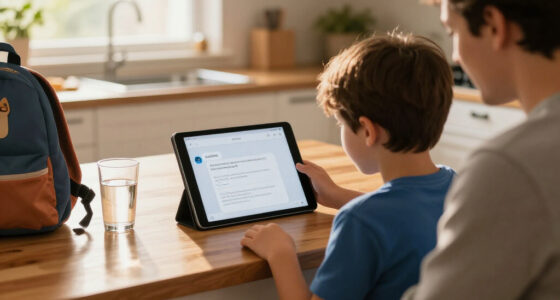
A Thomas B. Fordham Institute researcher argues that schools should sharply reduce one-to-one laptop and tablet programs and rely more on computer labs or laptop carts. The argument draws on a survey of more than 2,000 high school students and recent graduates, but the survey describes reported behavior and does not establish that school devices cause distraction or cheating.
The 74 has published an opinion article urging school leaders to reduce or end routine one-to-one laptop and tablet access for students and instead use computer labs or limited laptop carts. The author, writing for the Thomas B. Fordham Institute, bases the proposal partly on a survey of more than 2,000 high school students and recent graduates who reported frequent classroom technology misuse; the survey does not establish that school-issued devices caused those behaviors.
The survey was commissioned by the Thomas B. Fordham Institute and conducted by Impact Research and UpONE Insights. The article says it was nationally representative and included more than 2,000 high school students and recent graduates. According to the author’s account of the results, 76% said they engaged in some form of technology misuse daily. Half reported scrolling social media or messaging friends during class each day, while about one-third reported daily use of unassigned videos or video games. The article says 22% reported using AI without permission daily.
The author also reports that six in 10 students said they spent most of class on a school-issued device, and nearly one-third said they used one for more than three-quarters of class. Students reportedly accessed AI, games and YouTube at school primarily through school-issued devices. Nearly half said they used AI to solve math problems, and one in four said they used it to cheat on quizzes or tests. These are survey responses as described in the opinion article, not independently verified findings about every school or student.
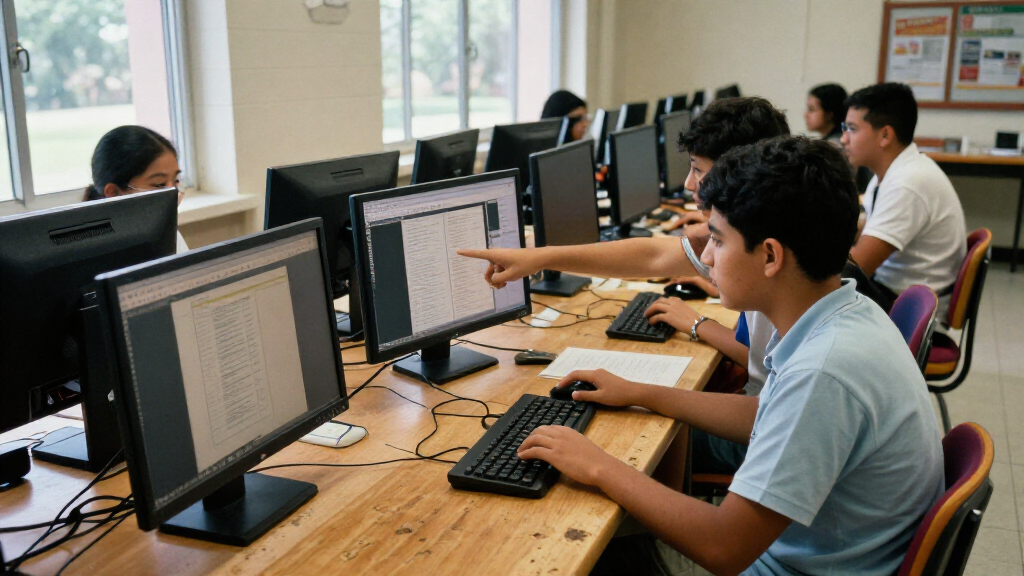
The proposed change is not a blanket rejection of classroom technology. The author favors access for specific learning needs, including advanced computer science or cybersecurity courses, and suggests schools could lend computers to students who lack one at home. The article argues that decisions should be made locally by school administrators, boards and parents, rather than imposed by states.
How Device Rules Could Change Class
The proposal challenges the one-device-per-student model that many schools adopted or expanded during the pandemic. If districts act on it, students could spend less class time on personal screens and more on paper-based work, while accessing computers in scheduled or supervised settings. That could affect lesson planning, student access to digital materials and how schools teach research and technology skills.
The article’s central concern is that devices intended for instruction also provide easy access to entertainment and unauthorized AI assistance. The survey figures give school leaders a measure of how often students say these behaviors occur, but they do not show whether changing device policies would reduce them, improve learning or create other costs. Those outcomes would need to be evaluated by districts considering a policy shift.
Popular right now

KitchenAid Classic Series 4.5-Quart Tilt-Head Stand Mixer, Onyx Black

De'Longhi La Specialista Opera Espresso Machine with Coffee Grinder

Dyson Omni-Glide Cordless Stick Vacuum, Gold/Iron
As an affiliate, we earn on qualifying purchases.
Districts Already Tighten Screen Rules
The opinion article points to recent device restrictions in Los Angeles and New York City as signs of growing concern about classroom screen use. It says Los Angeles mandated strict daily limits on school-issued device use and blocked YouTube on district devices. New York City, it says, issued screen-use recommendations that are not mandatory and do not cover high school students. The article does not provide dates or further policy details.
The author acknowledges that research on universal student laptop access is mixed. The article characterizes many studies reporting benefits as small-scale or low-quality and says the strongest available studies are underwhelming or negative. It also explicitly describes the institute’s survey as not a causal study; it documents reported patterns but cannot determine whether device distribution produces academic harm. The opinion’s call for computer labs is a policy argument built on that distinction, not a settled research consensus.
““Our recent research isn’t a causal study and won’t settle this debate.””
— The opinion article’s author, writing for the Thomas B. Fordham Institute
What the Survey Cannot Establish
The article does not provide the survey questionnaire, response rate, detailed methodology or subgroup results, so readers cannot assess those elements from the supplied report alone. It also does not establish whether students’ self-reported behavior reflects all classroom activity or how patterns vary by school, grade or access to personal devices.
Most importantly, the findings do not show that one-to-one devices cause distraction, cheating or weaker academic performance. The article does not quantify how many districts may adopt the proposed approach, nor does it provide evidence comparing learning outcomes under computer-lab and individual-device models. Whether reduced access would improve attention without limiting useful instruction remains an open question.
Local Leaders Face Policy Choices
The article calls on school administrators, boards and parents to review how often students use school-issued devices and whether classroom access fits instructional goals. It does not announce a formal policy proposal, a deadline or a planned follow-up study. Any next steps depend on local decisions, including whether districts set limits, reserve devices for particular classes or continue one-to-one access.
For districts weighing changes, the reported survey offers a reason to examine student behavior, but it does not predict the effects of a policy shift. Schools would need to define exceptions for coursework and students without home computers, then track how any revised rules affect learning, access and classroom attention.
Key Questions
What is the article proposing?
It argues that schools should reduce or end routine one-to-one laptop and tablet distribution and use computer labs or limited laptop carts instead, with exceptions for particular courses or student needs.
How many students were surveyed?
The opinion article says the Fordham Institute commissioned a nationally representative survey of more than 2,000 high school students and recent graduates, conducted by Impact Research and UpONE Insights.
Does the survey prove school devices cause distraction?
No. The author says the research is not a causal study. It reports student responses about technology use but does not establish that school-issued devices caused that behavior or affected academic results.
Would the proposal remove computers from schools?
No. The author supports computer labs, laptop carts and access for specific courses or students who need a computer. The argument is against routine, unrestricted one-to-one access in ordinary classrooms.
Source: the74million.org