
TL;DR

Prime made for students and young adults
- Fast, free delivery for dorm and study essentials
- Prime Video and Amazon Music included
- Member-only deals
An EdSource analysis found that 45% of California K-12 students—more than 2.6 million—attend schools where tree canopy covers 5% or less of areas used by students. Heat exposure is also rising: nearly 4,900 public schools were in areas rated high or severe heat risk on Oct. 5, almost twice the count on Aug. 10. Schools are adding shade and greenery, but the report says many campuses remain poorly shaded.
Nearly 4,900 California public schools were in areas rated at high or severe heat risk on Oct. 5, almost twice the number recorded on Aug. 10, while a separate EdSource analysis found that 45% of the state’s K-12 students attend schools where trees cover no more than 5% of the areas they use. The findings highlight a gap between worsening heat exposure and the shade available to students on campus.
The EdSource analysis estimates that more than 2.6 million students attend schools with tree canopy over 5% or less of student zones. The median coverage in those areas is 6.4%, according to a report by Green Schoolyards America. The analysis also found that less than half of school tree canopy is accessible to students; about 55% of trees and greenery are around perimeters, entrances or parking lots.
Heat exposure varied over the dates cited. On Aug. 10, the week many students returned to school, about 2,600 public schools—including charter schools—were in areas with high heat risk, according to an EdSource analysis of CalHeat scores. On Oct. 5, during a heat wave that brought temperatures close to 100 degrees in parts of Los Angeles and the Bay Area, about 4,900 schools were in areas rated high or severe risk. The supplied report does not identify the year for these dates.
Some districts and partners are changing campuses. At Parkway Elementary in Sacramento, a 2024 collaboration with Green Schoolyards America transformed 15,000 square feet of schoolyard, adding 58 trees and 44 shrubs, along with arborist care and resources for teachers. CalFire’s Green Schoolyards Grant Program has also supported transformations at 215 schools statewide, according to the report.
Heat Risk Meets Bare Schoolyards
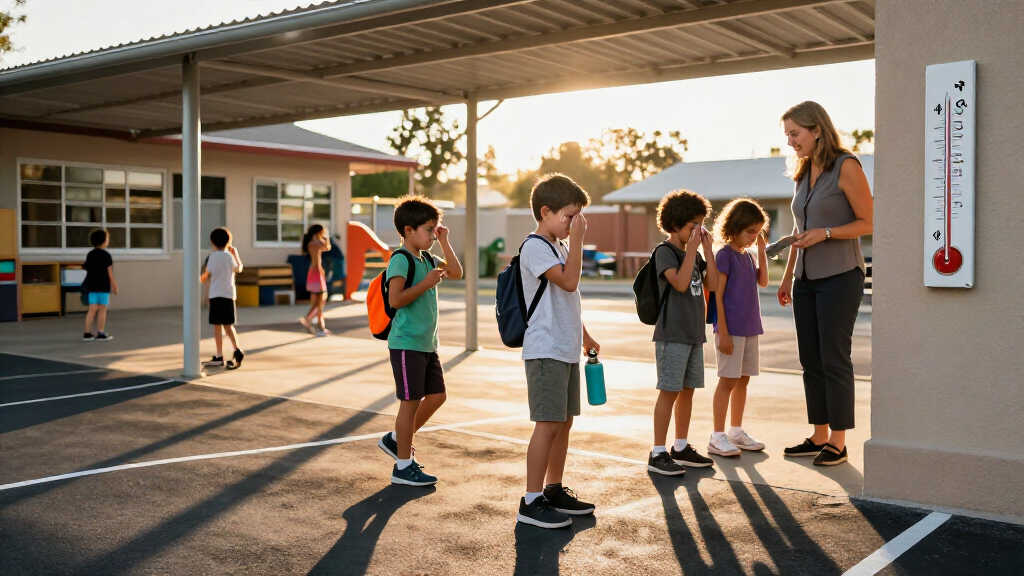
Limited shade can leave students with fewer cool places for recess, outdoor learning and physical activity during hot weather. The report says districts have adapted summer sessions by reducing time outdoors and changing activities; experts are concerned that heat is increasingly reaching the fall school term, when more students are on campus.
Tree planting is one part of a broader response, not an instant fix. UCLA urban planning and geography professor Kelly Turner said shade, air conditioning, pools, altered recess schedules and water breaks can help reduce the physical strain of heat. The report also describes green schoolyards as spaces for play and socializing, with advocates pointing to possible benefits for student well-being and schoolyard behavior.
Where trees are placed matters: canopy around parking areas may do little to shade children during the school day. Advocates say campuses in hotter areas and communities with fewer resources may have the greatest need, while districts often face competing demands for basic safety upgrades and infrastructure.
As an affiliate, we earn on qualifying purchases.
How California Campuses Are Responding
California’s temperatures have risen by roughly 3% since 1896, with more than half of that increase occurring since the 1970s, according to the Scripps Institution of Oceanography, as cited in the report. The source does not provide the underlying temperature measure or clarify the percentage calculation, so the figure should be read as reported rather than as a specific temperature increase.
The report describes campus projects at Parkway Elementary in Sacramento, Washington Elementary in Berkeley and 122nd Street Elementary in Los Angeles. They range from tree planting to wider changes that bring natural areas into school grounds. At Parkway, sustainability manager Chamberlain Segrest said the effort began with shade but expanded into a broader campus project.
Green Schoolyards America says many schools aim for 30% shade or green space, compared with a reported median of 6.4% tree coverage in student zones. These measures are not identical: the target includes shade or green space, while the median figure refers specifically to tree canopy.
““Adults like to plant trees for themselves in the places that are in the parking lot and the perimeter.””
— Sharon Gamson Danks, founder and CEO of Green Schoolyards America
portable shade structures for playgrounds
As an affiliate, we earn on qualifying purchases.
As an affiliate, we earn on qualifying purchases.
Gaps in the Heat and Canopy Data
The supplied report does not specify the year for the Aug. 10 and Oct. 5 heat-risk snapshots, nor does it provide school-by-school temperatures or show how long each campus faced hazardous conditions. The comparison describes the number of schools in state-rated high or severe risk areas on two dates; it does not by itself establish a long-term trend in the number of heat-risk campuses.
The canopy findings describe coverage, but do not establish how much cooler individual campuses are because of trees or quantify the effect of planting on student health, attendance or learning. The report presents behavioral and well-being benefits as claims made by advocates, not as measured outcomes from the cited analysis. It also does not provide total project costs or say how many schools have secured funding for future work.
As an affiliate, we earn on qualifying purchases.
Districts Face Near-Term Heat Decisions
Districts will need to manage heat during school days with measures such as shade, water breaks, adjusted recess schedules and changes to outdoor activity, while longer-term campus projects require planning, funding and ongoing tree care. The report does not give a timeline for additional statewide grants or a target date for schools to reach the 30% shade or green-space goal cited by advocates.
Further reporting and updated state data would help show whether campuses are becoming better protected, which communities receive improvements, and how heat-risk ratings change across the school year. For now, the analysis documents a substantial shade shortfall alongside high heat exposure, but does not establish the effect of individual projects on student outcomes.
outdoor cooling fans for schoolyards
As an affiliate, we earn on qualifying purchases.
As an affiliate, we earn on qualifying purchases.
Key Questions
How many California students attend schools with very little tree cover?
EdSource found that 45% of K-12 students—more than 2.6 million—attend schools where tree canopy covers 5% or less of student-use areas.
How many schools were in high or severe heat-risk areas?
About 4,900 public schools were in areas rated high or severe risk on Oct. 5, compared with about 2,600 in high-risk areas on Aug. 10. The report does not specify the year for either date, and the categories differ slightly.
Are most school trees located where students can use their shade?
No. The report says less than half of school tree canopy is accessible to students; about 55% of trees and greenery are around school perimeters, entrances or parking lots.
What steps can schools take during hot weather?
Turner cited shade, air conditioning, pools, adjusted recess times and water breaks as possible measures. The report also says some districts reduce outdoor time or change physical activities during hot periods.
Do the findings show that planting trees improves student outcomes?
No direct outcome measurement is provided. Advocates say green schoolyards can support play, social interaction and well-being, but the reported analysis measures canopy coverage and heat-risk locations, not the effects of individual projects on students.
Source: rss
Halloween Picks
halloween
As an affiliate, we earn on qualifying purchases.